
The digital marketing funnel stages map out the journey someone takes from the moment they first hear about your brand to the point where they become a paying customer. At its core, this path is often broken down into three key phases: Awareness, Consideration, and Conversion, which help you fine-tune your marketing to connect with people at just the right time.
Mapping Your Customer Journey
Think of a digital marketing funnel as the ultimate roadmap for your customer's entire experience with you. Just like planning a road trip, every stop along the way serves a purpose—from the initial "aha!" moment of discovering your brand to the final destination of making a purchase. This isn't just some abstract marketing theory; it's a practical framework for building meaningful connections.
When you truly understand this process, you stop wasting money on marketing that doesn't work. Instead of shouting the same message at everyone, you can craft content that speaks directly to where a person is mentally, whether they're just starting to realize they have a problem or are weighing their final options. The whole idea is to gently guide people from being total strangers to becoming your biggest fans.
The Core Stages of a Marketing Funnel
To build a funnel that actually moves the needle, you have to get a handle on each distinct phase. They all demand a different style of communication, content, and strategy.
- Awareness: This is the top of the funnel—the "discovery" phase. Here, you're casting a wide net to attract people who are just beginning to understand they have a need or a problem that you might be able to solve.
- Consideration: In the middle of the funnel, potential customers are well aware of their problem and are now actively researching solutions. Your job is to stand out by providing genuine value and building trust, positioning yourself as a credible option.
- Conversion: This is the bottom of the funnel, where your prospect is ready to pull the trigger. The focus here is all about making it as easy and compelling as possible for them to make a decision and buy.
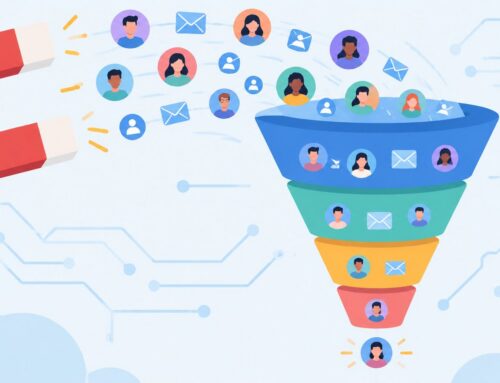
The diagram below gives you a great visual of how these digital marketing funnel stages work together, from the broad top to the narrow bottom.
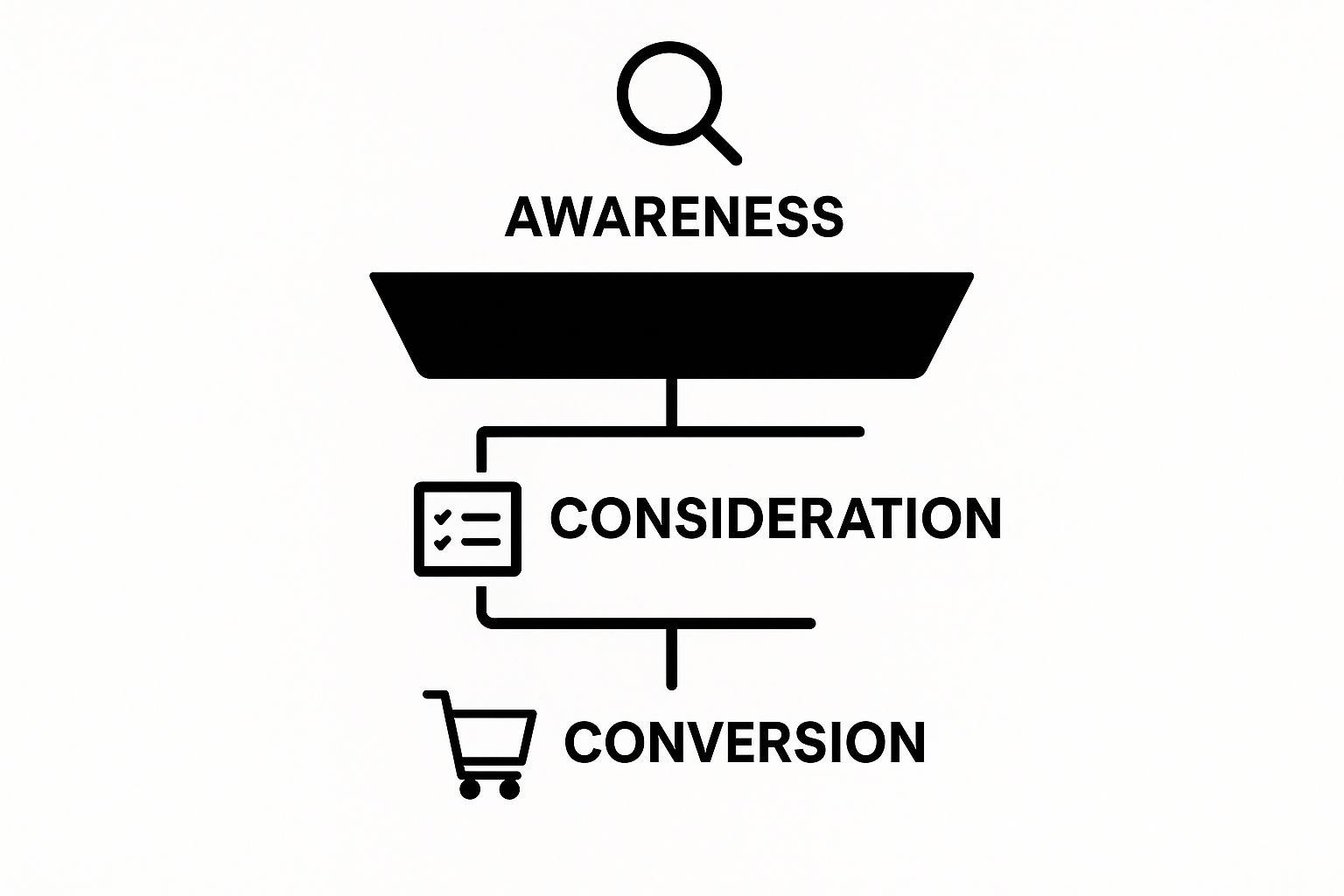
To help you get started, here’s a quick-reference table that breaks down each funnel stage, its primary goal, and the customer's mindset to help you navigate their journey.
The Four Core Funnel Stages at a Glance
| Funnel Stage | Primary Goal | Customer Mindset |
|---|---|---|
| Awareness | Attract a broad audience and introduce your brand | "I have a problem, but I'm not sure what the solution is." |
| Consideration | Nurture leads with educational content and build trust | "I'm exploring different options to solve my problem." |
| Conversion | Convince qualified leads to make a purchase decision | "I'm ready to choose the best solution for me." |
| Loyalty/Advocacy | Retain existing customers and turn them into brand fans | "I made a great choice and want to share my experience." |
This visual hierarchy in the infographic and the breakdown in the table show how a large, general audience is carefully guided and narrowed down into a smaller, more committed group of customers.
If you're ready to start applying these ideas, these customer journey mapping templates are a fantastic resource for visualizing every single step. Getting a firm grip on these stages is the key to building relationships that last.
The Awareness Stage: Making a First Impression
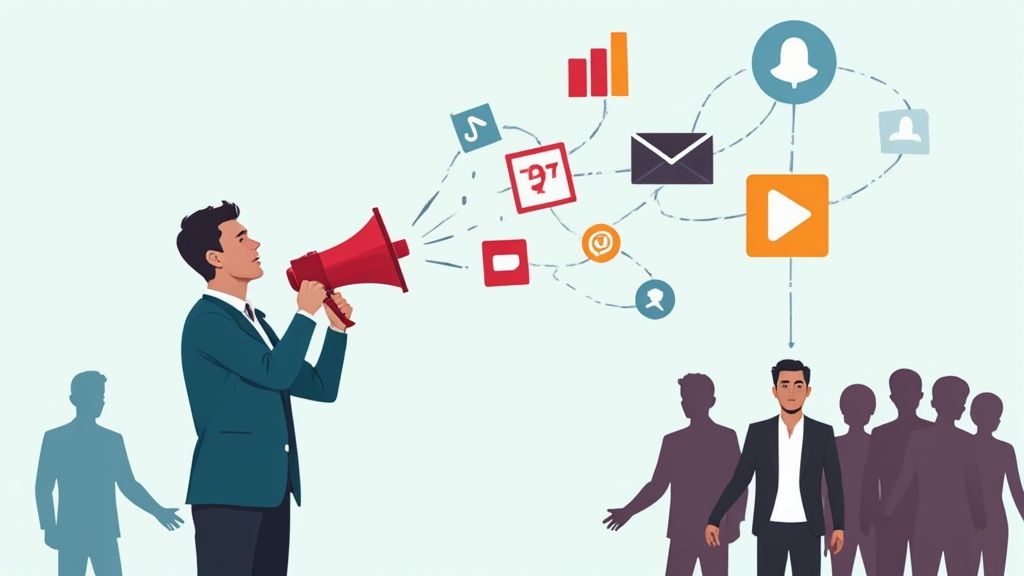
This is ground zero. Every single customer relationship starts right here. The awareness stage, what marketers often call the Top of the Funnel (TOFU), is your brand’s very first handshake with a future customer.
At this point, these folks aren't shopping. They're not even browsing. They’re just beginning to realize they have a problem or a question bubbling up. So, your job isn't to make a sales pitch—it's to attract their attention by being genuinely helpful.
Think of yourself as a friendly guide in a massive library. Someone is wandering the aisles, trying to find answers to a question they can barely put into words. You’re the expert who doesn't push a book on them, but instead points them to the right section with a useful article, a quick video, or an interesting post. This is one of the most important digital marketing funnel stages because it's where trust begins to form.
Casting a Wide, Smart Net
The secret to winning at the awareness stage is to give away value with no strings attached. You want to show up where your audience is already hanging out when they're looking for information. The whole game here is about getting seen and positioning your brand as a credible source.
Some of the best ways to do this are:
- SEO-Driven Blog Posts: Write content that directly answers the common questions people in your industry are plugging into Google.
- Engaging Social Media Content: Share helpful tips, sharp infographics, and short videos on platforms like LinkedIn or Instagram to catch someone's eye while they scroll.
- Informative Videos: How-to guides and explainer videos are perfect for simplifying complex ideas and showing you really know your stuff.
The goal is simple: become the helpful answer to their earliest questions. When you deliver real value right from the start, you build the credibility you'll need to draw them deeper into the funnel.
How to Know If It's Working
Even though you aren't chasing sales just yet, you absolutely need to measure your efforts. Key Performance Indicators (KPIs) at this stage tell you how good you are at grabbing an audience's attention. This is where many businesses can get a huge lift from proven brand awareness strategies to grow their footprint.
Keep a close eye on these metrics:
- Website Traffic: Are more people visiting your site, especially your blog and other informational pages?
- Social Reach and Impressions: How many unique people are actually seeing your content on social media?
- Keyword Rankings: Are you climbing the search engine rankings for important, non-branded terms?
Ultimately, success here comes down to getting noticed by the right crowd. Landing pages are critical, as they're often the first real interaction someone has with your brand after clicking a link. The average landing page converts at around 10.76%, but you can push that number much higher with smart design. For instance, just adding a video can boost conversions by a whopping 80%, which really shows the power of engaging, educational content at this early phase.
The Consideration Stage: Winning Them Over
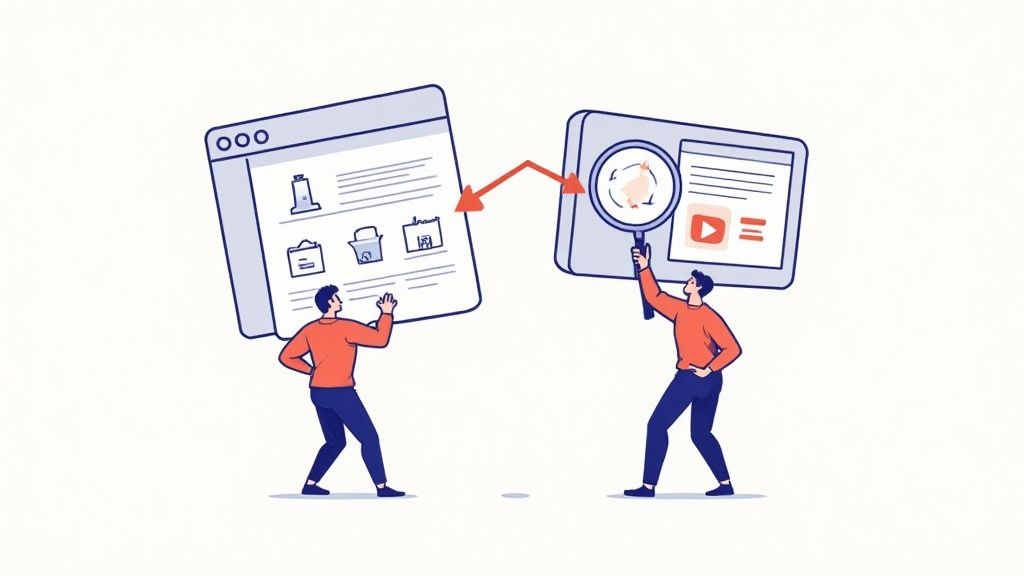
Alright, you’ve made a great first impression. Now, your prospects are stepping into one of the most crucial digital marketing funnel stages: the consideration phase. They've stopped just thinking about their problem and have started actively shopping for a solution. It’s time to stop casting a wide net and start building real connections.
I like to think of this stage like dating. Awareness was the first "hello," but consideration is the first few dates. Your prospect is learning about you, checking out your competition, and trying to figure out if you're the right long-term partner. Your job is to prove you're not just another face in the crowd—you're the one.
This middle-of-the-funnel (MOFU) moment is all about nurturing that initial spark of interest. It's where you get to turn a casual website visitor into a genuine, qualified lead by giving them something truly valuable in return for their contact info.
Proving Your Worth with High-Value Content
To really shine in the consideration stage, your content needs to help people make a smart decision. This isn't the time for a hard-sell pitch. It's time to be a guide, offering up educational resources that establish your expertise and highlight what makes you different.
Here are some of the most effective ways to do that:
- Detailed Case Studies: Don't just talk about results—show them. Walk people through real stories of how you've helped customers who were in their exact shoes.
- Expert Webinars: Go deep on a specific topic with a live or on-demand session. This is a fantastic way to position your team as the go-to authorities in your field.
- Comparison Guides: Create honest, side-by-side comparisons of your solution versus your competitors. This builds trust and helps prospects organize their thoughts.
- Whitepapers and E-books: Offer meaty, in-depth guides behind a form. If the content is valuable enough, people will happily trade their email address for it.
This is the exact moment an anonymous visitor becomes a tangible lead. The right piece of content can open the door to a more direct conversation, which is why a smart strategy for lead nurturing automation becomes so important for handling this at scale.
The Consideration Stage is where trust is either solidified or lost. Your content must directly address your prospect’s key questions and objections, guiding them confidently toward a decision.
Measuring What Matters: Engagement and Lead Quality
At this point, you're not just tracking eyeballs; you're tracking genuine interest. You need to know who's leaning in and who's getting ready to buy. This is where you get really granular with your conversion rates to see what's working.
In the B2B world, a healthy lead to Marketing Qualified Lead (MQL) conversion rate typically sits between 25% and 35%. From there, the MQL to Sales Qualified Lead (SQL) rate is often in the 13% to 26% range. Knowing these benchmarks is key to spotting leaks in your own funnel.
Pay close attention to these key metrics:
- Lead Generation Rate: How many visitors are actually downloading your gated content?
- Email Engagement: What are the open and click-through rates on your nurture emails? Are people clicking on the links you send?
- Time on Page: Are they sticking around to read your entire case study or just skimming?
These numbers don't just sit on a dashboard; they tell you a story about which content is hitting the mark and which leads are warm enough to move to the next stage.
The Conversion Stage: Turning Interest into Action
Welcome to the bottom of the funnel (BOFU)—the moment of truth. This is where all your effort culminates. Your prospect has done their research, weighed their options, and now they're ready to make a choice. It's the most delicate part of the entire journey.
Your job here is simple: get out of the way. Make the final step to becoming a customer as seamless and compelling as you possibly can. Think of it like a perfectly paved, clearly marked express lane at the checkout. No friction, no last-minute questions, just a smooth ride to the finish line.
You’re not just educating anymore; you're providing final reassurance. It's about addressing any lingering doubts and giving them that one last nudge they need to commit.
How to Create an Unbeatable Final Offer
To get someone to take action, your messaging needs to be sharp, persuasive, and completely focused on sealing the deal. Your prospect is on the verge of a decision, and your job is to make saying "yes" feel like a no-brainer. This is all about combining powerful trust signals with a crystal-clear path to purchase.
Here are the tactics that make all the difference at this stage:
- High-Impact Sales Pages: Your sales page is your final pitch. It needs to scream value, hammering home the benefits and ending with a powerful, impossible-to-miss call-to-action (CTA).
- Free Trials or Live Demos: Nothing builds confidence like hands-on experience. Offering a risk-free trial or a personalized demo lets people see the value for themselves before pulling out their credit card.
- Compelling Case Studies & Testimonials: Social proof is your ace in the hole. When a prospect sees that people just like them have succeeded with your product, it provides the final validation they need.
- A Touch of Urgency: A little nudge goes a long way. Limited-time discounts, exclusive bonuses, or a simple "only 3 left!" can create the urgency needed to push someone over the edge.
The conversion stage is a game of confidence. Your prospect needs to feel completely secure in their decision. Every single detail, from your checkout design to your return policy, should be designed to build that final layer of trust.
Key Metrics for the Bottom of the Funnel
At this point, your metrics become incredibly direct. These numbers don't lie—they tell you exactly how good you are at turning interested leads into actual customers.
You'll want to keep a close eye on these three KPIs:
- Conversion Rate: This is the big one. It's the percentage of people who take the final action you want, like making a purchase. It’s your ultimate report card.
- Cost Per Acquisition (CPA): This tells you exactly what you're spending to get a new customer. The lower your CPA, the more efficient and profitable your entire funnel is.
- Cart Abandonment Rate: For anyone selling online, this is critical. It shows how many people add an item to their cart but bail before completing the purchase. A high number here is a huge red flag that something in your checkout process is broken.
For context, the average e-commerce conversion rate hovers around 1.89% globally. But a well-oiled machine can easily hit 4% to 5% or more, often just by smoothing out the checkout experience. You can dig into more e-commerce conversion rate benchmarks on blendcommerce.com. It just goes to show that tiny tweaks at this final stage can lead to massive wins.
The Loyalty Stage: Creating Brand Advocates
Think the sale is the finish line? Think again. It’s actually the starting line for what can be the most profitable part of the entire customer relationship. This is where we enter the Loyalty and Advocacy stage of the digital marketing funnel, where our focus shifts dramatically from acquiring new customers to keeping the ones we already have.
It's easy to get caught up in the chase for new leads, but the real, sustainable growth happens after the first purchase. The numbers don't lie: it can cost five times more to attract a new customer than to keep an existing one. That’s why getting this final stage right isn't just a nice-to-have; it's essential for long-term success.
This phase is all about creating such a fantastic post-purchase experience that customers feel genuinely appreciated. When you nail this, you don't just get repeat business—you create passionate fans who are eager to spread the word about you for free.
Nurturing Lifelong Relationships
Building true loyalty means you have to keep delivering value long after you've made the sale. You need to prove that you're invested in your customer's success, not just in their wallet. This requires proactive, helpful, and consistent communication that feels personal.
To turn happy customers into brand advocates, you have to be intentional about keeping them engaged. There are several proven customer retention strategies that can completely reshape your post-sale process.
Some of the most effective tactics include:
- A Smooth Onboarding Process: Don't just hand over the product; guide new customers through it so they see its value right away.
- Proactive Customer Support: Why wait for problems? Reach out with helpful tips or check-ins before they even have a chance to get frustrated.
- Exclusive Content for Customers: Make them feel special with access to webinars, in-depth guides, or articles that aren't available to the general public.
- Rewarding Loyalty Programs: Give them a reason to come back with discounts, points, or early access to new releases.
These actions show you’re committed to their experience, transforming a simple transaction into a sense of belonging.
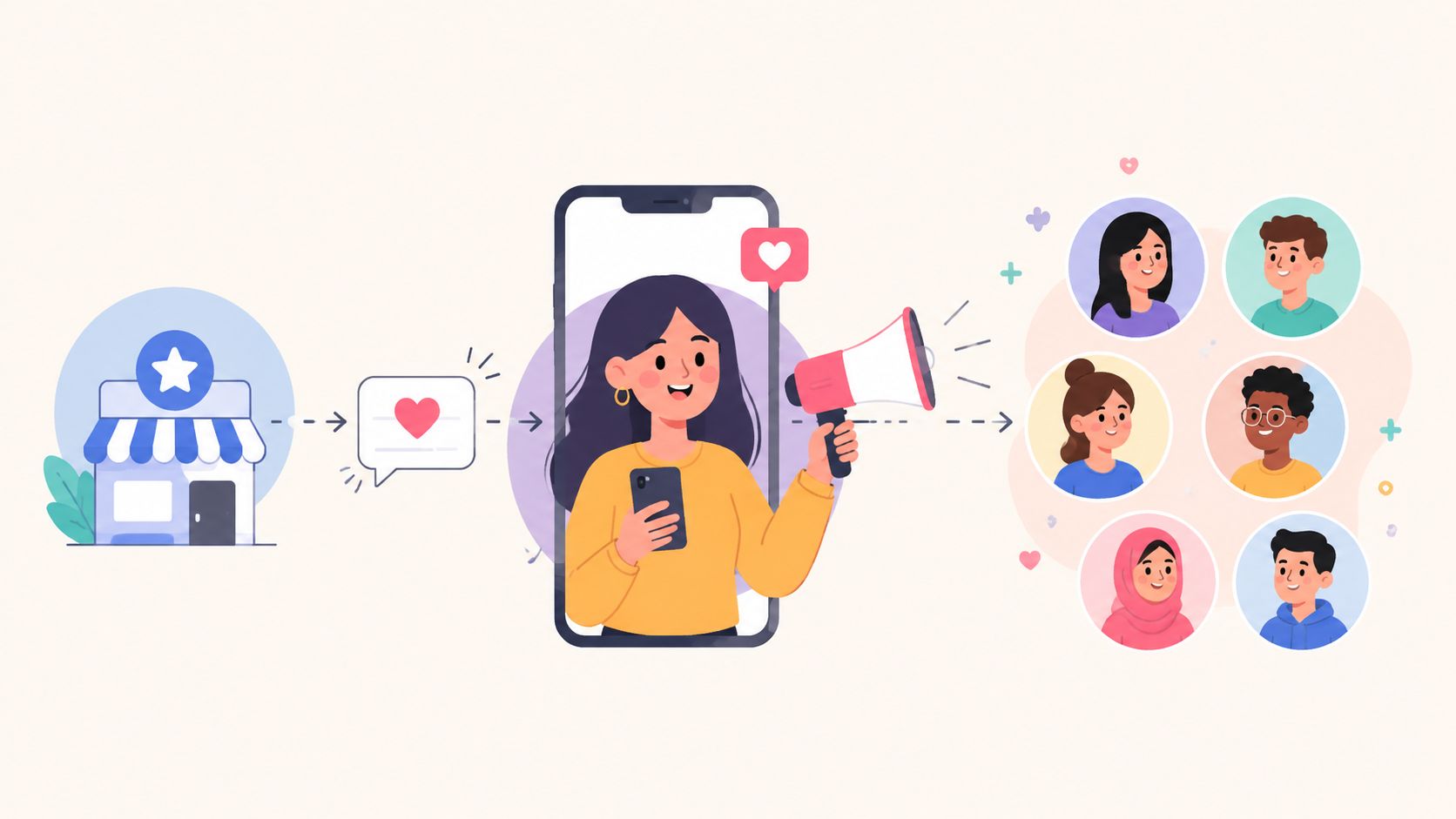
The ultimate goal here is to make your customers so happy they chose you that they become a volunteer marketing team, driving referrals and creating positive content all on their own.
Measuring Loyalty and Advocacy
So, how do you know if all this effort is paying off? You track the right metrics. These KPIs give you a clear window into how your customers feel and how much value they bring over time, pointing you toward what's working and what isn't.
Keep a close eye on these key metrics:
- Customer Lifetime Value (CLV): This is the big one. It calculates the total revenue you can expect from a single customer over their entire relationship with you. A rising CLV is a sure sign your retention strategies are working.
- Net Promoter Score (NPS): This boils it down to one simple question: "On a scale of 0-10, how likely are you to recommend our brand?" It’s a direct pulse-check on customer satisfaction and their willingness to advocate for you.
- Repeat Purchase Rate: This straightforward metric tracks the percentage of customers who buy from you more than once. It’s one of the most basic and powerful indicators of customer happiness.
How to Analyze and Optimize Your Funnel
A great marketing funnel isn't something you can just build and walk away from. Think of it more like a high-performance engine; it needs constant tuning and attention to run at its peak. Optimizing your funnel is all about digging into the data to make smart, informed decisions that patch up leaks and make the whole system run smoother.
It helps to put on your detective hat. Your job is to investigate exactly where prospects get stuck, lose interest, and drop off. Using the right analytics tools, you can follow their journey step-by-step, pinpointing the moments that cause them to leave. This disciplined, data-first approach is how you turn small, consistent tweaks into huge gains over time.
This ongoing process is what transforms a simple pathway into a powerful conversion machine, ensuring you squeeze every last drop of value out of your marketing spend.
Pinpointing Leaks and Opportunities
Your first move is to find the friction. Where are potential customers slipping through the cracks? This means getting comfortable with your analytics and hunting for any big drop-offs between the different digital marketing funnel stages.
A few incredibly useful techniques can give you a crystal-clear picture of what people are actually doing on your site:
-
Heatmaps: These tools, like Hotjar, create a visual map of where users click, scroll, and move their mouse. They’re fantastic for seeing what content actually grabs someone's attention versus what gets completely ignored.
-
Session Recordings: Ever wish you could look over a user's shoulder? Session recordings let you do just that. You can watch anonymous recordings of real people interacting with your website, revealing confusing navigation, broken links, or other frustrating issues you'd never spot on your own.
-
Conversion Rate Analysis: This one is simple but powerful. Just compare the conversion rates from one stage to the next. If you see a massive plunge between, say, the consideration stage and the conversion stage, that’s a red flag telling you to investigate your sales page or checkout process.
When you blend these different views—the hard numbers and the real human behavior—you can diagnose problems with stunning accuracy. You stop guessing what’s wrong and start knowing.
Testing and Refining for Better Results
Once you’ve zeroed in on a problem spot, the next step is to test your proposed fixes in a structured way. This is where A/B testing becomes your most valuable tool.
Also known as split testing, A/B testing is pretty straightforward: you create two versions of the same page—the original (your "control") and a new version with one change (the "variation"). You then show each version to a different segment of your audience to see which one performs better.
You could test anything: a bold new headline, a different color for your call-to-action button, or a completely redesigned layout. This scientific approach takes the guesswork out of optimization, letting real user behavior—not just your gut feeling—guide your decisions.
Common Questions About Marketing Funnels
As you get your hands dirty with marketing funnels, a few questions always seem to pop up. It's totally normal. Let's tackle some of the most common ones I hear.
Funnel vs. Flywheel: What's the Difference?
One of the biggest points of confusion is the whole "funnel vs. flywheel" debate. Think of the traditional funnel as a straight line with a clear finish line: the sale. A customer enters the top and, hopefully, comes out the bottom as a buyer. Journey over.
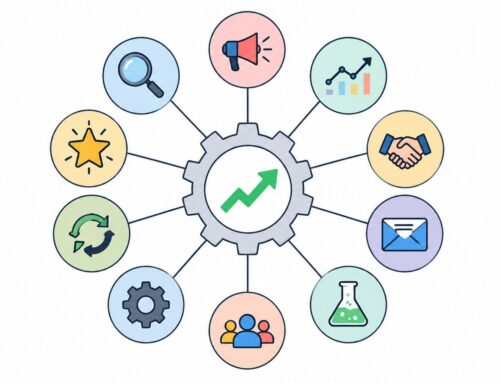
The flywheel model, on the other hand, sees that sale as just the beginning. It puts the customer right in the middle of everything. A happy customer's momentum—through repeat business and word-of-mouth referrals—spins the wheel and attracts new customers. It’s a shift from a one-and-done transaction to building a self-perpetuating growth engine. For a really solid breakdown of the fundamentals, check out this complete guide to marketing funnels.
How Long Does It Take to Go Through a Funnel?
This is the classic "it depends" answer, but for good reason. The timeline for a customer to move from awareness to purchase can vary dramatically.
Someone buying a $20 t-shirt online might go through the entire funnel in under five minutes. But a business looking to invest in a $50,000 piece of B2B software? That decision-making process could easily stretch over six months, involving demos, team approvals, and budget negotiations.
No single timeline fits all. The key is understanding your specific customer's decision-making process and optimizing each touchpoint to guide them smoothly, no matter how long it takes.
What Tools Are Essential for Managing a Funnel?
You can't just wing it. To manage the customer journey effectively, you need a solid tech stack. Here are the non-negotiables:
- A CRM (Customer Relationship Management) tool: This is your central hub for tracking every single interaction a lead has with your company.
- Analytics Platforms: Think Google Analytics or similar tools to measure what’s working (and what's not) at each stage.
- Email Automation Software: Crucial for nurturing leads with the right message at the right time, without you having to hit "send" manually.