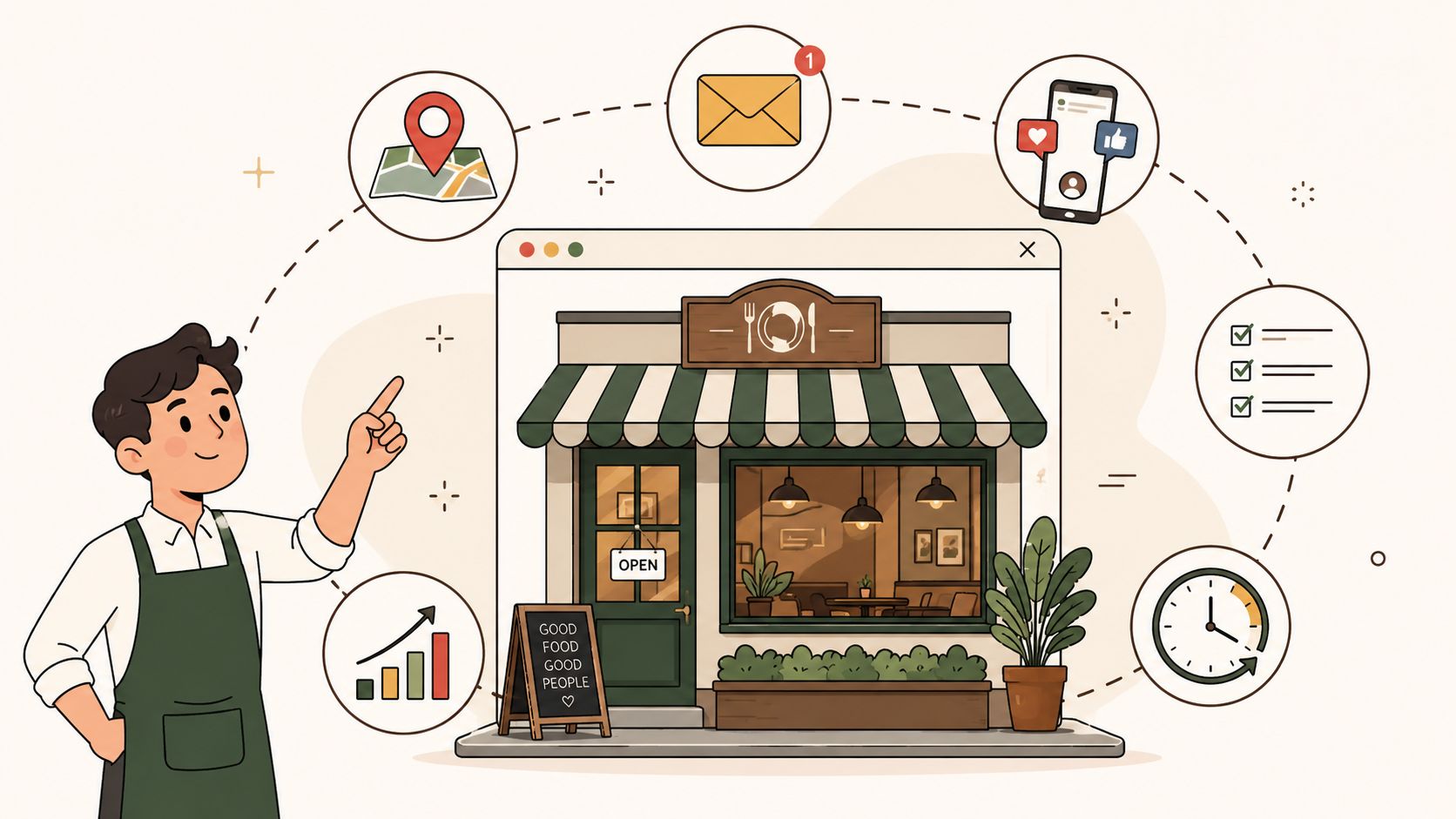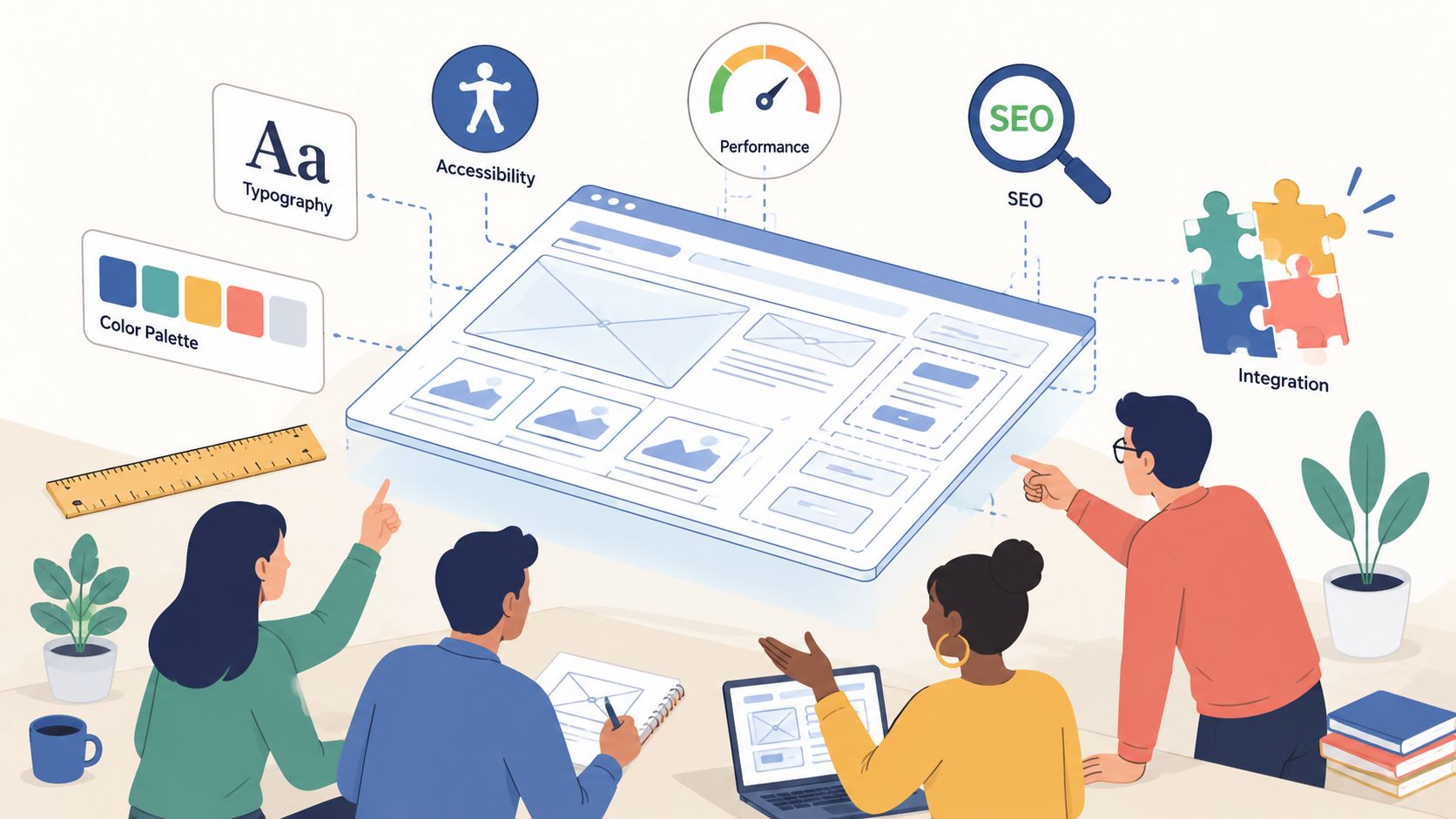

When you're a startup, "digital marketing" means more than just running a few ads. It’s about being scrappy and smart, using online channels like SEO, social media, and great content to build a brand from the ground up. The key is to make smart, targeted choices that create sustainable growth, especially when you don't have a massive budget for flashy, short-lived campaigns.
Building Your Startup Marketing Foundation

Before you spend a dime on an ad or even write your first blog post, you have to lay the groundwork. It's a common and painful mistake to see startups fail not because their product was bad, but because they jumped straight into tactics without a real strategy.
Think of it like building a house. You wouldn't start framing the walls without first pouring a solid concrete foundation, right? The same principle applies here. Your goal isn't just to launch a few disconnected campaigns; it's to build a growth engine that keeps running. This whole process starts by answering two critical questions.
Define Your Unique Value Proposition
First off, what actually makes you different? In a sea of competitors, just being another option isn't going to cut it. Your Unique Value Proposition (UVP) is that one clear, compelling statement that explains the benefit you offer, how you solve a real problem for your customers, and what makes you the obvious choice over everyone else.
A strong UVP is the heart of all your messaging. It must instantly answer your potential customer's question: "Why should I pick you over the other guys?"
For instance, instead of a generic "We sell project management software," a powerful UVP would be something like, "The only project management tool built for non-technical teams, cutting meeting times by 50%." That specificity is what grabs attention and makes you memorable.
Create Your Ideal Customer Persona
With your UVP locked in, the next step is figuring out exactly who you're talking to. An Ideal Customer Persona (ICP) is a detailed profile of your perfect customer, and it needs to be more than just basic demographics like age and city. A truly useful ICP gives you a deep understanding of their world.
To really bring your persona to life, you need to dig into these areas:
- Pain Points: What keeps them up at night? What are the biggest frustrations your product or service can eliminate?
- Motivations: What are they trying to achieve in their life or career? What drives the decisions they make?
- Online Habits: Where do they hang out online? Are they scrolling through LinkedIn, watching TikToks, or deep in niche Reddit forums?
- Watering Holes: Which blogs, influencers, or communities do they trust? Where do they go for reliable information?
Knowing this stuff is everything. It tells you where to find your audience, how to speak their language, and what kind of message will actually connect with them. Without this clarity, you're just throwing money and time into the wind.
These foundational steps are non-negotiable and form the bedrock of any winning campaign. To get a broader look at establishing a solid foundation, check out this complete guide to digital marketing for small businesses.
Once you have a sharp UVP and a well-defined customer persona, you have the essential building blocks for a powerful strategy. From here, choosing the right marketing channels and crafting messages that truly resonate becomes so much easier. If you need help structuring these ideas, our article on how to write a marketing plan is a great next step.
Choosing Your High-Impact Marketing Channels
As a startup, you’re not playing with an infinite supply of time, money, or energy. It’s a classic mistake to try and be everywhere at once—that’s a surefire way to stretch your resources so thin that nothing gets done. The real key to smart digital marketing isn't about covering every possible channel. It’s about making a few strategic bets on the ones that actually line up with your business goals and where your customers are.
Here’s a simple mental model I use: think of it as "owning" versus "renting" your audience. Channels like SEO and content marketing are about building assets you own, kind of like a house. It takes work and patience to build, but once it's up, it provides lasting, sustainable value and traffic, and the cost to maintain it goes down over time.
On the flip side, you have channels like Google Ads (PPC) and paid social media ads. These are like renting. You get instant access to a huge audience, but the second you stop paying the rent, the traffic disappears. A truly effective strategy usually blends both—renting for quick wins and gathering initial data, while you build your owned assets for long-term, compounding growth.
The Core Four Channels for Startups
To make the right call, you have to understand what each of the main channels is built for. Let's break down the four big ones to see where your startup might find its footing.
-
Search Engine Optimization (SEO): This is all about getting your website to show up higher on search engines like Google when people search for what you offer. It’s a long-term game that builds a steady stream of organic traffic. The beauty here is that when someone finds you through search, they're already looking for a solution, making them a fantastic, high-intent lead.
-
Content Marketing: Think of this as creating and sharing genuinely useful stuff—blog posts, in-depth guides, videos—to attract and keep a specific audience. Content marketing and SEO are two sides of the same coin; content gives search engines a reason to rank you and gives your audience a reason to trust you.
-
Social Media Marketing: This isn’t just about posting updates. It's about building a community and talking directly with your target audience on the platforms they use every day. It’s brilliant for building brand awareness, creating loyal followers, and sparking real conversations.
-
Pay-Per-Click (PPC) Advertising: This is where you pay for your ads to appear at the top of search results or in social media feeds. PPC is your go-to for immediate traffic. It’s fantastic for testing if your product has legs, pushing a specific offer, or just capturing demand that exists right now.
The infographic below shows the kind of audience data that can help point you toward the right channels by looking at demographics, psychographics, and behaviors.
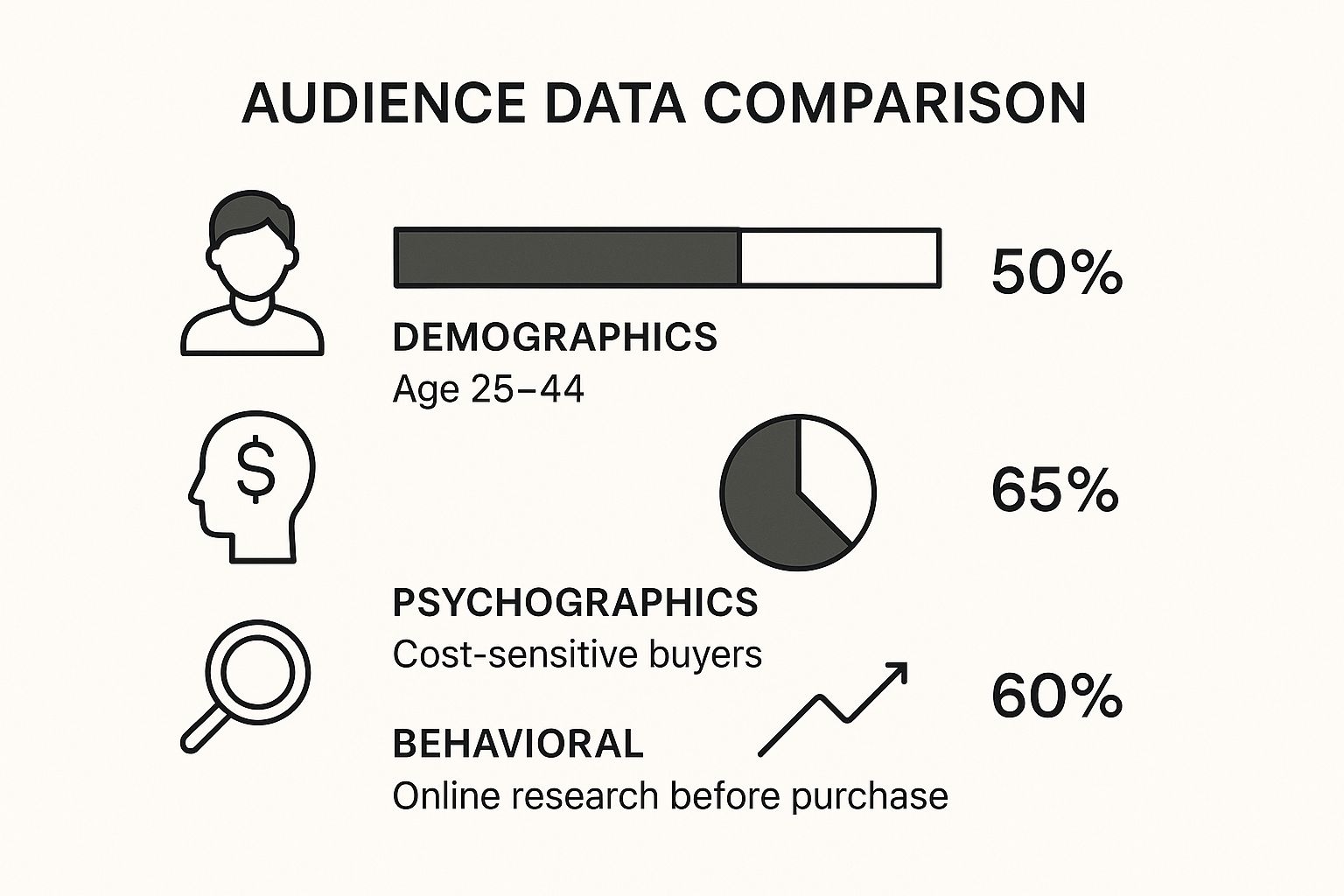
Based on this, we can see the target audience is a digitally savvy crowd in their prime working years. They’re smart with their money and do their homework online before buying.
To help you weigh your options, I've put together a table that breaks down these four channels side-by-side. It’s a quick-glance guide to see how they stack up in terms of cost, speed, and overall value for a new business.
Comparing Key Digital Marketing Channels for Startups
| Channel | Primary Goal | Typical Cost | Time to See Results | Key Benefit for Startups |
|---|---|---|---|---|
| SEO | Long-term organic growth, authority building | Low to Medium (content & time) | 6-12 months | Builds a sustainable, high-intent traffic source you own. |
| Content Marketing | Building trust, audience engagement, lead gen | Low to Medium (creation & promotion) | 3-6 months | Establishes expertise and fuels your SEO and social media efforts. |
| Social Media | Brand awareness, community building | Low to High (organic vs. paid) | Immediate to 3 months | Direct engagement with customers and rapid brand visibility. |
| PPC | Immediate traffic, lead generation, sales | Medium to High (ad spend) | Within days | Provides fast results, valuable data, and predictable traffic. |
Ultimately, this table shows there's no single "best" channel. The right choice depends entirely on whether you need to build a foundation for the future (SEO) or get traffic in the door by tomorrow (PPC).
Making a Data-Driven Channel Decision
Your channel choice should be guided by your business model, your audience's habits, and what you need to achieve right now. For instance, a B2B SaaS startup with a longer sales cycle will probably lean heavily on SEO and content on LinkedIn to build authority. In contrast, a direct-to-consumer brand selling a trendy new gadget will likely get much faster traction with ads on Instagram and TikTok.
Social media, in particular, has become a non-negotiable part of the mix. With an estimated 5.24 billion social media users globally by 2025, the reach is undeniable. For B2B startups, LinkedIn is an absolute powerhouse—a study showed 40% of B2B marketers named it their number one channel for high-quality leads. It's no surprise that businesses now dedicate roughly 15% of their total marketing budgets to social media. If you're curious about more stats like these, there are some great insights in this compilation of digital marketing statistics.
Don’t just follow the trends. Choose channels based on where your specific Ideal Customer Persona spends their time and seeks information. Data, not hype, should drive your decisions.
In the end, your marketing mix will change as your startup grows. The best approach is to start small. Pick one or two channels, get really good at them, and then expand. By focusing your efforts, you make every dollar and every hour work for you, turning marketing from a simple expense into your most powerful engine for growth.
Creating a Lean Startup Marketing Budget
For a startup, your budget isn’t just a spreadsheet—it's your survival guide. Every single dollar needs to have a job, and frankly, wasteful spending is the fastest way to kill your momentum. Building a lean marketing budget means you have to move past arbitrary numbers and create a plan where spending is directly tied to real business goals.
Think of it this way: your marketing budget is like fuel for a car. Just pouring it in without knowing your destination is a complete waste. First, you need to decide where you're going—say, acquiring your first 100 users—and then figure out how much fuel you'll need to get there.
Goal-Driven Budgeting Models
Forget the old-school advice about dedicating a fixed percentage of revenue to marketing. That’s for established companies. When it comes to digital marketing for startups, a much smarter approach is to work backward from your objectives. This way, every dollar is accountable and has a clear purpose.
Here are a few practical models that work well for a lean operation:
- Cost Per Acquisition (CPA) Model: This is the gold standard if you're focused on performance. You start by defining your target CPA—the absolute maximum you're willing to spend to get one new customer. If your goal is to acquire 50 new customers and your target CPA is $100, your budget is a simple $5,000. Easy.
- Activity-Based Model: This one is perfect for very early-stage startups that need to build foundational assets. You budget for specific activities, like "create four high-quality blog posts a month" or "run one targeted social media campaign." It shifts the focus to getting things done instead of chasing abstract financial goals.
- Competitive Match Model: Use this one with a bit of caution, but it can be effective. The idea is to estimate what a close competitor is spending and then aim to either match them or strategically find a less expensive angle. Tools like Ahrefs or Semrush can give you clues about their paid ad spend and content output, which provides a solid baseline.
A budget isn't a restriction; it's a strategic tool. It forces you to make deliberate choices about where to place your bets, ensuring your limited resources are channeled into the activities with the highest potential return.
This kind of strategic thinking is more critical than ever. The explosion of accessible digital advertising has completely changed how companies spend money. In 2024, digital ad spending is on track to make up 72.7% of all advertising investment, hitting over $790 billion worldwide. That figure has more than doubled since 2019. This surge, kicked into high gear by the pandemic, is largely thanks to easy-to-use ad platforms on social media and search engines that have lowered the barrier to entry for businesses like yours. You can read more about these global advertising trends and see how AI is set to further shape marketing investments.
Maximizing Every Dollar Spent
A lean budget is about being efficient, not just being cheap. The goal is to squeeze every last drop of value from your investment, which means putting your money into channels that deliver the best long-term results. For most startups, that means starting with organic channels.
- Prioritize Organic First: SEO and content marketing are investments in assets you actually own. Sure, they might take longer to show results, but they build a sustainable source of traffic that pays you back for years to come.
- Use Paid Ads for Surgical Strikes: Don’t just throw money at paid ads for "brand awareness." Use them for specific, measurable goals, like testing a new landing page, validating whether customers want a new feature, or driving sign-ups for a webinar.
- Track Everything: Use free tools like Google Analytics 4 to see exactly where every conversion comes from. If you can’t measure a channel’s performance, you shouldn't be spending money on it. Period.
- Review and Reallocate: Your budget can't be set in stone. Look at your spending and performance weekly or bi-weekly. If a channel isn't pulling its weight, cut its funding and move that cash over to what is working. This agility is a startup’s superpower.
Kicking Off Your First High-Impact Campaigns
A killer strategy is just a piece of paper until you actually do something with it. This is where the rubber meets the road—turning those plans into real campaigns that start building momentum. For a startup, smart digital marketing isn't about trying to do a dozen things at once. It's about picking a few high-impact plays and knocking them out of the park.
Think of it like starting a campfire. You don't just toss a giant log on and hope it catches. You start small and get deliberate. You gather tinder, arrange the kindling, and nurture a small flame until it’s strong enough to sustain itself. Your first campaigns are that kindling, designed to catch fire quickly and build a solid base for growth.
Build Your Cornerstone Content Engine
Your first big move should be creating a piece of cornerstone content. This isn't just another blog post. We're talking about a seriously substantial, in-depth resource that solves a major problem for your ideal customer. It needs to be the definitive guide, the ultimate checklist, or the detailed walkthrough they can't find anywhere else.
This one piece of content becomes a central hub for your marketing. You can promote it for months, slice it up into dozens of social media posts, and use it to attract valuable backlinks from other sites. For instance, a SaaS startup with a project management tool could create "The Ultimate Guide to Asynchronous Team Productivity." A resource that good will naturally start ranking on Google over time.
This approach does two things brilliantly: it immediately positions you as an authority and fuels your long-term SEO. It’s an asset that keeps working for you long after you hit publish.
Launch Targeted Social Media Campaigns
Once you have that cornerstone content, your next play is to run a targeted social media campaign. The goal here isn't just to rack up empty clicks; it's about starting real conversations and building a community around your brand.
Here’s a simple but incredibly effective way to structure it:
- Pick Your Playground: Go where your customers actually hang out. If you're a B2B tech startup, that’s probably LinkedIn. If you're a fashion brand, you'll feel more at home on Instagram or TikTok.
- Share the Good Stuff: Don't just spam a link to your guide. Pull out the most interesting stats, compelling quotes, or actionable tips and turn them into standalone posts. Good visuals are non-negotiable here.
- Actually Be Social: Ask questions. Respond to every single comment. Jump into relevant industry conversations. This is how you show there are real, helpful humans behind the logo.
This turns social media from a megaphone into a magnet, pulling in the right people and helping you learn directly from them.
The best startup campaigns don't even feel like marketing. They feel like a genuine attempt to help, educate, and connect with people who all share the same problem.
Master the SEO Basics and Think Like a Growth Hacker
While content and social create that initial buzz, foundational Search Engine Optimization (SEO) is what makes sure your startup keeps getting discovered for years to come. You don't need a huge budget for this. Just start with the fundamentals: make sure every page on your site has a unique title tag, a compelling meta description, and is focused on a relevant keyword.
This is also where a growth hacking mindset is your secret weapon. Growth hacking is all about finding clever, low-cost ways to get in front of people. Instead of just pouring money into ads, early-stage startups can get serious traction with tactics like:
- Smart Influencer Partnerships: Forget the mega-celebrities. Collaborate with micro-influencers who have smaller but hyper-engaged audiences. Their endorsement feels way more authentic.
- Personalized Outreach: Ditch the automated email blasts. A genuine, manually written message to a potential customer or partner can build an incredibly strong relationship from day one.
- Community Engagement: Find the niche forums, Slack channels, or subreddits where your people are. Become an active, helpful member, and you'll build trust that drives valuable referral traffic.
Personalization and authentic collaborations aren't just nice-to-haves anymore; they're essential. The data is clear: 76% of social media users say social content influences their buying decisions, a number that skyrockets to 90% for Gen Z. And with influencer marketing projected to see 59% more partnerships in 2025, it’s a channel that offers a genuine voice that ads just can't replicate. On top of that, 56% of marketing leaders are investing more in personalization because they know it's a direct line to customer loyalty. You can explore more data on these evolving trends to see just how much they're shaping the future of marketing.
Measuring the Metrics That Actually Matter
It’s easy to get buried in data with digital marketing, but not all of it tells you the real story. Startups often fall into the trap of chasing numbers that look impressive on the surface but don't actually move the business forward. These are what we call vanity metrics.
Think of them like the speedometer on a stationary bike. You can pedal furiously, watch the numbers climb, and feel like you're flying—but you haven't gone anywhere. A flood of website visitors or a viral social media post feels great, but if it doesn't lead to customers, it's just noise. To make smart decisions, you have to focus on the Key Performance Indicators (KPIs) that truly signal your startup's health.
Moving Beyond Vanity Metrics
The real game-changer is shifting your thinking from "How many people saw us?" to "What did those people do?" That simple question is the key. An action-oriented mindset helps you measure what really counts: bringing in new customers, making money, and building a business that can last.
This means getting comfortable with a few core metrics that reveal the true impact of your marketing spend.
- Customer Acquisition Cost (CAC): This is your total sales and marketing spend divided by the number of new customers you brought in. Simply put, it's what you pay to get one new customer.
- Customer Lifetime Value (LTV): This metric forecasts the total amount of money you'll make from a single customer over the entire time they do business with you.
- Conversion Rate: This is the percentage of people who take the specific action you want them to, whether that's signing up for a trial, buying a product, or booking a demo.
These aren't just abstract numbers; they are the vital signs of your business. The classic recipe for a profitable, scalable startup? A high LTV paired with a low CAC.
Key Metrics Every Startup Must Track
To build a data-driven startup, you need to track the right KPIs from the very beginning. These metrics give you a clear, unfiltered view of your marketing ROI and show you exactly where your limited budget will make the biggest impact.
The goal is to build a simple, clear dashboard that tells you if your marketing engine is working. You shouldn't need a data science degree to understand if you're on the right track.
Let’s break down the most essential KPIs for any startup and what they really mean for your growth. For a much deeper look, our guide on how to measure marketing campaign success is a great resource.
Here's a quick rundown of the essential metrics every startup founder should have tattooed on their brain. These are the numbers that investors will ask about and that will ultimately determine your success.
Essential Startup Marketing KPIs and Their Meaning
| KPI | What It Measures | Why It's Critical for a Startup |
|---|---|---|
| Customer Acquisition Cost (CAC) | The average cost to gain one new paying customer. | If your CAC is too high, you could be spending yourself out of business before you find profitability. |
| Customer Lifetime Value (LTV) | The total revenue a customer will generate over their lifetime. | A high LTV shows you have a "sticky" product and a healthy business model. Ideally, LTV should be at least 3x your CAC. |
| Conversion Rate | The percentage of users who complete a specific goal. | This metric tells you how effective your messaging, landing pages, and user experience are at convincing people to act. |
| Churn Rate | The percentage of customers who cancel or do not renew their subscription. | A high churn rate is a major red flag, indicating a problem with your product or customer satisfaction. |
Tracking these KPIs helps you diagnose problems before they become catastrophic. A rising CAC might mean your ad campaigns are becoming less effective, while a creeping churn rate could signal a new competitor or a flaw in your product.
Setting Up Your First Analytics Dashboard
You don't need a complicated or expensive setup to get started. A powerful tool like Google Analytics 4 (GA4) is completely free and gives you everything you need to track these core metrics.
The first step is to set up custom goals in GA4 to track the actions that matter most, like a completed purchase or a contact form submission. Once you connect it to your website, you can see which channels are driving not just traffic, but actual, valuable customer actions.
This simple setup is incredibly empowering. It allows you to make decisions based on real data, prove that your marketing is working, and build a startup that grows on a solid foundation of facts, not just hope.
Scaling Marketing as Your Startup Grows
Those scrappy, all-hands-on-deck marketing tactics that landed your first 100 customers are something to be proud of. But let’s be honest—they won’t get you to 1,000, and they certainly won't get you to 10,000.
As your startup finds its footing and starts to gain real traction, your whole approach to marketing has to mature. It’s time to shift from doing things that don’t scale to building systems that do. This is a make-or-break transition where you move beyond pure founder-led hustle and start building a structured, repeatable marketing engine that can actually support growth.
Think of it like graduating from a go-kart to a Formula 1 car. The basics of driving are the same, but the speed, complexity, and the need for a skilled pit crew all go up exponentially. Your early campaigns were the go-kart—now it's time to build the F1 machine.
Hiring Your First Marketer
One of the first big decisions you’ll have to make is when to hire a dedicated marketer. At the start, founders and a few good freelancers can often juggle what needs to be done. But you’ll hit a point where you need consistent execution and someone who owns the strategy day-in and day-out.
When you get there, the key is hiring the right kind of marketer first. Don't fall into the trap of looking for a narrow specialist.
Your first hire should be a T-shaped marketer. This is someone with a broad understanding across many different channels (the top of the "T") but deep, hands-on expertise in one or two that are critical for your business, like content marketing or paid ads (the vertical part of the "T"). This gives you a versatile player who can manage a variety of initiatives while really moving the needle where it counts most.
Hiring a generalist with a key specialty means you can keep all your plates spinning while doubling down on your most effective growth channel—without having to build a huge team from day one.
Introducing Marketing Automation
As you start to grow, manually sending every email or posting to social media in real-time just isn’t going to cut it. It’s a huge time-sink and simply unsustainable. This is where marketing automation tools from platforms like HubSpot or Mailchimp become your new best friend. They handle the repetitive stuff so your team can focus on strategy and creative work.
You don't have to boil the ocean. Start with a few simple, high-impact automation workflows:
- Welcome Series: Set up an automated sequence of emails that goes out to new subscribers. It’s the perfect way to onboard them and introduce them to your brand.
- Lead Nurturing: Create simple campaigns that send targeted content to potential customers based on what they do on your site. Did they download an ebook? Send them a relevant case study a few days later.
- Social Media Scheduling: Plan your posts a week or two in advance. This ensures you maintain a consistent presence without the daily scramble.
Putting these systems in place is what scaling communication really looks like. For any startup focused on rapid growth, understanding the mindset behind this kind of efficiency is critical. If you're looking for aggressive tactics to scale quickly, it's worth exploring what is growth hacking and how to apply its principles.
At the end of the day, scaling your marketing means building a function that drives predictable and sustainable growth, no matter what stage your startup is in.
Startup Marketing FAQs: Your Questions, Answered
Jumping into marketing for a startup can feel like you're staring at a map with no compass. You know where you want to go, but the path is anything but clear. We get it. To help point you in the right direction, we’ve put together answers to the questions we hear most often from founders.
This isn’t about high-level theory. It’s about giving you practical, straightforward advice to help you make smart decisions from day one. Let's tackle the questions that are probably on your mind right now.
How Much Should My Startup Spend on Marketing?
There's no single magic number, but a common rule of thumb for early-stage startups is to set aside 10-20% of your revenue for marketing. Honestly, though, a much better way to think about it is to work backward from your goals.
Instead of just picking a percentage out of thin air, figure out what you actually want to achieve. Do you need your first 100 customers? Great. Now, calculate your budget based on your target Cost Per Acquisition (CPA). This goal-first approach makes sure every dollar you spend is tied directly to a result, which is absolutely essential when you're watching every penny.
What's the First Marketing Channel I Should Focus On?
Stop trying to be everywhere at once—it's a surefire way to burn through your cash and your energy. Your first channel should be the one where your ideal customers are already hanging out. It’s that simple.
- For B2B Startups (like a SaaS tool): You need to build trust and show you know your stuff. Channels like SEO and LinkedIn are fantastic for this. They help you generate high-quality leads and position yourself as an authority in your space.
- For B2C Startups (like a direct-to-consumer brand): You want to connect with people on a more visual and personal level. Platforms like Instagram and TikTok are perfect for building a community and getting your product in front of the right eyes, fast.
Your best first channel is where your customers already are. Go there, provide value, and build a presence before expanding your efforts elsewhere. The key is to dominate one or two channels before diversifying.
How Long Will It Take to See Results?
In the startup world, patience really is a virtue. The timeline for seeing a return on your marketing efforts depends entirely on the channels you pick. Some give you instant feedback, while others are a long game.
Think of it like investing your money. Paid ads are like day trading—you can see gains (or losses) almost immediately. SEO, on the other hand, is like putting money into a mutual fund; it takes consistent effort over a longer period to see that valuable, compounding growth.
- Quick-Win Channels (PPC, Paid Social): You can start seeing traffic and collecting data within a few days or weeks. These are great for testing an offer and getting fast market feedback.
- Long-Term Plays (SEO, Content Marketing): These channels are all about building a sustainable foundation. It usually takes a solid 6-12 months of consistent work before you start seeing meaningful organic traffic and climbing the search rankings.
At ReachLabs.ai, we help startups answer these questions and build a marketing engine that drives real growth. Let's build your success story together.