
A lot of businesses are still making major decisions the same way they did years ago. The owner has a hunch. The marketing manager likes one channel more than another. A salesperson insists a certain type of lead is “always better.” Budget gets moved, campaigns get launched, and everyone waits to see what happens.
Sometimes that works. Often, it burns time and money.
The pattern is familiar. A company puts more spend into paid social because it feels visible. Meanwhile, search keeps bringing in higher-intent traffic, email keeps closing repeat buyers, and the actual bottleneck sits on the landing page. The problem isn't effort. It's that effort gets guided by opinion instead of evidence.
That's where data driven business strategies matter. Not as a buzzword. Not as a giant software purchase. As a practical way to replace guesswork with a clearer read on what's driving growth.
Moving Beyond Gut Feel in Business
A small business owner is reviewing last quarter's marketing spend. Paid ads felt busy, social media got plenty of comments, and a local sponsorship seemed good for brand awareness. So the owner doubles down on the same mix.
A month later, revenue is flat. Sales calls haven't improved. The team is frustrated because they worked hard, but they still can't answer the simplest question: what moved buyers closer to purchase?
That's the cost of running on gut feel alone. Instinct still has a place, especially when markets shift fast or you're testing a new offer. But instinct without evidence usually turns into repetition. Teams keep funding what looks active instead of what produces results.
The real issue isn't effort
Most SMBs don't lack data. They lack a way to use it.
They already have website traffic data, form submissions, email engagement, CRM notes, sales records, customer support feedback, and transaction history. The missing piece is turning those signals into decisions. That starts by asking better questions:
- Which channel brings qualified leads, not just clicks
- Which offer gets attention but doesn't convert
- Which customers buy once versus repeatedly
- Where prospects drop out of the buying process
When you answer those questions, the business stops reacting and starts steering.
Your data should work like a GPS. It won't drive for you, but it will show where you are, what's slowing you down, and which route is most likely to get results.
That matters long before you build a formal analytics team. Founders often need the same discipline when they're evaluating what to launch in the first place. A useful example is this Proven SaaS method for founders, which focuses on validating ideas instead of falling in love with assumptions.
For marketers and operators, the same principle applies inside the business. Start with what you can already observe, then build decisions around evidence. A practical overview of that mindset sits in ReachLabs.ai's guide to data-driven marketing, especially if your team is trying to connect campaign activity to actual business outcomes.
What changes when you stop guessing
The biggest shift is accountability. Once teams agree to follow evidence, conversations get sharper.
Instead of “I think LinkedIn is working,” the question becomes “What did LinkedIn traffic do after it landed?” Instead of “Customers like this package,” the question becomes “Which package creates repeat purchases or larger deal sizes?” That's the beginning of a data-driven company. Not dashboards for their own sake. Better judgment, backed by proof.
What a Data-Driven Culture Actually Looks Like
A data-driven business isn't a business with the most software. It's a business where people regularly ask for evidence before making a decision.
The simplest analogy is a chef. A chef can wing dinner and occasionally get a good result. But if that chef wants consistent quality, they need a recipe, reliable ingredients, and the skill to adjust based on taste. Businesses work the same way. Data is the ingredient. Decision-making is the craft.

The recipe matters more than the kitchen
Many teams assume becoming data-driven means buying a CRM, adding dashboards, and connecting a few platforms. Those things help. They aren't the foundation.
The foundation is operational behavior:
- Clear objectives so people know what success looks like
- Shared definitions so “qualified lead,” “active customer,” or “conversion” mean the same thing across teams
- Regular review habits so data gets discussed before major changes are made
- Permission to test so teams can challenge assumptions without politics getting in the way
That's culture. Infrastructure supports it, but it doesn't create it.
What good culture looks like in practice
A healthy data culture is visible in ordinary decisions.
A marketing team pauses a campaign because click volume is high but form quality is weak. A sales manager notices one lead source closes faster and shifts follow-up priority. A founder reviews customer retention by offer type before expanding a product line. Nobody needs a data science degree for that. They need curiosity, discipline, and consistent metrics.
The payoff can be meaningful. On average, companies that embraced data-driven decision-making experienced a 20% increase in revenue, a 15% reduction in operational costs, and a 10% improvement in customer satisfaction according to this data-driven business strategies reference.
That kind of improvement doesn't come from charts alone. It comes from using quantitative evidence instead of treating decisions like personal preference.
The failure point most guides skip
The human barrier is usually bigger than the tool barrier.
The most data-mature organizations are three times more likely to clearly delineate roles, yet 70% of executives report their teams lack the skills to interpret data effectively, as outlined in Dataversity's breakdown of the fundamentals of a data-driven approach. That's why expensive platforms often end up as reporting warehouses nobody trusts or acts on.
Practical rule: Don't ask, “What dashboard should we buy?” Ask, “Who will use this information, what decision will it support, and do they know how to interpret it?”
For marketers, efficiency improves fast. If your team is trying to tighten spend and performance without defaulting to more tools, these strategies to drive marketing ROI are useful because they focus on process choices, not just platform choices.
A data-driven culture looks less impressive in a sales pitch than a shiny martech stack. It's also what keeps the stack from becoming shelfware.
Your Framework for Actionable Insights
Most businesses don't need a complex analytics model first. They need a repeatable way to move from raw information to a better decision.
The framework I recommend is simple: Ask, Acquire, Analyze, Act.

Ask the question before touching the data
Bad analysis usually starts with a vague goal. “We want more growth” isn't a useful prompt. Neither is “Let's look at the numbers and see what we find.”
Start narrower:
- Why are lead volumes up but sales down
- Which traffic sources create demos that convert
- Where do users abandon the checkout or contact flow
- Which content themes attract the right audience
A focused question keeps the team from drowning in reports.
Acquire the data you already have
SMBs often sit on more usable information than they realize. Common sources include Google Analytics 4, ad platform reports, email platform engagement, CRM stages, sales call notes, e-commerce order history, and customer support tickets.
If GA4 feels messy, a practical starting point is Raven SEO's GA4 report analysis, which helps marketers understand which reports are worth attention and which are just noise.
The point at this stage isn't to collect everything. It's to gather the minimum evidence needed to answer the question you asked.
For teams that need a clear way to present findings internally, using a structured marketing report format helps turn raw channel data into decisions stakeholders can act on.
Analyze for patterns, not trivia
Many teams overcomplicate analysis. Analysis doesn't have to mean advanced modeling. It often means comparing segments, spotting drop-off points, or checking whether performance differs by channel, campaign, audience, offer, or landing page.
A simple working table can help:
| Question | Useful data source | What to look for |
|---|---|---|
| Why are leads lower quality? | CRM + source data | Lead source by close rate or sales acceptance |
| Why is traffic not converting? | GA4 + landing pages | High exits, low engagement, weak page alignment |
| Why is email underperforming? | Email platform reports | Offer mismatch, weak clicks, poor audience relevance |
| Why are repeat purchases low? | Order history + CRM | Product mix, timing, and customer segment differences |
After you spot a pattern, resist the urge to admire it. Turn it into a change.
Here's a short walkthrough that explains this mindset in a practical way:
Act so data becomes operational
This last step is where strategy becomes useful. If paid traffic from one campaign produces low-quality leads, tighten targeting or revise the offer. If existing customers respond better to a specific email sequence, roll that pattern into your lifecycle marketing. If form submissions spike outside business hours, create a follow-up process that catches them faster.
As noted in Striim's explanation of data-driven strategy, operational efficiency comes from embedding analytics into daily workflows so teams act on data as a default rather than an exception. For a small team, that doesn't need to mean machine learning. It can be as simple as weekly threshold alerts, source-quality reviews, or standardized campaign check-ins that trigger action when numbers move.
A report nobody uses is decoration. A report tied to a decision is strategy.
Assembling Your Team Tools and Governance
Monday morning is a common failure point. Marketing is reporting strong lead volume, sales says lead quality dropped, and the founder is staring at two dashboards that should match but do not. The problem usually is not a lack of data. It is unclear ownership, inconsistent setup, and no shared rules for how numbers get recorded and used.
That is good news for smaller businesses, because it means the fix starts with discipline before software.

Team first, even if the team is small
A workable data operation for an SMB does not start with hiring analysts. It starts with naming who owns what.
Someone needs to maintain clean inputs. Someone needs to connect reporting to real business decisions. Someone close to customers needs to challenge bad assumptions before they spread into budget decisions or workflow changes. In a ten-person company, one person may cover two of those jobs. That is fine. Ambiguity is the main problem.
Useful roles often look like this:
- Data champion. Usually a marketer, operator, or founder who keeps measurement tied to business questions.
- System owner. The person who manages CRM fields, campaign naming, dashboard logic, and reporting consistency.
- Decision owner. The leader who can change budget, workflow, messaging, or process when the evidence supports it.
- Reality check. A sales, account, or support lead who catches gaps between what reports show and what customers do.
If responsibilities are blurred, examples of a digital marketing team structure can help a lean team define ownership across reporting, execution, and strategy.
Tools should match maturity, not ego
A lot of small businesses buy software for the company they hope to become, then struggle to use it in the company they run.
Start with tools your team will update and trust. A spreadsheet with clean definitions beats an expensive dashboard fed by bad naming conventions and half-complete CRM fields. I have seen teams get more value from one accurate weekly report than from a full stack of disconnected platforms.
For most SMBs, a sensible stack looks like this:
| Need | Start simple | Add later if needed |
|---|---|---|
| Website analytics | Google Analytics 4 | More specialized behavior tools |
| Reporting | Google Sheets or Looker Studio | BI platforms with deeper modeling |
| Sales visibility | Basic CRM fields and pipeline views | Advanced automation and attribution setups |
| Campaign measurement | Native ad platform reporting | Cross-channel reporting once naming is standardized |
Use one test when choosing a tool. Can this team make a better decision with it in the next 30 days?
Agency support can also fill a gap when internal bandwidth is thin. ReachLabs.ai, for example, provides marketing strategy work that uses campaign and customer data to guide execution. That can help a business that already has data coming in but lacks time to interpret it consistently.
Governance is the part people skip
Governance sounds bigger than it is. For most SMBs, it means a few written rules that keep reports credible.
Without those rules, teams create their own versions of reality. Marketing counts a lead at form submission. Sales counts it after qualification. Finance only trusts booked revenue. Then every meeting turns into an argument about definitions instead of a decision about what to change.
Keep governance practical:
- Define core metrics so lead, opportunity, conversion, retention, and revenue source mean the same thing across teams.
- Standardize naming for campaigns, channels, and content so reporting stays usable over time.
- Control access so the right people can edit records and formulas without letting anyone rewrite tracking logic by accident.
- Review data quality on a schedule by checking duplicates, missing fields, broken integrations, and inconsistent entries.
This is not bureaucracy. It is operating discipline.
The governance point is well established. The Data Governance Institute framework describes governance as the system of decision rights and accountabilities that keeps data definitions, processes, and controls consistent across the business. That matters for SMBs because even a simple reporting setup breaks down fast when nobody owns the rules.
Clean data does not guarantee a smart decision. Inconsistent data makes a smart decision much harder.
Data-Driven Success Stories and Pitfalls to Avoid
The best way to understand data driven business strategies is to watch how they change ordinary business decisions.
One e-commerce team noticed a familiar problem. Traffic was healthy, product pages were getting attention, but completed purchases were lagging. Instead of redesigning the whole site, they reviewed user flow, compared entry pages to checkout exits, and isolated a friction point near the final steps. The team simplified the path, tightened page messaging, and kept measuring after the change. They didn't need a giant transformation. They needed one question, one bottleneck, and one decision.
Another example comes from a local service business with a smaller ad budget and limited staff time. Their team pulled customer records from the CRM, reviewed which jobs brought the best margins, and compared that against lead source and inquiry type. They found that the loudest segment wasn't the most valuable one. So they adjusted messaging, shifted spend toward higher-fit audiences, and changed follow-up scripts to qualify faster. The improvement came from focus, not volume.

What these teams got right
Both examples worked because the teams did a few things well:
- They picked a business problem first instead of chasing interesting data.
- They used existing information rather than delaying action until a perfect stack was in place.
- They tied insight to a real decision about pages, messaging, targeting, or process.
- They kept measuring after the change so the first answer didn't become permanent dogma.
That habit matters more every year. A Pecan AI projection on data-driven strategy states that by 2025, 70 percent of public companies that outperform competitors on financial metrics are projected to use a data-driven approach. For smaller businesses, the lesson isn't to copy public-company infrastructure. It's to build the decision discipline now.
Where teams still get stuck
The common traps are less technical than people think.
First, there's analysis paralysis. Teams keep slicing reports, asking for more views, and waiting for perfect certainty. Meanwhile, the campaign, landing page, or sales process stays broken.
Second, they chase vanity metrics. High reach, raw traffic, likes, or impressions can be useful context, but they're weak substitutes for pipeline quality, conversion behavior, repeat purchase patterns, or sales acceptance.
Third, they ignore qualitative feedback. If sales calls, customer objections, and support tickets all say one thing while the dashboard says another, that tension needs investigation. Data should sharpen judgment, not replace common sense.
The point isn't to collect more evidence forever. It's to know enough to make a better move than guessing.
A practical gut check
Before acting on any report, ask three questions:
- Does this metric connect to revenue, cost, or customer experience
- Can someone on the team do something different because of it
- Do we trust how this number was captured
If the answer is no, the issue usually isn't a lack of data. It's a lack of relevance.
Your First Steps Into a Data-Driven Future
The fastest way to become more data-driven is to stop treating it like a company-wide transformation project. It's a set of operating habits. Start with one business question, one data source, and one decision that can change.
If you're a marketer
Run a focused campaign audit.
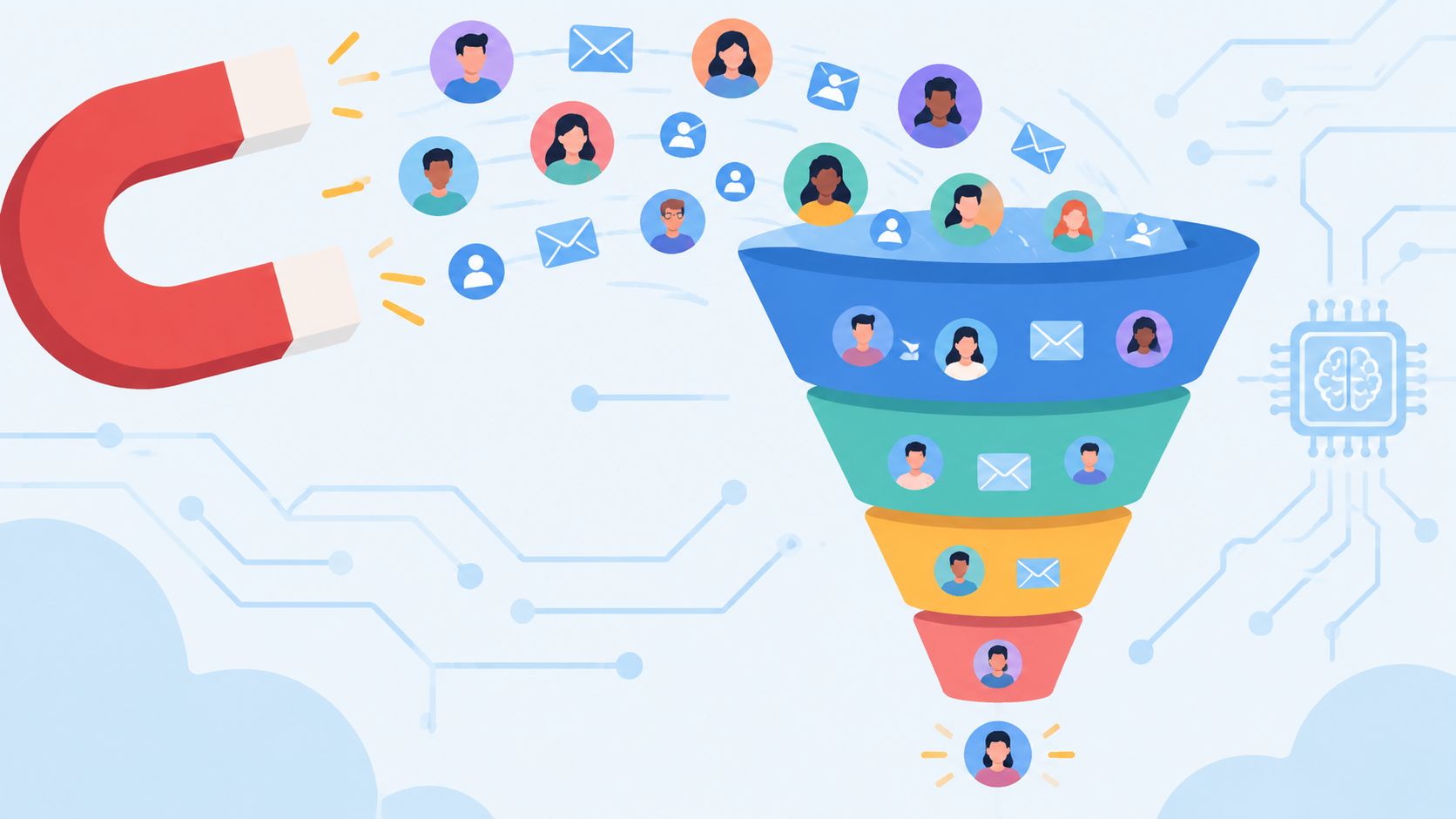
Choose one active or recent campaign and ask a single question: did this campaign produce the kind of response the business needs? Then look at the path from impression to click to landing page behavior to form fill or sale. Don't stop at top-of-funnel activity.
A useful starter checklist looks like this:
- Pick one conversion goal tied to business value
- Review channel-to-landing-page alignment so the promise in the ad matches the page
- Compare traffic quality instead of only comparing traffic volume
- Document one change you'll make based on the findings
- Set a benchmark before launching the next round
If you run an SMB
Start with your customer or product mix.
Pull sales records and look for patterns in what's most profitable, most repeatable, or easiest to deliver well. Then compare that against where those customers came from and what they bought first. You're looking for concentration, not complexity.
Try this sequence:
- List your highest-value customers or best-performing offers
- Identify the source, message, or referral path that brought them in
- Look for common traits in timing, need, industry, or purchase behavior
- Refocus budget and sales effort toward what already shows signs of fit
Benchmarking turns effort into progress
This part gets skipped too often. Teams make changes but never define what “better” means before they start. That's why benchmarking matters.
According to TSIA's explanation of data-driven benchmarking, benchmarking is a critical part of data-driven strategy because it helps organizations measure progress over time and stay aligned with changing business objectives. For an SMB or marketing team, that can be as simple as documenting today's baseline before adjusting a campaign, sales workflow, or offer.
You don't need perfect dashboards to begin. You need a reliable starting point, a decision you're willing to test, and the discipline to review the result objectively.
Small wins compound. A cleaner CRM field structure leads to better reporting. Better reporting leads to sharper budget decisions. Sharper decisions lead to better outcomes and more trust in the process. That's how a data-driven company is built in practice.
ReachLabs.ai helps businesses turn scattered marketing and customer data into practical strategy. If you need support connecting reporting, campaign analysis, and decision-making into a clearer growth system, explore ReachLabs.ai.