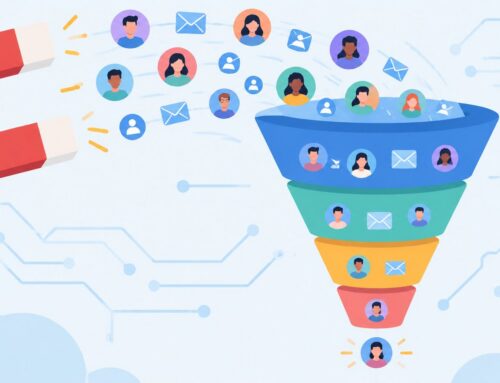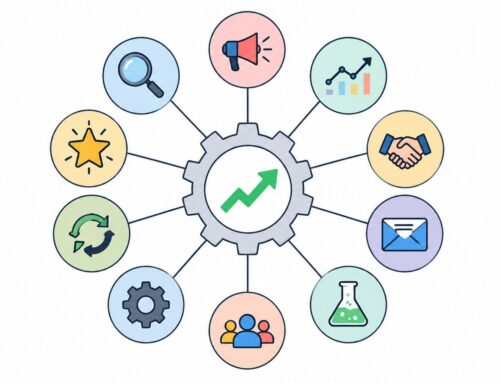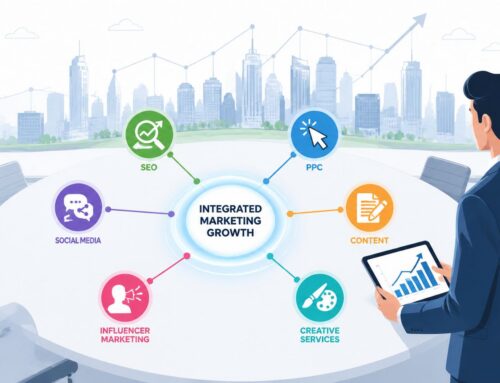
You shipped the guide. Design signed off. The copy is strong. Sales liked it. A week later, traffic is flat, shares are thin, and nobody outside your team seems to know the piece exists.
That's the point where many teams realize they don't have a content problem. They have a distribution problem.
I see this constantly with mid-market brands and lean internal teams. They invest serious time in research, writing, review cycles, and production, then treat promotion like a checklist item at the end. Publish the blog. Post once on LinkedIn. Maybe add it to the next newsletter. Then move on. That workflow feels efficient, but it burns budget because the asset never gets enough qualified exposure to justify what it cost to create.
The fix is not “be everywhere.” It's to treat content distribution channels like a portfolio. Each channel has a different profile for control, reach, labor, speed, and cost. Some compound over time. Some buy immediate attention. Some look cheap until you count staff hours. The right mix has to survive two tests at once. It has to work for the audience, and it has to make financial sense to a CFO.
Why Great Content Is Not Enough
A strong asset doesn't distribute itself.
One of the most common failure patterns in content marketing is what I'd call quiet underperformance. Nothing is obviously broken. The article is live. The landing page works. The social post went out. But the asset never builds momentum because nobody planned how it would move beyond the first touch.
The publish and pray trap
A team creates a substantial piece of content, then relies on a single lane to carry it. Usually that lane is the company blog, a newsletter send, or one organic social post. That approach assumes quality alone will create discovery. It rarely does.
The market data tells the same story. Marketers already distribute across multiple platforms instead of relying on one. Taboola's 2026 roundup, cited by Terakeet, reports that 90% of marketers share video on YouTube, 86% on Facebook, 79% on Instagram and LinkedIn, 54% on X, and 35% on TikTok. The same dataset says the most effective distribution channels in 2025 were in-person events (52%), webinars (51%), and email (42%) (Terakeet's content distribution roundup).
That matters because it changes how you should think about effort allocation. Publishing is just the starting point. The primary return comes from matching the content format to the channel where buyers focus their attention.
For teams refining the content side before they fix distribution, this guide on content marketing best practices is a useful companion. The two disciplines only work when they're planned together.
Distribution is where economics show up
Creation costs are visible. Distribution costs are often buried.
The writer hours are on a project board. The design invoice is easy to find. What gets missed is the opportunity cost of weak promotion. If a content asset doesn't travel, your effective cost per meaningful view goes up. If it doesn't create pipeline, your team has funded an internal exercise, not a market-facing asset.
Practical rule: If you can't explain how a piece will reach three distinct audience touchpoints before it's published, it's not ready.
That's why strong teams build distribution into the brief, not the wrap-up. They decide in advance which owned channels will carry the asset, where earned visibility is realistic, and whether paid support is justified. That single shift is what turns content from a library expense into a demand asset.
The Three Pillars of Content Distribution
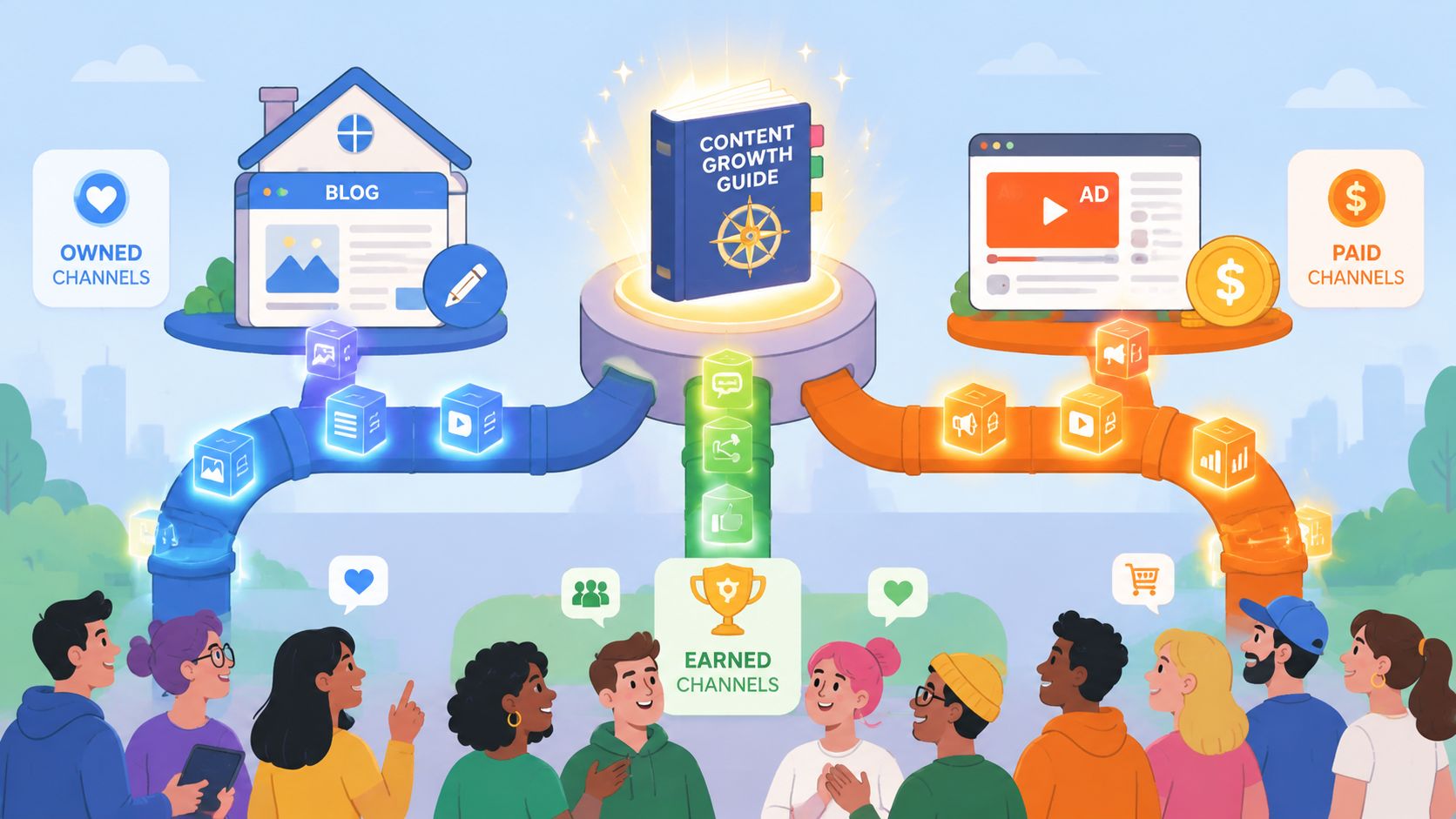
The cleanest way to organize content distribution channels is through three pillars: owned, earned, and paid.

The framework matters because each pillar gives you a different mix of control, reach, and cost. Mimeo's guidance explains: content distribution works best when treated as a three-layer system. Owned channels offer full control but limited inherent reach, earned channels can extend reach but reduce control, and paid channels deliver immediate visibility but require budget (Mimeo's content distribution strategy guide).
A good way to explain this internally is with a property analogy.
Owned media is the house you control
Owned media is your property. You decide the layout, the rules, the timing, and the message.
That includes your website, blog, email list, resource center, and branded social profiles. These channels are operationally attractive because the asset stays on infrastructure you manage. You can update the CTA, improve the page, retarget visitors, and reuse the content later.
The trade-off is obvious. Control is high, but built-in reach is limited unless you've already earned audience attention.
Typical owned channels include:
- Website and blog for durable search visibility and conversion paths
- Email programs for direct distribution to people who already know you
- Branded social profiles for repeat publishing and audience nurturing
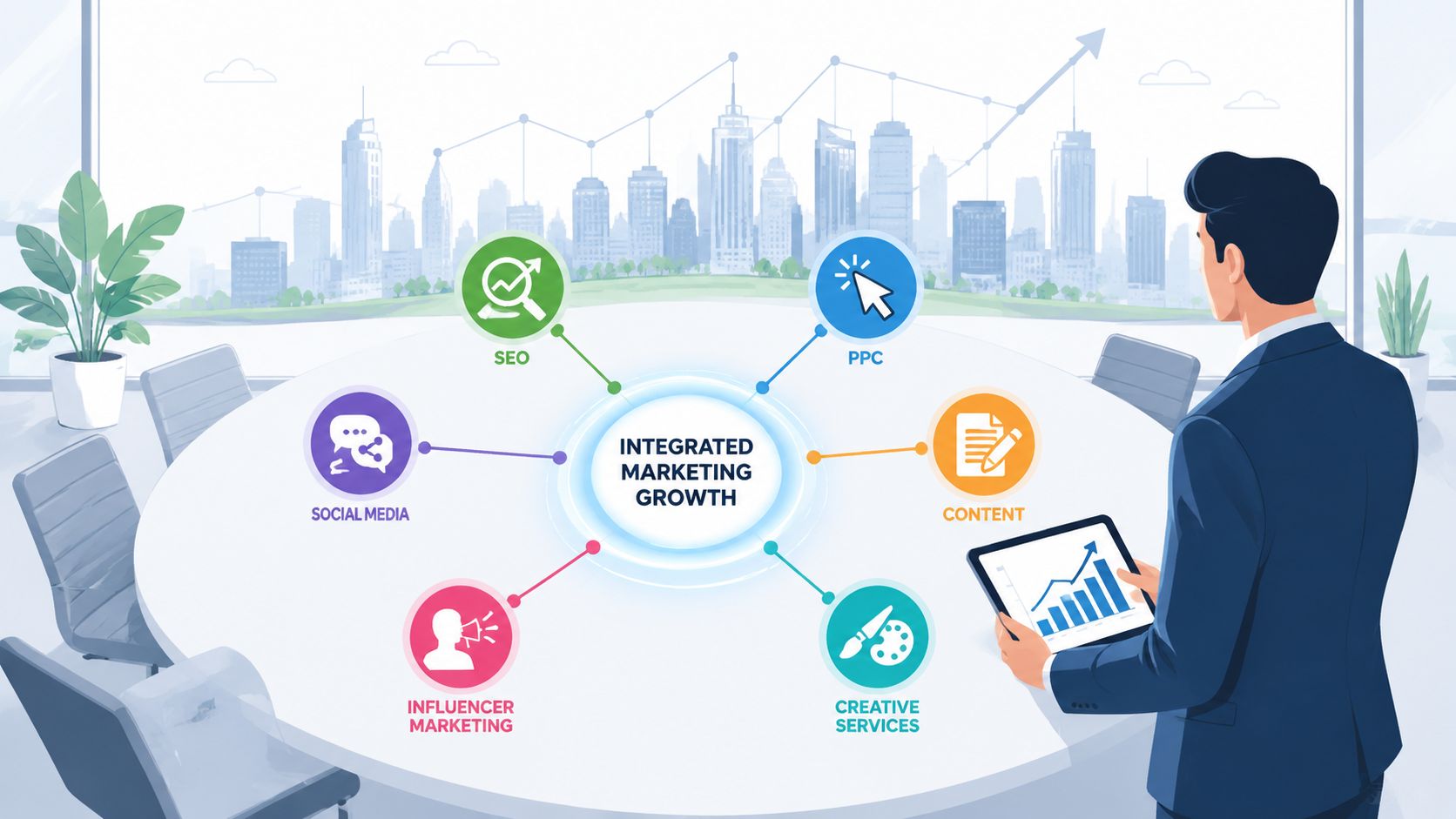
For teams planning a broader channel system, ReachLabs.ai's view on multi-channel marketing fits naturally here because distribution only gets stronger when channels support each other instead of operating in silos.
Earned media is the recommendation you didn't buy
Earned media is what happens when someone else carries your message because they believe it's worth sharing.
That might be media coverage, guest contributions, influencer mentions, backlinks, community discussion, podcast invitations, or search visibility created through useful content. You don't fully control the framing or timing, which makes earned media harder to forecast. But it often carries higher trust because the brand didn't pay for the endorsement directly.
Examples include:
- Media mentions driven by a strong point of view or original insight
- Community shares in niche groups, forums, or Slack spaces
- Organic search discovery when the content earns rankings and backlinks
Paid media is rented attention
Paid media is the billboard, the sponsored placement, the promoted post.
You use it when speed matters, when targeting precision matters, or when you need to amplify a proven asset beyond your existing audience. It's useful for launches, retargeting, event promotion, and bottom-funnel offers. It's less useful when the underlying content hasn't yet shown any audience-market fit.
Common paid channels include:
- Search ads for intent-heavy queries
- Paid social for audience targeting and remarketing
- Sponsored content or native placements for controlled amplification
A smart distribution plan doesn't ask one pillar to do everything. It assigns each pillar a role and judges it by that role.
That's the baseline mental model. Once teams understand the pillars, they can stop arguing about channels in the abstract and start comparing them as investment choices.
How to Select Your Ideal Channel Mix
The right channel mix isn't the set of platforms your competitors use most loudly. It's the mix that fits your objective, your audience behavior, your operating capacity, and the format of the content itself.

Teams often make this harder than it needs to be. The decision usually comes down to four filters.
Start with the business objective
If your goal is awareness, you need broader discovery channels. If your goal is lead capture, you need channels that can move people into a form fill, demo request, or email sequence. If your goal is sales enablement, you need channels your existing buyers already trust.
That sounds simple, but it cuts out a lot of waste. A webinar invite and a thought-leadership article might both be “content,” but they don't belong in the same distribution plan if they serve different business outcomes.
A practical way to frame it:
| Objective | Best-fit channel bias | Why |
|---|---|---|
| Brand visibility | Earned and selective paid | Faster external reach |
| Lead generation | Owned plus retargeting | Better conversion control |
| Nurture and retention | Owned | Lower dependency on platforms |
| Thought leadership | Earned plus owned | Credibility and depth |
Match channels to audience behavior
Many distribution plans either become rigorous or stay generic.
Contentful's guidance is the most useful operational rule here: segment audiences by behavior and demographic signals, then map each segment to the channel where it historically engages best, using analytics tools to continuously reallocate spend and effort toward the highest-performing placements (Contentful on content distribution).
If senior buyers engage with email and webinar invites, don't force short-form social to carry your whole plan. If practitioners save carousel posts on LinkedIn but ignore long email newsletters, adjust. Channel choice should follow evidence from audience behavior, not internal preference.
Here's the mistake I see often: teams choose channels based on ease of posting rather than likelihood of engagement. A channel is not “efficient” just because it's quick to publish into.
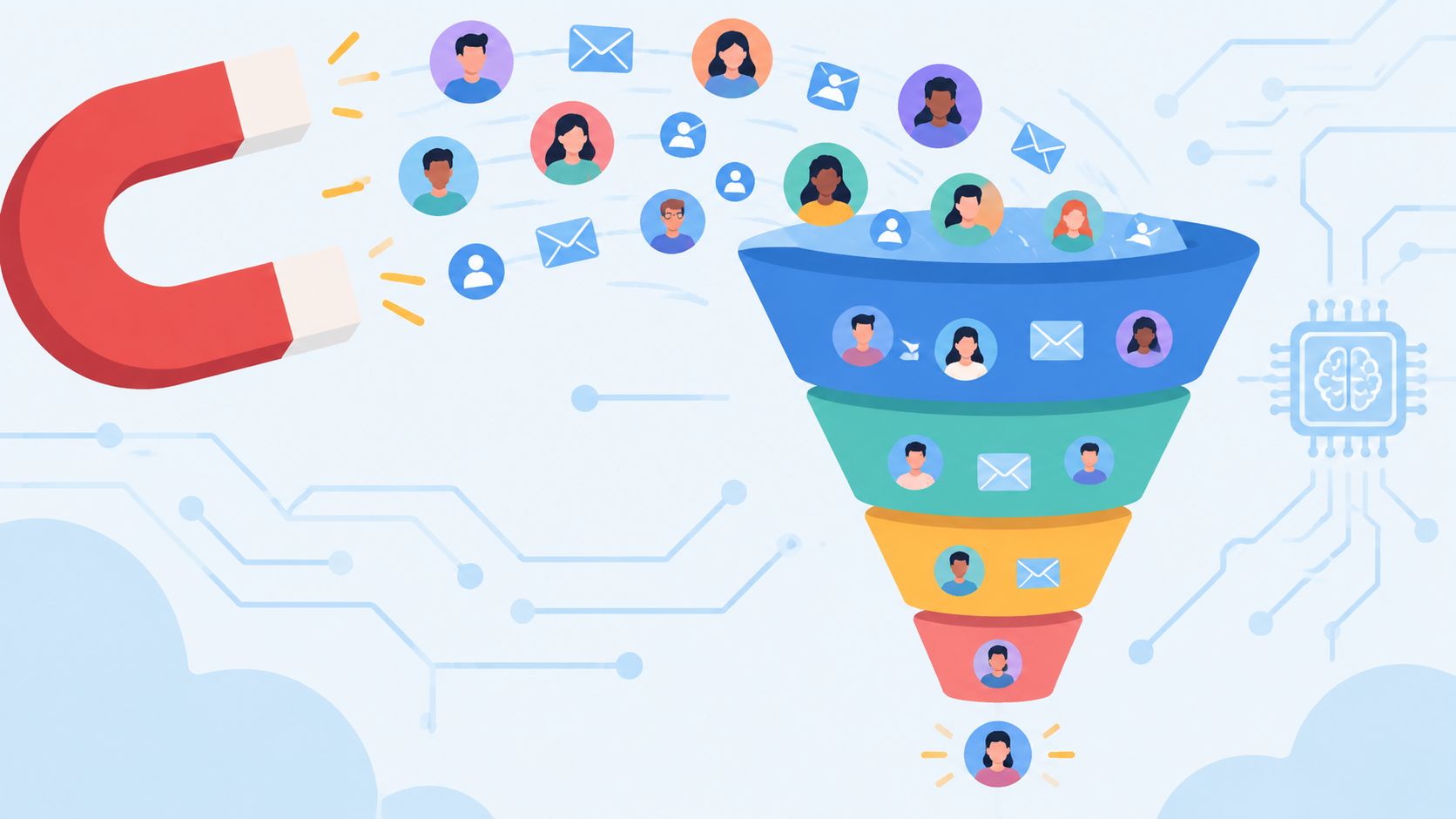
A short visual summary helps when you're aligning internal stakeholders:
Price the channel in labor, not just media spend
CFOs rarely object to distribution because they dislike content. They object because channel decisions are often justified with soft language and weak cost accounting.
A niche community may have no direct media cost, but it can still be expensive if it requires daily participation, moderation awareness, and custom formatting. Paid social may look expensive at first glance, but it may be operationally cheaper if it reduces manual effort and produces clearer attribution.
Decision rule: Every channel has two prices. The invoice price and the labor price. If you only track one, your model is wrong.
Use format fit as the tiebreaker
Some assets naturally travel better in certain environments. Detailed guides work well on owned channels and in nurture. Strong data points can travel into PR and community discussion. Product explainers may need paid support if the audience won't discover them organically.
When two channels look equally attractive, use format fit to break the tie. The closer the content is to the native expectations of the platform, the lower your friction to distribute and the higher your odds of sustained performance.
Actionable Tactics for Each Distribution Pillar
Many teams don't need more channel ideas. They need a tighter operating model inside each pillar.
The tactics below are the ones that hold up when you account for both performance and labor.
Owned media tactics that compound
Owned channels are where you should expect long-term asset value, not instant spikes.
- Build a destination page, not just a post. Put strong content on pages with clear internal links, one primary CTA, and a next-step path. A guide that sends readers nowhere wastes intent.
- Segment email by interest or lifecycle. A newsletter blast is often too broad. Smaller, intent-based sends usually produce cleaner signal because the offer matches why the subscriber joined.
- Create reusable distribution blocks. Pull quote cards, short summaries, FAQ sections, and webinar snippets should be created during production, not as an afterthought.
- Refresh proven assets. Update intros, examples, and CTAs on existing pages before creating yet another net-new piece.
Earned media tactics that don't waste hours
Earned channels can be efficient, but only if the outreach angle is sharp.
- Pitch a point of view, not a topic. Editors, newsletter writers, and podcast hosts respond better to a strong angle than to “we published a blog post.”
- Use communities to test language first. If a framing gets real discussion in a niche forum or Slack group, it's often worth promoting more broadly.
- Micro-contextualize every community post. Recent 2024 data from the Content Marketing Institute says 62% of marketers struggle with channel-specific adaptation, resulting in a 25% higher rate of content rejection by platform algorithms (Content Marketing Institute data referenced here). Generic cross-posting is one reason thoughtful content underperforms.
- Treat search visibility as earned distribution. If AI search and search summaries are affecting how discovery happens in your category, this overview of AI search impact on ecommerce is useful because it shows why format and source visibility now matter beyond standard ranking logic.
Paid media tactics that justify the budget
Paid channels work best when they amplify traction, not when they try to rescue weak content.
Try this sequence:
- Identify an asset with clear engagement signal. Good time on page, solid replies, strong email clicks, or strong completion rates.
- Build one audience-specific landing experience. Don't send every segment to the same page if their intent differs.
- Run retargeting before broad prospecting. People who already touched the asset are cheaper to move than cold audiences.
- Watch conversion quality, not just click volume. Cheap clicks that never progress create a false sense of efficiency.
Here's the operational trap teams miss. Community-driven distribution looks inexpensive because there's no direct media spend. But labor can erase that advantage fast. A 2025 Gartner study on B2B marketing efficiency found that 70% of strategies include community-based channels, 45% of firms fail to track the content maintenance burden, and that gap leads to a 30% drop in team productivity. If your community plan requires constant manual attention, that cost belongs in the channel model.
One practical setup is to manage execution through a stack that includes analytics, scheduling, CRM tagging, and one coordination layer. For teams that want outside execution support as one option among others, ReachLabs.ai handles distribution planning alongside content, paid, and influencer workflows.
Measuring the ROI of Your Distribution Efforts
If you want budget support for content distribution channels, don't report activity. Report economics.
The easiest way to lose credibility with finance or leadership is to lead with impressions, likes, or vague “visibility” wins without connecting them to pipeline movement, acquisition cost, or conversion quality.

Use different KPIs for each pillar
Owned, earned, and paid should not be measured as if they serve the same job.
- Owned media should be judged on durable traffic, subscriber growth, assisted conversions, and lead capture quality.
- Earned media should be judged on referral quality, branded search lift, backlinks, mentions, and downstream conversion behavior from referred visitors.
- Paid media should be judged on acquisition efficiency, audience quality, and whether the spend accelerates a proven path instead of masking a weak one.
This is where attribution discipline matters. If your reporting can't show how an earned mention assisted a later direct visit or email conversion, the channel will look weaker than it is. Teams that need a cleaner framework for this usually benefit from a more explicit cross-channel attribution model.
Focus on contribution, not vanity
Digital Applied's 2026 data is useful here because it highlights why some channels deserve more budget patience. The source reports 4,200% ROI for email marketing, and its traffic mix analysis shows organic search at 53%, social media at 18%, and email marketing at 14% (Digital Applied's 2026 content marketing data).
The takeaway isn't “email wins, so ignore everything else.” It's that owned and earned channels often create the most defensible returns because they keep working after the campaign window closes.
A simple measurement lens looks like this:
| Pillar | Leading indicator | Business indicator |
|---|---|---|
| Owned | Qualified visits, engaged sessions | Leads, demos, subscriber growth |
| Earned | Referral sessions, backlinks, mentions | Assisted conversions, brand lift |
| Paid | CTR, landing engagement, CPA | Pipeline contribution, customer acquisition |
Don't ask whether a channel generated traffic. Ask whether it generated the kind of traffic that moves.
For teams running creator or partner distribution, influencer reporting needs this same discipline. This guide on how to measure influencer marketing success is useful because it pushes measurement beyond surface engagement into business outcomes.
Smart Content Repurposing for Maximum Reach
Repurposing only works when you stop thinking of it as copy-paste distribution.

A strong content system uses a hub-and-spoke model. One primary asset does the heavy intellectual work. Then smaller channel-native assets carry the argument into different environments.
Start with a hub asset
Your hub is usually one of these:
- A detailed guide
- A webinar or workshop
- An original research summary
- A customer story with a clear lesson
That hub should contain more raw material than the final blog itself. Pull quotes, counterarguments, examples, data points, short clips, slides, and FAQs all become spokes later.
Build spokes that fit the platform
Take one long-form guide and turn it into assets with distinct jobs:
- LinkedIn carousel that summarizes the framework
- Short email segment for subscribers already interested in the topic
- Community post that frames one tactical problem and asks for feedback
- Short video clip that explains one practical takeaway
- Sales enablement one-pager for internal follow-up
- FAQ post answering the objections from comments or calls
- Webinar talking points for a live session on the same theme
The important part is adaptation. Recent 2024 data from the Content Marketing Institute shows 62% of marketers struggle with channel-specific adaptation, leading to a 25% higher rate of content rejection by platform algorithms. That's why “micro-contextualization” matters. A forum post should not sound like a newsletter intro. A LinkedIn carousel should not read like a blog conclusion.
Repurposing is not duplication. It's translation.
A practical workflow that keeps quality high
A workable production rhythm looks like this:
- Draft the hub first with extraction in mind
- Tag reusable sections during editing
- Assign each spoke a specific audience and CTA
- Rewrite the opening for the native platform
- Change length, tone, and framing before publishing
- Review comments and performance, then create the next spoke from what resonated
This approach protects quality and keeps teams from flooding channels with near-identical posts that users ignore and platforms downrank.
Building a Sustainable Distribution Engine
The biggest shift isn't tactical. It's financial.
Once you treat content distribution channels as a managed portfolio, the conversation changes. You stop asking, “Where should we post this?” and start asking, “Which mix of channels gives us the best combination of control, reach, and operating efficiency for this objective?”
That's the difference between campaign thinking and system thinking. Campaign thinking creates bursts of activity. System thinking creates repeatable demand, cleaner reporting, and a content program leadership can defend.
The teams that win here don't chase every platform. They build a durable owned base, earn attention where credibility matters, and use paid distribution with discipline. They track labor alongside media spend. They repurpose intelligently. They optimize based on contribution, not noise.
If your team is tired of publish-and-pray execution and needs a distribution model that stands up to both market reality and budget scrutiny, the next step is to build the operating system, not just another content calendar.
ReachLabs.ai helps brands design and run practical distribution systems across owned, earned, and paid channels, with strategy tied to real business outcomes. If you want a partner to map the right channel mix, tighten execution, and make the economics easier to defend, explore ReachLabs.ai.