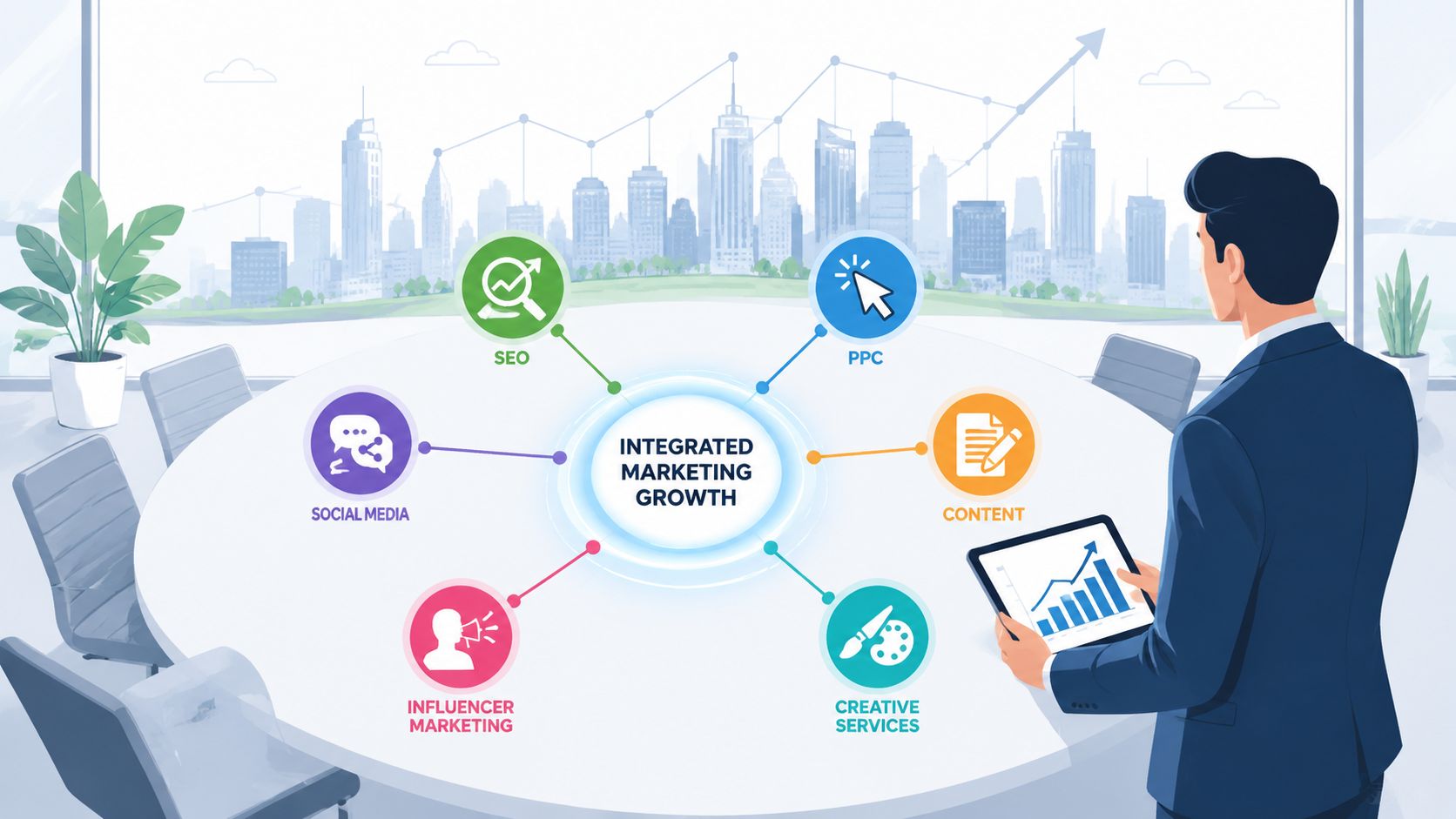
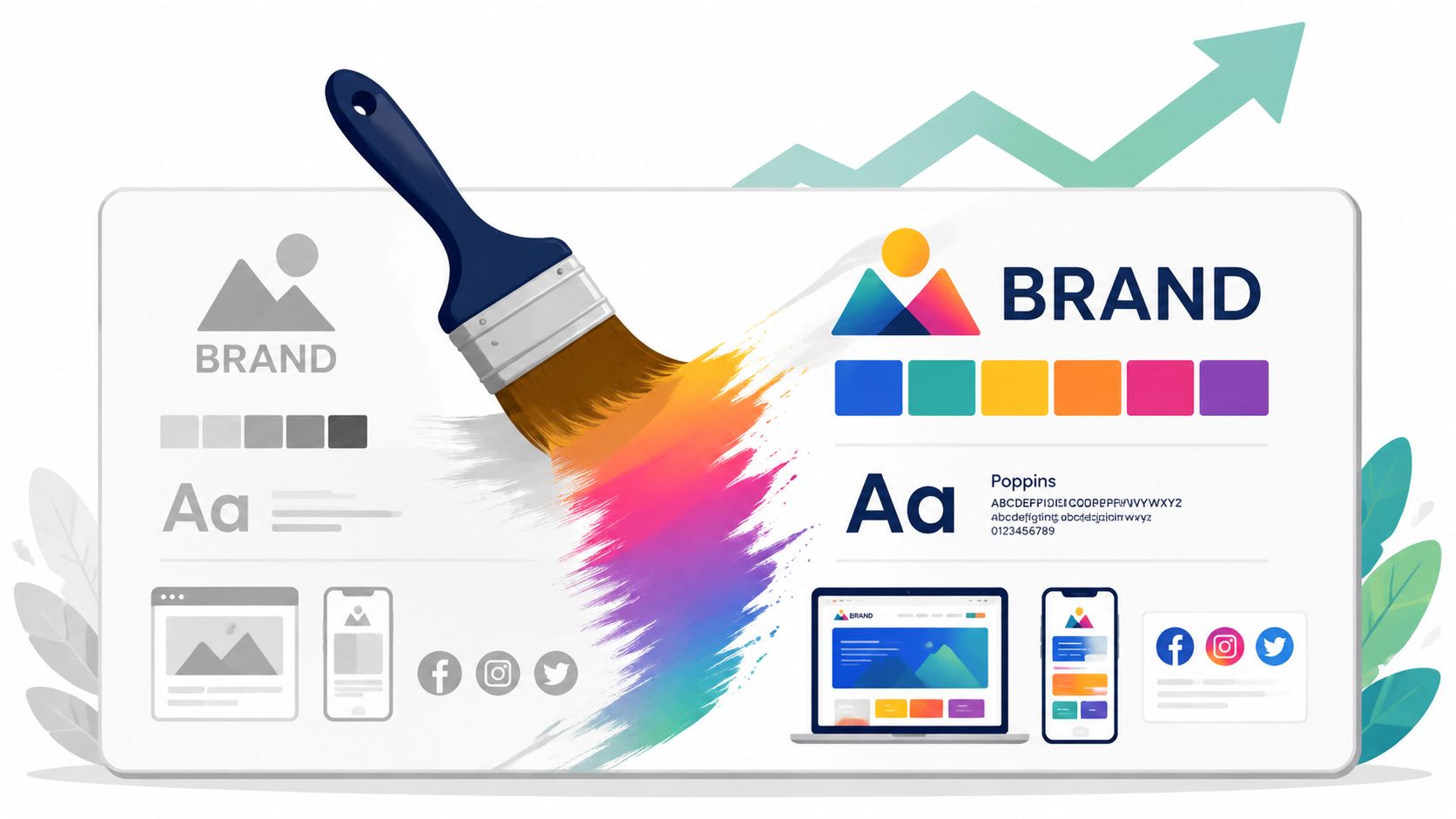
Your company has grown. The offer is sharper, the team is stronger, and the clients you want now are more discerning than the ones you served a few years ago. But your website still sounds like the old company. Your sales deck looks like it came from three different eras. Your social posts don't feel connected to what your sales team says in calls.
That's usually the moment leaders start asking about brand refresh services.
A refresh isn't the same as starting over. It's closer to renovating a strong house than tearing it down and rebuilding it. You keep the foundation that still holds value, then update the rooms people use. In brand terms, that often means refining messaging, modernizing design, tightening guidelines, and fixing inconsistent touchpoints without abandoning the equity you've already built.
Done well, a refresh gives the market a clearer story about who you are now. It also gives your team a more usable system for selling, creating, hiring, and communicating. If your brand no longer reflects the business you've become, that gap will show up in lead quality, conversion friction, recruiting, and internal confidence. A thoughtful refresh closes it.
For many companies, the essential work starts with clarifying the narrative before touching the visuals. That's why a strong brand storytelling framework often becomes the backbone of a refresh. Design can sharpen a message, but it can't invent one.
Is Your Brand Still Telling the Right Story
A business can look healthy on paper yet feel out of sync with its customers.
You see it in ordinary moments. A prospect lands on the homepage and assumes you are the cheaper option, even though your firm now wins on expertise and results. A candidate interviews with your team and hears a sharper vision than anything on your careers page. A sales rep builds a custom deck from old slides because the current brand materials do not support the conversation they need to have.
That gap is expensive. It affects lead quality, slows sales conversations, weakens pricing power, and creates avoidable rework across marketing, sales, and hiring.
Brand refresh services address that gap by updating how the business is presented without discarding the recognition and trust you have already built. The point is not to make the brand look newer for its own sake. The point is to make the brand easier to sell, easier to understand, and harder to confuse with an earlier version of the company.
Refresh versus rebuild
Leaders often ask whether they need a refresh or a full rebrand. The practical difference comes down to how much has changed in the business itself.
- A refresh updates the expression of the brand. It improves messaging, design, structure, and consistency so the brand reflects the company you are today.
- A rebrand changes the identity. It usually follows a bigger shift in strategy, audience, offer, naming, or company direction.
That distinction matters because the cost, risk, and internal lift are different. A refresh usually protects more existing brand equity and creates less disruption for sales teams, customers, and internal operations. A rebrand asks the business to absorb a bigger change all at once.
What a refresh is really for
Companies rarely invest in brand refresh services because they are tired of their logo. They invest because the brand is no longer doing its job.
In practice, a good refresh improves performance in a few specific areas:
- Messaging clarity: Buyers understand what you do, who it is for, and why it is worth paying attention to.
- Positioning strength: The brand supports the level of client, talent, or partner you want to attract next.
- Consistency across touchpoints: Your website, proposals, social content, and sales materials sound and look like the same company.
- Internal usability: Teams can build assets faster because the rules are clear and the story is defined.
I usually tell clients to treat the brand like a sales system, not a style exercise. If the story is unclear, every downstream asset gets harder to produce and easier to misinterpret. That is why a clear brand storytelling framework often does more for ROI than a visual update alone.
A strong refresh keeps what still works, fixes what creates friction, and gives the business a brand that can support the next stage of growth.
The Telltale Signs Your Brand Needs a Refresh
Most leaders feel the problem before they can name it. Something is off. The business is moving, but the brand isn't keeping pace.
That instinct is useful, but it isn't enough to justify a budget or align stakeholders. A refresh becomes easier to defend when you treat it as a response to business signals, not a design preference.

Signals that deserve attention
Some signs are external. Others come from inside the company.
- Customer confusion: Prospects don't quickly understand your offer, your category, or what makes you different.
- Market drift: Competitors look more current, sound more focused, or present a clearer point of view.
- Internal inconsistency: Sales, marketing, recruiting, and leadership all describe the company differently.
- Growth friction: Leads come in, but they're not the right fit, or they need too much education before a sale can happen.
- Content strain: The team spends too much time reinventing decks, landing pages, ads, and social assets.
- Reputation lag: The business has evolved, but your public-facing brand still reflects an earlier stage.
A useful way to test this is to review your last few months of customer-facing assets side by side. Homepage, sales deck, LinkedIn posts, proposal template, onboarding material, event booth, email signatures. If they tell different stories, the brand system isn't doing its job.
Audit first, redesign second
Many companies get the sequence wrong. They jump to creative exploration before they've defined the problem.
A stronger approach starts with evidence. As outlined in Design Bridge's guidance on brand refresh strategy, a refresh should be treated as a controlled change-management project that begins with a brand audit, validates the degree of change through research, translates findings into design concepts, and measures results with pre- and post-KPIs across brand-funnel and business outcomes.
That audit doesn't have to be academic. It does need to be honest.
A practical review often includes:
- Asset review: What materials exist, and where are the inconsistencies?
- Message review: What claims repeat, and where do they conflict?
- Stakeholder input: What do leaders, sales teams, and customer-facing staff believe the brand stands for?
- Audience feedback: What do customers say when they describe you?
If you need a structured place to start, this guide to what a brand audit is is useful because it frames the audit as a decision tool, not just a content inventory.
Practical rule: If the brand problem can't be described clearly, the creative brief isn't ready.
When a refresh is tied to specific signs like confusion, inconsistency, or market mismatch, it stops sounding subjective. It becomes a business response to visible drag.
What Brand Refresh Services Actually Include
Many buyers hear “brand refresh” and picture a logo file, a font choice, and a new color palette. That's only a slice of the work.
Good brand refresh services combine strategy, design, and implementation. The deliverables matter, but the point of those deliverables is to help your business communicate more clearly and operate with less friction.

Strategic and messaging work
This is the layer that determines whether the refresh improves positioning.
It often includes refining your value proposition, clarifying audience segments, tightening your brand story, and defining a more disciplined tone of voice. If your current materials sound generic, overexplained, or inconsistent, this is usually why.
A few examples of what teams often update here:
- Positioning language: How you describe your category, your value, and your place in the market
- Core messaging: Homepage copy points, elevator pitch language, sales narrative, proof themes
- Voice rules: Whether the brand should sound formal, direct, technical, warm, challenger-led, or consultative
This is also where content planning intersects with brand execution. If your team is refreshing executive presence or social visibility as part of the brand shift, a practical LinkedIn posting strategy can help translate voice guidelines into repeatable publishing habits.
Visual identity updates
Visual work is the first thing noticed, but it should follow strategy.
A refresh may include a refined logo, updated typography, stronger color usage, revised imagery direction, iconography, layout patterns, or a cleaner design system for digital and print assets. Sometimes the logo barely changes. Sometimes it changes just enough to remove dated details and improve scalability.
A smart visual update does two things at once. It makes the brand feel more current, and it makes the system easier for teams to use repeatedly without improvising.
If the new identity looks better but still leaves teams guessing how to apply it, the refresh isn't finished.
Guidelines, systems, and channel adaptation
This is the piece companies underestimate most.
Recent guidance increasingly treats refresh work as a cross-channel operating change, including updates tied to SEO, voice, generative search, DAM governance, and phased rollout, as described in Phase 3's planning guidance for a successful brand refresh. In practice, that means the service isn't just “new branding.” It's also deciding how that branding lives across your website, social channels, sales materials, templates, and internal workflows.
A more complete scope often includes:
| Area | What gets updated | Why it matters |
|---|---|---|
| Website | Page messaging, UI patterns, visual hierarchy | Buyers form fast judgments here |
| Sales enablement | Decks, one-pagers, proposal templates | Sales teams need consistency under pressure |
| Social presence | Profile language, graphics, post formats | Brand tone gets tested in public |
| Guidelines | Rules for logos, color, voice, imagery | Teams need usable guardrails |
| Asset storage | Shared files, approved templates, source assets | Prevents brand drift after launch |
Some providers, including ReachLabs.ai, combine brand identity work with creative services and website design. That can be useful when the goal is to align message and execution across channels instead of handing the strategy to separate vendors.
The Brand Refresh Process From Start to Finish
A refresh works best when it's managed like a project with decisions, checkpoints, and clear ownership. Creative quality matters, but process is what keeps the work from becoming subjective, delayed, or disconnected from business goals.
This visual lays out the sequence clearly.

A useful framework comes from a broader shift in branding practice. Bynder's overview of rebranding statistics and methodology describes a six-step structure that moves from defining aims to strategy, guidelines, feedback, implementation, and launch. That matters because a refresh is no longer treated as a visual exercise alone. It's a multi-touchpoint change effort.
Discovery and audit
The first phase answers a simple question. What should change, and what should stay?
This work usually includes stakeholder interviews, asset review, competitor scanning, message analysis, and audience feedback. The strongest teams also identify which parts of the current brand still carry trust or recognition so those assets aren't discarded carelessly.
Clients are most helpful here when they bring unfiltered inputs. Sales call notes, customer objections, recruiter feedback, proposal language, screenshots of old assets, and examples of competitor positioning are all more useful than vague opinions like “make it pop.”
Strategy and concept development
Once the team understands the gaps, the refresh moves into direction-setting.
That usually means choosing a sharper positioning path, defining messaging priorities, and translating those decisions into early creative routes. At this stage, the best feedback is comparative and business-focused. Which concept better supports the buyer you want? Which one gives sales clearer language? Which one creates fewer problems across channels?
A short video can help teams align on what a real refresh involves before they debate design options.
Design, rollout, and measurement
After direction is approved, the team builds the working system. That includes final identity assets, templates, usage rules, and rollout priorities.
The implementation phase is where many refreshes either gain traction or stall. Teams need more than final files. They need launch sequencing, internal education, asset migration, and a plan for measuring whether the new brand is improving awareness, trust, engagement, lead quality, or sales enablement.
A typical handoff often covers:
- Core assets: Logos, color specs, typography, imagery direction, social templates
- Messaging tools: Tagline options, proof points, voice rules, homepage copy framework
- Guidelines: Practical usage rules for internal and external teams
- Launch plan: Which channels update first, who owns them, and what must be retired
- Measurement plan: The KPIs leadership will watch after launch
Don't judge a refresh on reveal day alone. Judge it when the sales team uses it, the website reflects it, and the market starts responding to it consistently.
Budgeting for a Brand Refresh and Measuring ROI
A familiar pattern plays out in leadership meetings. The CEO wants the brand to look sharper. Sales wants better materials. Finance asks the right question first: what are we buying, and how will we know it paid off?
That is the right conversation.
A brand refresh budget should be built like any other growth investment. Start with the business problem. If the current brand is creating confusion, slowing down content production, weakening close rates, or making the company look smaller than it is, the cost of doing nothing belongs in the discussion too.
Earlier benchmarks in this article noted that refreshes usually sit well below the cost and timeline of a full rebrand. The more useful question is what drives the range.
| Cost driver | Lower scope refresh | Higher scope refresh |
|---|---|---|
| Brand depth | Visual cleanup and message refinement | Positioning review, architecture decisions, and identity updates |
| Touchpoints | Website and core sales assets | Full rollout across web, social, email, decks, events, packaging, and signage |
| Stakeholders | Small leadership group | Cross-functional team with multiple approval layers |
| Implementation | Asset delivery only | Migration, governance, training, and launch support |
Scope discipline matters. A lower-cost refresh can still perform well if the company is clear about what it needs. Problems start when leadership buys design files but expects organization-wide adoption. If the website changes and the sales deck, proposal templates, recruiting materials, and LinkedIn presence stay fragmented, the business absorbs the cost twice. Once in agency fees, and again in wasted time and mixed signals.
I usually advise clients to separate the budget into two buckets: strategy and system rollout. Strategy covers the decisions. Rollout covers the work of getting those decisions into the market. Many teams underfund the second bucket, even though that is where ROI is protected.
How to build an ROI case leadership will accept
The strongest case is tied to operational and commercial outcomes, not taste.
Track a refresh against measures such as:
- Lead quality: Are more qualified prospects entering the pipeline after the new positioning and messaging go live?
- Conversion efficiency: Are sales conversations getting shorter because the offer is easier to understand?
- Win-rate support: Do prospects show stronger confidence in late-stage deals because the brand now matches the price point and promise?
- Content production speed: Can marketing and sales create materials faster because templates, voice rules, and asset libraries are clearer?
- Team morale: Do internal teams feel more confident presenting the company?
- Hiring and recruiting: Does the brand attract candidates who match the level of talent the business wants next?
Some returns are indirect but still measurable. Fewer one-off design requests. Less internal debate over messaging. Better consistency across channels. Those savings rarely get celebrated, but they affect output every week.
For growth-stage teams, brand expression also shapes long-term recall outside formal campaigns. A good example is this piece on branded meme content strategy, which shows how repeated, recognizable creative cues can build familiarity over time.
Measure before and after, or the refresh will be hard to defend
Set a baseline before any creative work starts. Review the previous quarter or two and record the metrics leadership already trusts. Pipeline quality, close rate, website conversion rate, proposal-to-win rate, time-to-publish for campaigns, employee advocacy participation, and recruiting response rates are all fair game if they connect to the refresh scope.
Then review performance at fixed intervals after launch. Thirty days is useful for implementation issues. Ninety days is better for early market response. Six months gives a clearer read on whether the refresh is improving how the business attracts, converts, and equips people.
If leadership needs help evaluating partners before committing budget, this guide on how to choose a marketing agency is a practical place to start.
The best ROI stories rarely come from one dramatic spike. They come from less friction across the whole revenue system.
That is the business case. A strong refresh helps the right buyers trust you faster, helps teams work faster, and helps the company compete at the level it is already trying to reach.
How to Choose the Right Brand Refresh Partner
A design vendor can make things look newer. A real partner can help the business make better decisions about what to change, what to keep, and how to roll the update out without chaos.
That distinction matters more than portfolio style.
Questions that reveal the difference
When you're evaluating providers, ask questions that expose process and judgment, not just taste.
- How do you decide the degree of change? You want to hear about audits, research inputs, and business goals, not instant opinions.
- What do you preserve from the current brand? Strong partners know that continuity can be as valuable as novelty.
- How do you handle rollout across channels? This separates strategic operators from presentation-only shops.
- How will success be measured? If they can't discuss business and brand KPIs, the engagement may stop at visuals.
- Who needs to be involved on our side? Good partners understand stakeholder management and approval reality.
A provider should also be able to show how they manage conflicting feedback. Most refreshes don't fail because of weak aesthetics. They fail because too many people react to surface-level preferences without a shared decision framework.
Red flags worth noticing
Implementation quality often determines whether a refresh gains traction. Guidance for larger organizations recommends using a DAM system to retire legacy assets, distribute updated files, enforce compliance across channels, and roll changes out in stages rather than all at once, according to Bynder's brand refresh process guidance.
That makes a few red flags easy to spot:
- Visual-first, strategy-later: They talk almost entirely about logos and moodboards.
- No rollout discipline: They hand off files but don't address channel migration or asset retirement.
- One-size-fits-all process: They apply the same package to every company regardless of complexity.
- No governance thinking: They don't ask how teams access templates, store assets, or maintain consistency.
The right partner doesn't just ask what you want the brand to look like. They ask what the business needs the brand to do.
If you're comparing agencies, this guide on how to choose a marketing agency is a useful companion because it helps frame the difference between execution capacity and strategic fit.
The strongest partner will challenge assumptions, narrow scope where needed, and protect the work from becoming an expensive style debate.
Brand Refresh Examples Before and After
The easiest way to understand the value of brand refresh services is to look at common business situations where the old brand no longer supports the next stage of growth.
These aren't published case studies with hard numbers. They're realistic patterns that show how the work changes business outcomes.

Example one, the firm that outgrew its original positioning
A B2B service company started as a scrappy specialist. Over time it expanded its capabilities, raised the sophistication of its delivery, and began competing for larger accounts. The problem was that its brand still looked and sounded like a small tactical vendor.
The refresh didn't require a new name or a complete identity reset. It required sharper positioning, more confident website messaging, stronger proposal templates, and a cleaner visual system that matched the quality of the work. After launch, the company was better able to present itself at the level it was already operating.
The business impact was straightforward. Sales conversations started from a stronger baseline because prospects understood the offer faster and saw a brand that matched the team's actual maturity.
Example two, the company with internal brand chaos
Another common situation comes from growth by accumulation. Different teams build their own slides, social graphics, one-pagers, landing pages, and email visuals over time. Nothing is technically unusable, but nothing feels unified either.
In that case, the refresh focuses less on dramatic design and more on systemization. The company updates its visual language, rewrites key messages, and creates practical guidelines with templates the whole team can use. Suddenly, marketing doesn't have to approve every minor asset because people know the rules.
This kind of refresh often improves team morale more than leaders expect. People do better work when the brand gives them clear tools instead of vague expectations.
Example three, the business entering a new market
A company can also need a refresh when its audience changes.
A business moving upstream, entering a new category, or targeting a more discerning buyer usually finds that the old brand sends the wrong signals. The offer may be excellent, but the presentation still attracts price-sensitive or poorly matched prospects.
Here, the refresh acts like market preparation. Messaging gets more precise. Design becomes more credible. The website and sales collateral start speaking to the new audience's priorities instead of the old audience's assumptions.
A before-and-after refresh is rarely about looking prettier. It's about making the right buyer feel, “This company understands what I need.”
That's the key difference. The “after” version of the brand doesn't just look newer. It helps the business qualify, persuade, and scale more effectively.
Your Brand Refresh Commissioning Checklist
If you're preparing to commission brand refresh services, the most useful thing you can do before contacting a partner is get your internal house in order. Better preparation shortens decision cycles and produces better work.
What to prepare internally
Start with the business case.
- Define the problem clearly: Is the issue confusion, inconsistency, poor-fit leads, outdated presentation, or a shift in market position?
- Set success criteria: Decide what would make the refresh successful for leadership, sales, marketing, and recruiting.
- Choose baseline metrics: Use the KPIs your team already trusts. Brand-funnel signals and business outcomes both matter.
- List affected channels: Website, social, decks, packaging, proposals, email templates, internal docs, signage, recruiting materials.
Then gather the raw material a partner will need.
- Current assets: Logos, decks, templates, copy docs, campaign samples, website pages, social examples
- Internal perspectives: Notes from leadership, sales, support, recruiting, and customer success
- Customer input: Testimonials, objections, interview notes, win-loss themes, recurring questions
- Competitive context: A simple set of competitor examples that show where your brand feels out of step
What to decide before kickoff
Not every decision needs to be final, but a few do.
| Decision | Why it matters |
|---|---|
| Budget range | Prevents unrealistic scope discussions |
| Stakeholders | Avoids late-stage approval problems |
| Decision maker | Keeps feedback from becoming a committee maze |
| Priority channels | Helps sequence rollout intelligently |
| Non-negotiables | Protects equity you don't want to lose |
One more recommendation matters here. Decide early whether you want a refresh partner to handle only strategy and creative, or whether you also need implementation support. Many teams underestimate the amount of coordination required after approval.
The commissioning phase should answer one question above all: what business change should the refreshed brand make easier?
If you can answer that cleanly, the project starts on solid ground. If you can't, pause and sharpen the brief before spending money on creative exploration.
A well-run refresh doesn't just produce new assets. It gives your company a clearer signal in the market and a more usable system inside the business.
If your brand no longer reflects the company you've become, ReachLabs.ai can help you assess the gap, clarify the business case, and translate that into a practical refresh plan across messaging, creative, and digital touchpoints.