

In today’s crowded digital marketplace, simply shouting about your product isn’t enough to capture attention. Sustainable growth is built on providing genuine value, and that’s the core principle of content marketing. This isn’t just about publishing blog posts or social media updates; it’s a strategic framework for attracting, engaging, and retaining a clearly defined audience. By consistently creating and distributing relevant, helpful information, you cultivate trust and establish your brand as a credible authority.
The true benefits of content marketing extend far beyond surface-level metrics, fundamentally changing how your business connects with customers and achieves measurable outcomes. This strategy fuels nearly every part of your marketing funnel, from initial awareness to long-term loyalty. If you’re ready to move beyond temporary campaigns and build a resilient engine for growth, understanding these advantages is the first step.
This article provides a comprehensive breakdown of the eight most impactful benefits this approach offers. We will explore each one with actionable insights and practical examples, showing you exactly how to transform your content from a simple tactic into a cornerstone of your business strategy. Let’s dive into how content marketing can revolutionize your results.
1. Increased Brand Awareness and Visibility
One of the most significant benefits of content marketing is its power to elevate brand awareness and expand your digital footprint. By consistently creating and distributing valuable content, you establish multiple touchpoints where potential customers can discover your brand. Instead of directly pushing a product, you offer solutions, entertainment, or education, which builds familiarity and trust over time. This approach positions your brand as a helpful authority in its niche, making it more memorable when a consumer is ready to make a purchase decision.
This strategy works because it places your brand into the natural discovery process of your target audience. When someone searches for a solution to a problem your business solves, your blog post, video, or infographic can be the first thing they find. This initial positive interaction creates a foundation for a lasting customer relationship.
How to Implement This Strategy
- Define Your Content Pillars: Identify three to five core topics that are central to your brand’s expertise and resonate with your target audience. All content should align with these pillars to ensure consistency.
- Establish a Consistent Voice and Visual Identity: Your brand’s personality should be unmistakable. Use a consistent tone, color palette, and logo placement across all content formats, from blog posts to social media graphics.
- Leverage Multiple Channels: Don’t just publish content on your blog. Repurpose and cross-promote it on social media platforms, email newsletters, and video channels like YouTube or TikTok to maximize reach.
Real-World Example: Red Bull
Red Bull has mastered brand awareness not by advertising its energy drink, but by becoming a media powerhouse. The Red Bull Media House creates and sponsors high-octane content centered around extreme sports and adventure. By producing feature films, documentaries, and viral video clips, they associate their brand with energy, excitement, and pushing human limits. Their content generates billions of views, ensuring the Red Bull brand is constantly visible to a global audience without a direct sales pitch.
2. Lead Generation and Customer Acquisition
Another of the core benefits of content marketing is its ability to act as a powerful engine for lead generation and customer acquisition. Instead of interrupting prospects with ads, you attract them by offering valuable solutions to their problems. This strategy hinges on creating high-value content that addresses specific pain points, then placing it behind a simple form to capture contact information. By providing value upfront, you earn the right to market to them directly, guiding them through the sales funnel with targeted nurturing campaigns.

This method transforms your website from a static brochure into a dynamic lead-capturing tool. By offering resources like ebooks, webinars, or templates, you create a fair exchange: your expertise for their contact details. This process not only generates leads but also ensures they are more qualified, as they have actively shown interest in the solutions you provide. To dive deeper into these strategies, you can learn more about inbound marketing and lead generation.
How to Implement This Strategy
- Create Compelling Lead Magnets: Develop high-value resources like whitepapers, case studies, or free tools that solve a very specific problem for your target audience. The more niche and useful the resource, the higher the conversion rate.
- Align Content with Funnel Stages: Map your content to different stages of the buyer’s journey. Use top-of-funnel blog posts to attract visitors and mid-funnel lead magnets (like ebooks) to convert them into leads.
- Use Clear Calls-to-Action (CTAs): Every piece of content should guide the user toward the next step. Use clear, action-oriented language in your CTAs and place them strategically within blog posts, on landing pages, and in videos.
Real-World Example: HubSpot
HubSpot is a master of content-driven lead generation. Instead of just writing about marketing, they offer a suite of free tools, including a CRM, a website grader, and email marketing software. These tools act as powerful lead magnets, attracting hundreds of thousands of users who provide their contact information in exchange for access. HubSpot then nurtures these leads with educational content, webinars, and personalized demos, effectively turning free tool users into paying customers for their premium software suite.
3. Enhanced Search Engine Optimization (SEO)
A cornerstone among the benefits of content marketing is its profound impact on Search Engine Optimization (SEO). High-quality content is the fuel that search engines like Google run on. By consistently publishing relevant, authoritative, and valuable information, you provide search engines with fresh material to index, which signals that your website is an active and credible resource. This process directly improves your site’s authority and helps you rank higher for the keywords that matter most to your business, driving sustained organic traffic.

Each blog post, guide, or case study you create acts as a new opportunity to rank on search engine results pages (SERPs). This content also serves as a natural magnet for backlinks from other reputable sites, which is one of the most powerful ranking factors. Ultimately, a strategic content plan transforms your website from a simple digital brochure into a dynamic information hub that Google rewards with greater visibility.
How to Implement This Strategy
- Build Topic Clusters: Structure your content around central “pillar” pages that cover a broad topic, supported by multiple “cluster” articles that delve into more specific subtopics. This shows search engines your depth of expertise.
- Focus on Search Intent: Go beyond keywords and understand why a user is searching for a particular term. Create content that directly answers their question or solves their problem, whether they are looking for information, comparing products, or ready to buy.
- Optimize for On-Page SEO: Ensure every piece of content includes target keywords in the title, meta description, headers, and body copy. Also, optimize images with descriptive alt text and use internal links to guide users and search crawlers through your site.
Real-World Example: Backlinko
Brian Dean’s SEO training website, Backlinko, is a prime example of content-driven SEO dominance. Instead of publishing content daily, Dean focuses on creating extremely comprehensive, data-backed guides and “skyscraper” posts on highly competitive SEO topics. These definitive resources, like his guide on “Google’s 200 Ranking Factors,” naturally attract thousands of backlinks and consistently rank at the top of search results for high-value keywords. This strategy has generated millions of organic visits and cemented Backlinko’s reputation as a leading authority in the SEO industry.
4. Thought Leadership and Industry Authority
Another one of the core benefits of content marketing is its ability to establish your brand as a credible, authoritative voice in your industry. By consistently publishing insightful, high-quality content, you move beyond just selling a product and become a trusted source of information and expertise. This strategy involves sharing unique perspectives, original data, and deep knowledge that educates and informs your audience, positioning your brand as the go-to resource in its field.
This approach builds immense trust because you are providing value long before asking for a sale. When customers and peers see you as an expert, they are more likely to turn to you for solutions, recommend your services, and trust your guidance. This authority translates into higher-quality leads, media opportunities, and a powerful competitive advantage that is difficult to replicate.
How to Implement This Strategy
- Publish Original Research: Conduct your own surveys, studies, or data analysis and share the findings. This proprietary data is highly linkable and positions you as a primary source of industry information.
- Take a Defensible Stance: Don’t be afraid to voice a strong, well-reasoned opinion on industry trends or controversies. This shows confidence and can spark meaningful conversations that elevate your profile.
- Contribute Beyond Your Own Channels: Write guest posts for respected industry publications, appear on relevant podcasts, and speak at conferences to broaden your reach and solidify your expert status.
Real-World Example: Rand Fishkin
Rand Fishkin, co-founder of Moz and SparkToro, built his reputation as a thought leader in the SEO industry through radical transparency and deep expertise. His “Whiteboard Friday” video series broke down complex SEO concepts into digestible lessons, providing immense value for free. By openly sharing his knowledge, business insights, and even his company’s struggles, Fishkin established himself and Moz as a trusted, authoritative resource. This content-first approach was instrumental in building Moz into a multi-million dollar software company.
5. Cost-Effective Long-Term Marketing Investment
One of the most compelling benefits of content marketing is its exceptional return on investment as a long-term asset. Unlike paid advertising, which ceases to deliver results the moment you stop paying, high-quality content functions as a digital asset that appreciates in value over time. An evergreen blog post or a comprehensive guide can continue to attract, engage, and convert customers for months or even years, making the initial investment remarkably efficient. This compounding effect means that as your content library grows, so does your passive stream of traffic and leads.
The infographic below highlights key statistics that demonstrate the long-term financial viability of content marketing.
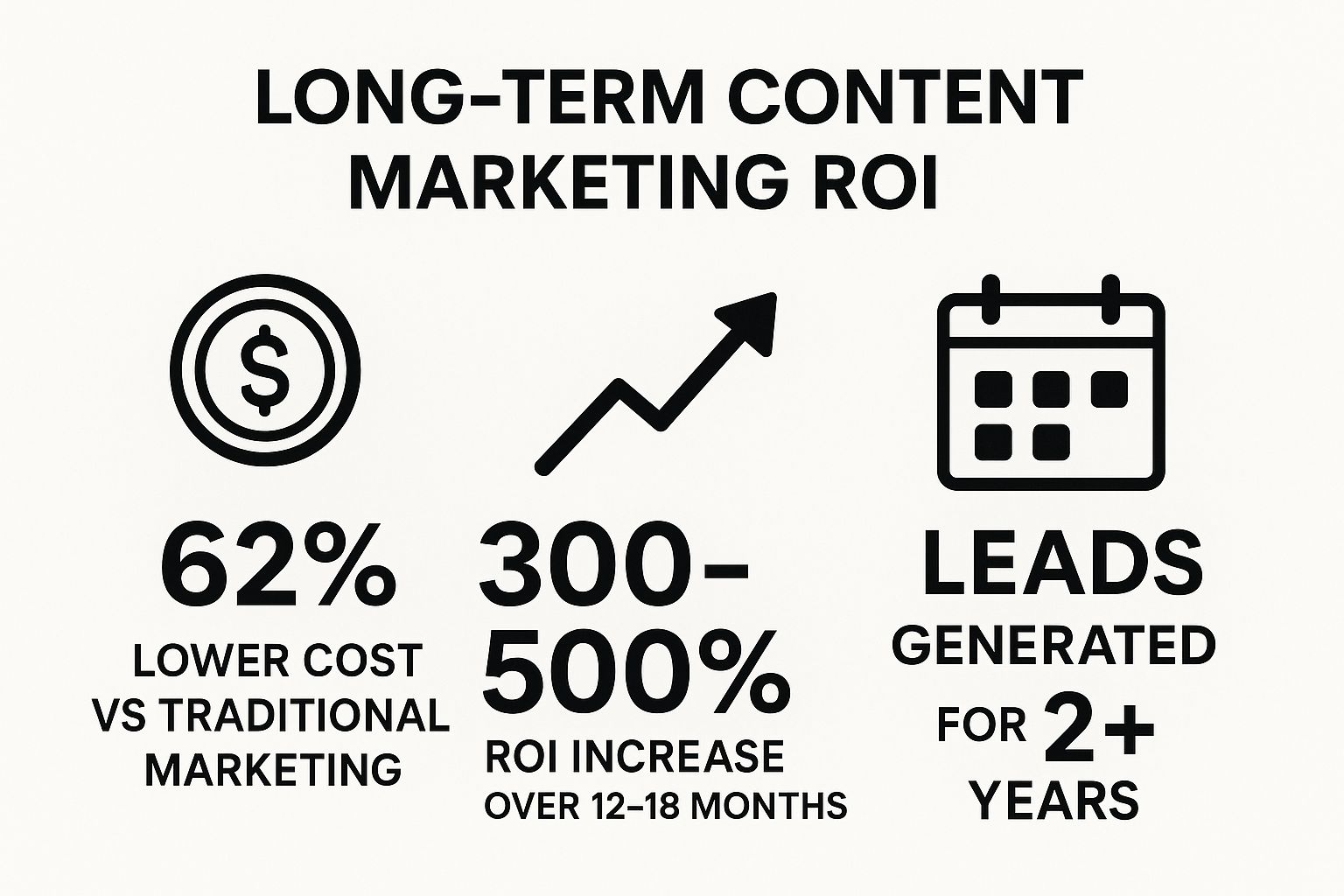
These figures illustrate that content not only costs significantly less than traditional methods but also delivers a substantial and growing ROI over time, with individual assets generating leads for years.
This strategy works by transforming marketing from an ongoing expense into a capital investment. Each piece of content you create is a seed planted in your digital ecosystem. While it requires an upfront investment of time and resources, it has the potential to yield a continuous harvest of organic traffic, qualified leads, and customer loyalty long after its publication date.
How to Implement This Strategy
- Focus on Evergreen Topics: Create content that addresses timeless challenges, questions, and interests within your industry. This ensures your articles and videos remain relevant and valuable to audiences for years.
- Establish Content Production Systems: Develop templates, style guides, and efficient workflows to streamline content creation. This reduces the cost and time required to produce new assets without sacrificing quality.
- Repurpose High-Performing Content: Extend the life and reach of your best content by turning a popular blog post into an infographic, a video series, or a podcast episode to maximize your initial investment.
- Track Long-Term Performance: Use analytics to monitor the traffic, leads, and conversions generated by older content. Identify top-performing assets and update them periodically to maintain their SEO value and relevance.
Real-World Example: Moz
Moz’s “The Beginner’s Guide to SEO” is a legendary example of a long-term content asset. First published over a decade ago, this comprehensive guide has been consistently updated to remain the definitive resource for anyone new to search engine optimization. It has generated millions of visits, thousands of high-quality backlinks, and countless qualified leads for their software products over its lifetime. Instead of being a one-off campaign, the guide acts as a permanent, lead-generating fixture of their marketing strategy, proving the immense long-term value of a single, well-executed piece of content.
6. Improved Customer Engagement and Relationship Building
Another one of the core benefits of content marketing is its ability to foster deeper, more meaningful relationships with your audience. Instead of communicating with customers only during a sale, content marketing creates ongoing conversations. By providing consistent value through educational guides, entertaining videos, or inspiring stories, you give people a reason to interact with your brand outside of a transactional context. This process builds a strong community and transforms one-time buyers into loyal advocates.
This strategy works by shifting the brand-customer dynamic from a simple exchange of goods for money to a two-way relationship built on shared interests and mutual respect. When customers feel seen and heard, they develop an emotional connection to the brand. This engagement leads to higher customer lifetime value, increased word-of-mouth marketing, and a resilient brand following that is less sensitive to price fluctuations.
How to Implement This Strategy
- Create Conversation-Starting Content: Develop content that asks questions and encourages discussion. Formats like polls, quizzes, and Q&A sessions are excellent for sparking immediate interaction.
- Encourage User-Generated Content (UGC): Launch campaigns or contests that invite your audience to share their own photos, videos, or stories featuring your products. This makes them active participants in your brand narrative.
- Humanize Your Brand: Share behind-the-scenes glimpses, employee spotlights, and stories that reveal the people and values behind your company. Authenticity builds trust and makes your brand more relatable.
- Engage Actively: Don’t just post and walk away. Respond to comments, answer questions, and acknowledge feedback across all your channels to show your audience that you are listening.
Real-World Example: Sephora
Sephora excels at building an engaged community through its content. The Beauty Insider Community is a dedicated forum where customers can ask questions, share product reviews, and post their makeup looks. Sephora complements this with a steady stream of video tutorials, how-to guides, and live events featuring beauty experts. By creating a platform for shared passion and providing genuinely helpful content, Sephora has built a loyal community that actively engages with the brand and each other, driving both sales and long-term loyalty.
7. Data-Driven Customer Insights and Market Intelligence
One of the most powerful yet often overlooked benefits of content marketing is its ability to generate invaluable data about your customers and market. Every interaction with your content, from a click to a comment, creates a data point. This rich information provides direct insights into your audience’s pain points, preferences, and behaviors, allowing you to move beyond assumptions and make truly data-driven business decisions.
By analyzing which topics resonate, what formats drive the most engagement, and which pathways lead to conversion, you can build a highly accurate profile of your ideal customer. This intelligence extends far beyond marketing, informing product development, customer service improvements, and overall business strategy. Your content becomes a real-time research tool, constantly feeding you the information needed to stay relevant and competitive.
How to Implement This Strategy
- Set Up Comprehensive Tracking: Ensure analytics are properly configured across your website, social media channels, and email platforms to capture meaningful engagement data like time on page, click-through rates, and conversion events.
- Create Regular Reporting Dashboards: Centralize key metrics into a single dashboard to track performance over time. This helps identify trends, measure the impact of new content initiatives, and spot opportunities for optimization.
- Integrate Content Data with Your CRM: Connect your content analytics with your Customer Relationship Management (CRM) system. This links content consumption to actual sales data, revealing which pieces of content are most effective at moving leads through the sales funnel. For more details, explore these tips on how to analyze content performance.
Real-World Example: Netflix
Netflix is a master of using data-driven insights from its content. The company meticulously tracks viewing habits, such as which shows are binge-watched, where viewers pause or abandon a series, and what content similar audiences enjoy. This massive data set directly informs their content acquisition strategy and the creation of Netflix Originals. By understanding precisely what their audience wants to see, they can invest billions in producing original shows and films with a high probability of success, minimizing risk and maximizing subscriber retention.
8. Sales Support and Customer Education
Another of the core benefits of content marketing is its ability to directly support and accelerate the sales process. By creating content that educates prospects and answers their most pressing questions, you empower your sales team with resources that move leads through the funnel more efficiently. Instead of spending time on basic education, salespeople can focus on building relationships and closing deals. This content acts as a silent salesperson, nurturing leads and addressing objections before a sales conversation even begins.
This strategy works by proactively addressing the information a buyer seeks at each stage of their journey. An educational blog post can attract an early-stage prospect, while a detailed case study can provide the social proof needed to convince a late-stage lead. Providing these assets shortens the sales cycle, increases close rates, and ensures a more informed and confident customer base. Learn more about aligning sales and marketing for better results.
How to Implement This Strategy
- Map Content to the Buyer’s Journey: Create specific content pieces tailored to the Awareness, Consideration, and Decision stages. For example, use blog posts for awareness, webinars for consideration, and case studies for decision-making.
- Develop a Centralized Content Hub: Give your sales team easy access to all marketing assets through a shared drive or content management system. Tag content by topic, funnel stage, and customer pain point so they can find what they need quickly.
- Create Sales Enablement Materials: Build resources like sales battle cards, one-pagers, and email templates that incorporate links to relevant content. This helps standardize messaging and makes it easy for sales to use the content effectively.
Real-World Example: HubSpot
HubSpot excels at using content for sales support through its extensive library of free tools and educational resources. Its free CRM and marketing tools allow potential customers to experience the product’s value firsthand, effectively qualifying themselves as leads. The HubSpot Academy offers free certifications and courses that not only educate the market on inbound marketing but also position HubSpot’s software as the essential tool for implementing these strategies. This educational approach ensures that when a sales rep connects with a lead, the prospect is already well-informed and convinced of the methodology, making the sale much smoother.
Benefits Comparison of 8 Content Marketing Aspects
| Benefit | Implementation Complexity 🔄 | Resource Requirements ⚡ | Expected Outcomes 📊 | Ideal Use Cases 💡 | Key Advantages ⭐ |
|---|---|---|---|---|---|
| Increased Brand Awareness and Visibility | Medium: Consistent multi-channel content needed | Moderate: Ongoing quality content production | Long-term brand recognition and trust build-up | Brands aiming for organic reach and thought leadership | Cost-effective, builds organic reach & digital assets |
| Lead Generation and Customer Acquisition | High: Requires gated content & analytics setup | High: Tracking, automation, and lead nurturing | Higher quality leads, permission-based marketing | Businesses focused on capturing and nurturing leads | Generates qualified leads, detailed segmentation |
| Enhanced Search Engine Optimization (SEO) | Medium-High: Keyword strategy & ongoing optimization | Moderate: Content creation plus SEO expertise | Sustained organic traffic growth & ranking improvements | Brands targeting increased organic search visibility | Builds domain authority, cost-effective long-term traffic |
| Thought Leadership and Industry Authority | High: Deep expertise & high-quality insights required | Moderate-High: Research, original data, and content | Increased credibility, media & partnership opportunities | Experts and businesses aiming to differentiate and lead | Commands premium pricing, attracts high-quality partners |
| Cost-Effective Long-Term Marketing Investment | Medium: Initial content investment with scalable systems | Moderate: Consistent content creation & maintenance | Reduced acquisition costs, improved ROI over time | Companies seeking sustainable, scalable marketing | Permanent digital assets, compounding content value |
| Improved Customer Engagement and Relationship Building | Medium: Ongoing community management and content variety | Moderate-High: Multi-format & interactive content | Higher retention, emotional connections, advocacy | Brands focusing on loyalty, community, and social sharing | Increases lifetime value, drives social engagement |
| Data-Driven Customer Insights and Market Intelligence | High: Requires analytics setup and expertise | High: Data collection, tracking, and analysis tools | Better targeting, optimization, and strategic decisions | Data-centric organizations optimizing marketing effectiveness | Real-time feedback, improved personalization, market trends |
| Sales Support and Customer Education | Medium-High: Coordination between sales and marketing | Moderate: Content aligned to sales stages and demos | Shorter sales cycles, higher conversion rates | Businesses integrating marketing to enhance sales productivity | Improves close rates, reduces education burden on sales teams |
Unlocking Your Growth Potential with Strategic Content
Throughout this detailed exploration, we have journeyed through the multifaceted landscape of content marketing, uncovering the powerful, interconnected advantages that await any brand willing to invest strategically. We’ve seen how a well-executed plan does far more than just fill a blog or social media feed; it acts as a central engine for sustainable business growth. The evidence is clear: the benefits of content marketing are not isolated perks but a synergistic force that amplifies every aspect of your customer acquisition and retention efforts.
From building initial brand awareness and enhancing SEO visibility to generating a steady stream of qualified leads, each benefit feeds into the next, creating a powerful growth flywheel. You don’t just attract visitors; you educate them, build trust, and establish your brand as a go-to authority in your industry. This isn’t a fleeting campaign-based outcome but a long-term asset that appreciates in value, continuously drawing in new audiences and nurturing existing relationships.
Your Path Forward: From Insights to Action
The most critical takeaway is the shift in perspective required to truly succeed. Content marketing is not a simple checklist item; it is the strategic foundation upon which modern marketing is built. It’s about creating value before you ask for it, building a community before you need one, and earning trust one insightful piece at a time. To truly harness these benefits, your next steps should be deliberate and focused:
- Audit and Align: Begin by evaluating your current content efforts. Do they align with your core business objectives? Identify gaps where you can better serve your audience’s needs, whether it’s through deeper customer education, establishing thought leadership, or providing direct sales support.
- Focus on the Flywheel: Instead of viewing each benefit in isolation, think about how they connect. How can your SEO-focused articles also serve as lead-generation magnets? How can your customer engagement data inform your next big thought leadership piece? Create a strategy where each piece of content serves multiple purposes.
- Commit to Consistency: The compound effect is the secret sauce. Sporadic posting will yield sporadic results. Commit to a consistent publishing schedule and a long-term vision. This dedication signals reliability to both search engines and your audience, solidifying the long-term benefits of content marketing.
Ultimately, embracing a content-first mindset is a commitment to building a more resilient, customer-centric, and authoritative brand. It transforms your marketing from a cost center into a value-generating asset that fuels every stage of the customer journey, ensuring your business not only survives but thrives in a competitive digital world.
Ready to transform these insights into a powerful growth engine for your business? The team at ReachLabs.ai specializes in building and managing data-driven content strategies that deliver measurable results. Let us help you harness the full spectrum of content marketing benefits by visiting ReachLabs.ai to see how our experts can unlock your brand’s potential.