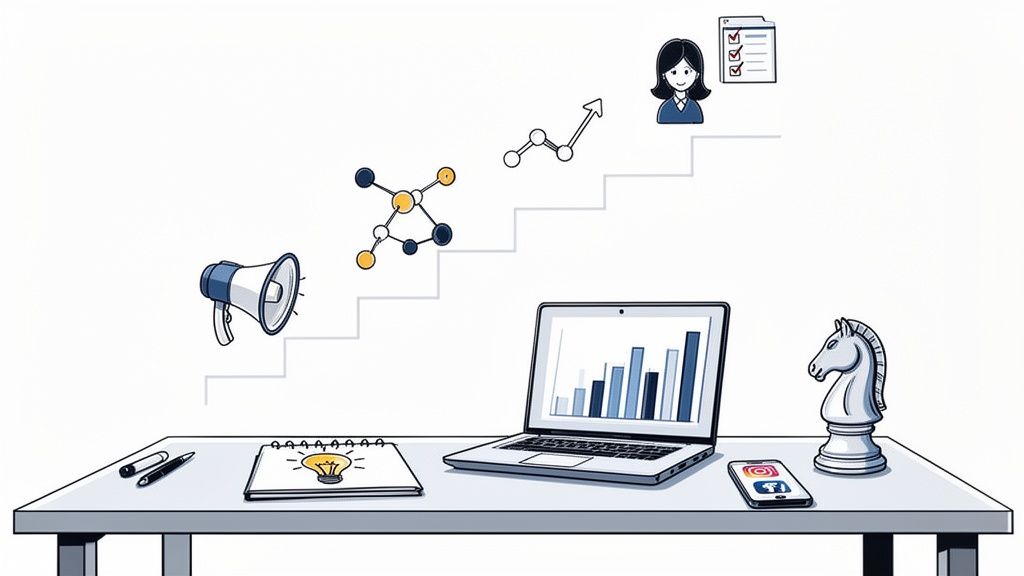
At its core, an advertising agency offers a mix of creative, strategic, and analytical services to get a company's products in front of the right people. Think of them as an outsourced marketing department, bringing together specialists in strategy, creative work, and media buying to help you grow your business and build your brand.
What Are Advertising Agency Services Really

It’s easy to think of an ad agency as just another vendor, but that’s not quite right. A better way to see it is as a specialized extension of your own marketing team. This isn't about just placing a few ads here and there. It's about getting a whole team of experts—strategists, creatives, data analysts, and media buyers—all pulling in the same direction to hit your business goals.
The real job of any agency is to take a bunch of complex moving parts and turn them into a single, well-oiled marketing machine. This machine is designed to do everything from getting your brand noticed for the first time to sealing the deal with a sale. It’s a delicate balance of art and science, blending sharp creative with hard data.
The Modern Agency Ecosystem
The ad industry has come a long way from the Mad Men era. The old playbook of just buying big, splashy ad placements is over. Today's world is all about being data-driven and integrated, because that's where the customers are—always online, always connected.
This shift means modern advertising agency services cover a much wider field, all working in concert:
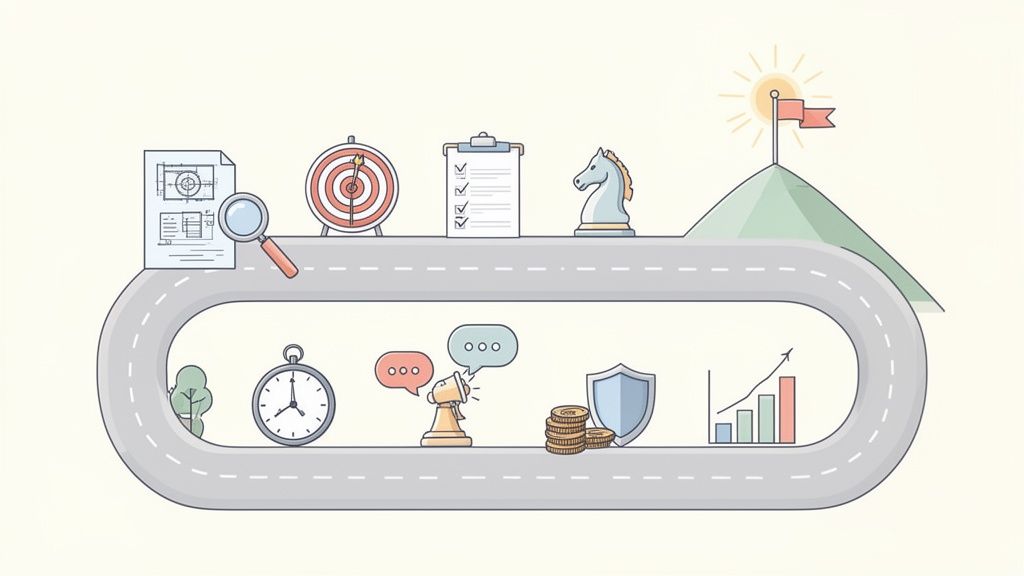
- Strategic Planning: This is the blueprint. Who are we trying to reach? What do we want to achieve? What's the plan to get there?
- Creative Development: This is the storytelling. It’s the words, the images, and the concepts that actually connect with people on an emotional level.
- Media Execution: This is about getting the message out. It could be on social media, in search results, on a podcast, or anywhere else your audience spends its time.
- Performance Analysis: This is where we see what's working. We track the numbers, measure the results, and tweak the campaigns on the fly to get the best possible return.
The magic of a good agency is its ability to bring all these different skills together under one roof. A brilliant creative idea is useless if it doesn't reach the right person, at the right time, in the right place.
Beyond Execution to Partnership
At the end of the day, hiring an agency is about finding a true strategic partner. You're getting a team that lives and breathes this stuff, staying on top of every new trend and technology so you don't have to. This frees up your in-house team to focus on what they do best—running the business.
To get a better handle on how these companies work, you can explore general insights on agencies and see how their roles are changing.
If you want to dig into the nitty-gritty of what a team might do for you, you can learn more about what a digital marketing agency does day-to-day. It’s a partnership built to be flexible, quick on its feet, and totally focused on your company's growth.
Exploring The Core Agency Service Categories
Think of a full-service advertising agency as a high-performance vehicle. It needs a powerful engine, precise steering and an eye-catching design to deliver results. Every component matters—and they all pull in the same direction.
Breaking down these core advertising agency services helps you see how each piece contributes to your journey. That clarity is your first step toward finding a partner who accelerates your business growth.
Creative Services: The Art Of Your Story
Creative is where your brand finds its voice. It turns dry objectives into narratives that capture attention and spark emotion.
This discipline goes beyond aesthetics. It’s about forging a personality that resonates with your audience.
Key Activities In Creative Services:
- Concept Development: Sketching the “big idea” that aligns with your strategic goals.
- Copywriting: Writing ads, web copy and social posts that persuade and inform.
- Art Direction And Design: Shaping visual style—logos, color palettes, layouts and interfaces.
- Video And Audio Production: Producing videos, branded content or audio spots from script to final edit.
Media Planning And Buying: The Science Of Reach
If creative is the art, media planning and buying is the science of getting seen. A stunning campaign achieves nothing if your audience never encounters it.
Think of it like a diversified investment portfolio—but instead of stocks, you’re placing bets on channels: social platforms, search engines, TV or podcasts.
Core Functions In Media Planning And Buying:
- Media Planning: Researching audience habits, mapping out which channels to use, when to run ads and how to allocate budget.
- Media Buying: Negotiating ad space and securing the best rates with platforms and publishers.
The aim? Squeeze out the highest return on ad spend for every dollar invested.
Digital Marketing Services: The Engine For Online Growth
A robust online footprint is now essential. Digital marketing services power your brand’s visibility and drive measurable results like traffic, leads and sales.
Digital channels now account for 72.7% of worldwide ad investment, with global spending approaching $1.1 trillion. Learn more about global advertising trends and insights on DataReportal.
This category includes specialized tactics, all focused on tangible outcomes:
- Search engine optimization (SEO)
- Pay-per-click (PPC) campaigns
- Social media management
- Email marketing
To see how these service pillars fit together, here’s a concise overview:
Core Advertising Agency Service Offerings
| Service Category | Description | Example Deliverables |
|---|---|---|
| Creative Services | Crafting the narrative and visual identity that brings your brand to life. | Ad copy, brand style guides, video commercials, design assets |
| Media Planning & Buying | Strategically placing ads where your target audience will see them. | Media plans, budget allocation reports, performance analyses |
| Digital Marketing | Driving online growth through channels like SEO, PPC, social and email. | SEO audits, PPC campaign summaries, social calendars, newsletters |
This table highlights the core offerings most agencies provide. Remember: their true power emerges when these services are woven into a unified strategy tailored to your business goals.
The Rise of Specialized and Emerging Services
The classic agency offerings—think big creative campaigns and media buying—are still the bedrock of the industry. But where the real magic happens today, and where brands find their competitive edge, is in the newer, more specialized services. The advertising world is in constant motion, always reacting to the latest tech, a new social platform, or a shift in how people shop and think. This has given birth to a whole new class of services built for a much faster, more targeted market.
These aren't just trendy add-ons; they're the essential tools for cracking today's toughest marketing puzzles. Whether it's building a genuine connection with a niche community or using data to make every interaction feel personal, these specialized services are the sharp tip of the spear. Getting a handle on them is how you stay ahead of the game.
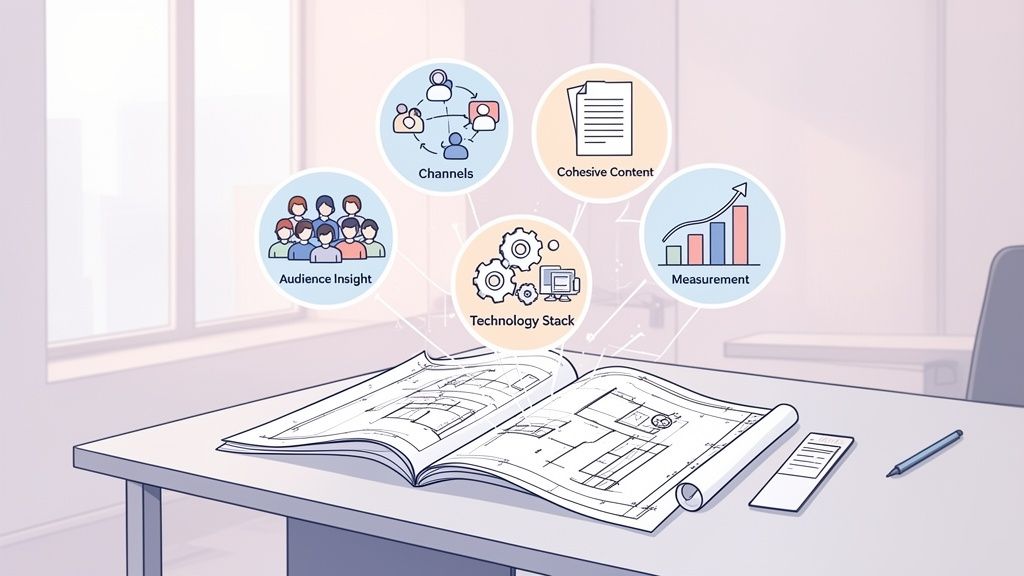
This diagram gives you a good sense of how these modern services branch out from the traditional agency structure.

You can see how foundational pillars like Creative, Media, and Digital act as hubs. From there, all the more specialized functions grow, showing how a modern agency works—integrated, yet incredibly diverse.
AI-Driven Analytics and Strategy
Artificial intelligence isn't some far-off concept anymore. It's the engine running under the hood of the smartest advertising strategies. With AI, agencies can dig through mountains of data to spot hidden patterns, predict what customers will do next, and even automate campaign tweaks with stunning accuracy. We're talking about a leap far beyond your standard monthly report.
Instead of just looking backward at what happened, AI models can forecast which customer groups are most likely to buy next week. It can adjust ad bids on the fly, second by second, to squeeze every last drop of value from your budget. This "data-first" mindset takes a huge amount of guesswork out of the equation, which almost always leads to better, more profitable campaigns.
The demand for this is exploding. Just a few years ago, AI-related services made up only 10% of what agencies offered; now, that number has jumped to 17%. That tells you everything you need to know about where the industry is heading. For a deeper dive, check out the data in Promethean Research's 2025 digital agency industry report.
The Power of Influencer Marketing
Influencer marketing has grown up. It's no longer just about paying someone with a lot of followers to hold up your product. It has become a sophisticated way to build real trust with an audience by partnering with credible voices who already have their attention and respect. When it works, it doesn't even feel like an ad—it feels like a recommendation from a friend.
A good agency will handle the entire, often complex, process for you. This usually includes:
- Influencer Identification: Sourcing creators whose audience and personal brand are a perfect match for yours.
- Campaign Strategy: Crafting a brief that gives the influencer creative freedom but ensures the core brand message shines through.
- Contract Negotiation: Managing all the legal and financial details to protect both parties.
- Performance Tracking: Measuring what actually matters—engagement, reach, and, most importantly, conversions.
Don't mistake influencer marketing as just a tool for consumer brands. In the B2B world, this often means teaming up with respected industry experts or thought leaders to build credibility and get in front of a professional audience.
Agile Creative Production for Social Platforms
The content beast must be fed, especially on platforms like TikTok, Instagram Reels, and YouTube Shorts. These channels don't just want content; they demand a constant stream of it that feels timely, authentic, and native to the platform. The old way of producing one big, polished video over several months just doesn't work here.
This is why agile creative production has become so critical. Think of it as a small, nimble content studio built for speed. These teams specialize in banging out short-form videos, memes, and interactive stories that look and feel like they belong in your feed. They work in quick sprints—testing ideas, looking at the data, and jumping on trends while they’re still hot. It's how brands stay part of the conversation, not just an interruption to it.
How to Choose the Right Agency Partner
Picking an agency is a big deal—probably one of the most important marketing decisions you’ll make. This isn't just about farming out tasks; it's about finding a partner who will shape your brand's voice, growth, and place in the market. You need to look past the slick pitch deck to find a team that truly gets your long-term vision.
The real goal here is to build a solid framework for making your choice, one that goes beyond a surface-level glance. This means getting your hands dirty and digging into their past work, understanding who you'll actually be working with, and getting a real sense of whether you'll click. It all comes down to asking the right questions to make sure you're bringing on a strategic partner, not just another vendor.
Look for Proof, Not Promises
Anyone can talk a good game. What really separates the contenders from the pretenders are proven, measurable results. The best way to get a feel for an agency's real capabilities is to comb through their case studies and portfolio. But don't just admire the finished product—look for the story behind it.
A case study worth its salt should lay everything out clearly:
- The Initial Challenge: What specific problem was their client trying to solve?
- The Strategic Approach: What was the core idea or strategy the agency came up with?
- The Execution: Which specific advertising agency services did they deploy to make it happen?
- The Measurable Results: What were the hard numbers? Think bottom-line impact like revenue growth, new leads, or a killer return on ad spend.
When an agency provides this level of detail, it’s a great sign they're focused on delivering real business value, not just pretty creative.
Assess Industry Specialization and Expertise
While plenty of agencies are generalists, finding one with deep roots in your industry can be a game-changer. They hit the ground running because they already speak your language, understand your customer's biggest headaches, and know the competitive landscape you're up against. That inside knowledge dramatically shortens the learning curve and leads to smarter strategies from day one.
An agency that has already navigated the challenges of your industry can anticipate roadblocks and identify opportunities that a generalist might miss. They speak your language, understand your metrics, and know what it takes to succeed in your specific arena.
The global advertising agency industry has shown impressive resilience, growing at a compound annual rate of 3.8% over the last five years. This steady growth shows just how critical these services have become for businesses everywhere, which makes finding a partner who truly understands your corner of the market more important than ever.
Understand the Team Structure
So, who's actually going to be working on your account? It's a simple question, but it’s amazing how often it gets glossed over in the sales pitch. The senior partners who woo you in the initial meetings might not be the ones in the trenches with you every day.
Push for clarity on the account team. You need to know your main point of contact, who's steering the strategy, and which specialists are handling the execution. A transparent agency will be more than happy to introduce you to the core team members you'll be collaborating with. This way, there are no surprises, and you can be sure the expertise you were sold is the expertise you're actually getting.
As you weigh your options, it's also smart to look at different ways of getting things done. For example, comparing agency, DIY, and hybrid approaches for product videos can help you decide which model best suits your internal team and budget.
Evaluate Cultural Fit and Communication Style
Skills and experience are crucial, of course. But a great partnership lives or dies on cultural fit and good communication. This is the human side of the equation. Do their values mesh with yours? Is their communication style open, honest, and collaborative?
Pay close attention to the dynamic during your meetings.
- Do they listen more than they talk?
- Are they asking sharp, insightful questions about your business?
- Is their communication style proactive and clear, or are you left guessing?
A mismatch in how you work and communicate can cause endless frustration, no matter how talented the team is. You're looking for a partner who feels like a natural extension of your own crew. For a more detailed walkthrough, our guide on how to choose a marketing agency offers an even deeper dive into this process.
Agency Evaluation Checklist: Key Questions to Ask
To help you vet potential partners thoroughly, we’ve put together a checklist of essential questions. Use these to guide your conversations and compare agencies on the things that truly matter.
| Evaluation Area | Key Questions |
|---|---|
| Past Performance & Results | "Can you walk me through a case study for a client with challenges similar to ours? What were the specific KPIs and how did you impact them?" |
| Industry Expertise | "What is your experience in the [Your Industry] sector? What unique trends or challenges do you see for businesses like mine?" |
| Team & Process | "Who will be my day-to-day contact? Who will be leading the strategy, and can I meet the core team I'll be working with?" "What does your onboarding process look like?" |
| Strategy & Creativity | "How do you balance creative ideas with data-driven decision-making?" "How would you approach our initial 90-day plan?" |
| Communication & Reporting | "What is your standard meeting cadence and reporting structure?" "How do you handle feedback and revisions?" |
| Cultural Fit & Partnership | "What do you consider the most important elements of a successful client-agency relationship?" "Can you provide a few client references we could speak with?" |
Using a structured approach like this helps you move beyond a gut feeling and make a confident, well-informed decision. The right agency won't just check boxes; they'll challenge your thinking, bring fresh ideas to the table, and ultimately become a key driver of your company's growth.
Making Sense of Agency Pricing and Performance

It’s easy to get caught up in the creative pitches and strategic plans, but understanding how an agency charges is just as critical as knowing what they’ll do for you. The financial side of the partnership can feel a bit murky at first, but it almost always boils down to a few common models. Getting a handle on these is the first step toward a partnership that feels transparent and fair.
Even more importantly, you need to know that every dollar you spend is pulling its weight. This is where you connect the money to measurable results—the Key Performance Indicators (KPIs) that show the work is actually moving the needle. Without that link, you're not investing in growth; you're just spending cash.
Common Agency Pricing Models Explained
Most agency partnerships are built on one of three classic pricing structures. Each one is designed for different kinds of work and different business goals. You can think of them as different ways to buy expertise, from having a team on standby to only paying for what they deliver.
1. The Retainer Model
A retainer is simply a fixed monthly fee you pay for an agreed-upon amount of work. It’s like putting the agency on your team—you get a dedicated group of experts focused on your brand, month in and month out. This model is a natural fit for long-term, ongoing efforts like SEO, content creation, or managing your social media channels.
A retainer gives you predictable budgeting and gives the agency the stability to plan ahead. This consistency often blossoms into a much deeper strategic relationship, where the agency truly functions as an extension of your own team.
2. Project-Based Fees
This one is as straightforward as it gets: you pay a single, flat fee for a specific project with a clear beginning and end. Think of things like a complete website overhaul, a new branding package, or producing a series of promotional videos. It’s the perfect model for one-off needs where you can easily map out the entire scope from the start.
3. Performance-Based Compensation
With this model, the agency puts its money where its mouth is. Their payment is tied directly to the results they generate for you. They might earn a percentage of your ad spend, a flat fee for every qualified lead they send your way, or even a cut of the revenue they help bring in. This structure ensures everyone is pulling in the same direction, because the agency only makes more money when you do.
Connecting Price to Performance with KPIs
Regardless of how you pay, you need proof that your investment is working. Key Performance Indicators (KPIs) are the specific metrics that measure how well your advertising agency services are hitting your business goals. They cut through the fluff and give you a clear, honest picture of what's driving results.
Here are a few of the most important KPIs you should be tracking:
- Return on Ad Spend (ROAS): This is the ultimate bottom-line number. For every dollar you put into advertising, how many dollars do you get back in revenue? A ROAS of 4:1 means you're generating $4 for every $1 spent.
- Cost Per Acquisition (CPA): On average, how much does it cost you to land one new customer? Watching this number go down is a clear sign that your marketing is getting more efficient.
- Customer Lifetime Value (CLV): This metric looks at the bigger picture, tracking the total revenue you can expect from a single customer over their entire relationship with your brand. A rising CLV shows you’re not just winning new business, but keeping your best customers around.
- Conversion Rate: Of all the people who see your ad or visit your website, what percentage actually take the action you want them to? Whether it’s making a purchase or signing up for a newsletter, this KPI tells you how persuasive your creative and messaging really are.
Getting a firm grasp of these payment structures is a must. You can dive even deeper with a detailed guide on digital marketing agency pricing. By matching the right pricing model with the right KPIs, you set the stage for a relationship built on trust, transparency, and a shared obsession with hitting your goals.
A Few Common Questions About Agency Services
Diving into the world of advertising agencies can feel a bit overwhelming, and it's natural to have questions. Whether you're thinking about hiring your first agency or just checking if your current partner is still the right fit, getting clear answers is key.
Let's walk through some of the most common questions we hear from businesses trying to figure out their next move. The goal here is to cut through the jargon and give you practical, straightforward advice.
When Is the Right Time to Hire an Advertising Agency?
There's no magic "right time," but a few tell-tale signs usually pop up. The most common one? Your team has hit a wall. Maybe you lack the specific skills to get to the next level, or perhaps you're just out of hours in the day to give marketing the attention it deserves.
Here are a few triggers that often mean it's time to call in for backup:
- You've Plateaued: Your sales or lead numbers have gone flat, and your usual bag of tricks isn't working anymore.
- You're Exploring New Territory: You're launching in a new city or trying to connect with a totally different audience, and you need local or demographic expertise.
- You've Got a Big Launch Coming Up: A major product release needs a big, coordinated push across multiple channels—something that's tough to juggle internally.
- Marketing is Distracting You: Your CEO is spending more time fiddling with ad campaigns than running the business. That's a huge red flag.
An agency isn't just another vendor; they're a dedicated team with specialized tools and focus, brought in to smash through these exact kinds of roadblocks.
What's the Difference Between a Full-Service and a Specialized Agency?
This is a great question. Think of it like this: a full-service agency is your general contractor. They can manage the whole project, from drawing up the blueprints (strategy) to hiring the plumbers (media buyers) and electricians (creative team). They handle everything under one roof.
A specialized agency, or a "boutique," is the master artisan you bring in for one specific, crucial job—like a custom cabinet maker. They are incredibly good at one thing, whether that's enterprise SEO, B2B social media, or advertising for a niche industry like healthcare.
Which one is right for you? It really depends on the job at hand.
If you need a cohesive strategy that works in lockstep across a dozen different channels, a full-service agency is probably your best bet. But if you have one very specific, high-stakes problem—like outranking a major competitor for a single keyword—a specialist will likely get you better, faster results.
How Much Do Advertising Agency Services Typically Cost?
This is the "how long is a piece of string?" question. Costs are all over the map and depend entirely on what you need, the agency's reputation, and how you structure the deal.
That said, we can talk in general terms. A small, one-off project—like designing a logo or building a landing page—might run you a few thousand dollars. For ongoing work, like a comprehensive digital marketing retainer, you could be looking at anything from $5,000 to $50,000+ per month. It all comes down to the scope and complexity.
The most important thing to look for is transparency. A good partner will break down their pricing and tie every dollar to a specific activity or outcome, so you know exactly where your money is going.
What Should I Have Prepared Before Contacting an Agency?
Coming to that first meeting prepared can make a world of difference. It helps the agency get up to speed quickly and start thinking about real solutions instead of spending the whole time just trying to understand your business.
Before you hop on that initial call, try to get these four things nailed down:
- Your Business Goals: What does success look like? Get specific. Instead of "more sales," try "increase online sales by 20% in the next six months" or "generate 100 qualified B2B leads per month."
- Your Target Audience: Who are you actually trying to talk to? If you have customer personas, bring them.
- Your Budget: You don't need an exact number down to the penny, but have a realistic range in mind for what you're prepared to invest.
- Your History: Be ready to talk about what you've tried in the past. What worked? And, just as important, what flopped?
Giving an agency this context up front is the fastest way to a productive partnership and a plan that actually works.
At ReachLabs.ai, our job is to turn these questions into a clear, actionable plan. Our collective of specialists plugs into your team, providing the expertise and horsepower you need to drive real growth. See how our approach can make a difference for your brand by visiting ReachLabs.ai.