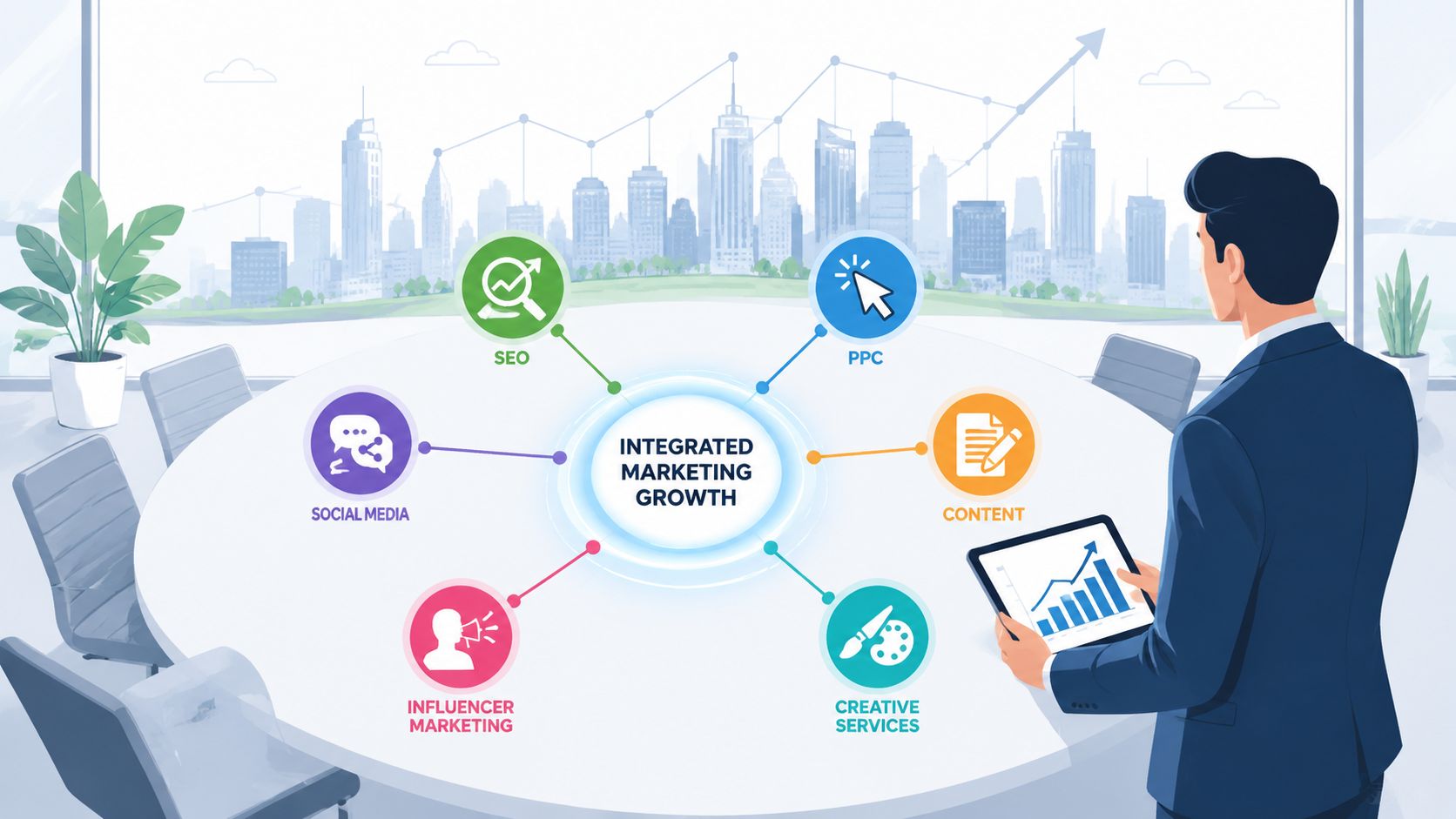

An agency digital strategy is the master plan that directs every single marketing move you make for a client. It's what makes sure every social media post, every email, and every ad campaign has a clear purpose and ties directly back to a real business goal.
The Strategic Blueprint for Agency and Client Growth
Think about building a house without a blueprint. You could have the best crew and the finest materials, but you'd likely end up with a mess—a structure that’s unstable and doesn't make any sense. That's exactly what happens when you do marketing without a solid strategy. It becomes a bunch of "random acts of marketing" that burn through a client's budget without getting them anywhere.
The right digital strategy is that essential blueprint. It elevates your agency’s work from being just another expense to a reliable source of revenue for your clients. It provides a clear roadmap that gets your team, the client's team, and every marketing tactic all pulling in the same direction. In today’s market, that kind of alignment is everything.
Moving Beyond Tactics to True Partnership
Too many agencies get stuck in the weeds, focusing only on the tactics—SEO, PPC, content—without a unifying strategy. A client might say, "We need more traffic," and the agency delivers exactly that. But what good is a flood of traffic if it doesn't lead to new customers or sales? The engagement is doomed to fail.
A real agency digital strategy changes the entire dynamic. It shifts the conversation from deliverables to outcomes. Suddenly, you're not just talking about click-through rates; you're discussing customer acquisition costs and lifetime value. This is how you build deep-seated trust and position your agency as a genuine growth partner, not just another vendor checking off boxes.
An effective digital strategy is the connective tissue between a client's business objectives and the marketing activities designed to achieve them. It transforms isolated tactics into a cohesive, goal-oriented system that produces measurable value.
Thriving in a Competitive Environment
The need for a sharp, strategic approach is more critical than ever. The digital advertising agency market is exploding, projected to reach $64.2 billion by 2026, with over 66,000 agencies competing in the U.S. alone. In such a crowded field, the agencies that lead with strategy are the ones that win, keep clients, and grow. You can dive deeper into the digital advertising industry's expansion on IBISWorld.com.
A well-crafted strategy gives you a serious edge in three key ways:
- Clarity and Focus: It forces everyone to prioritize, ensuring that precious time and money are spent on the channels and activities that will actually make a difference.
- Proactive Decision-Making: With a clear plan, you can anticipate changes in the market and adjust your approach based on data, not just scramble to react to what a competitor does.
- Demonstrable ROI: It sets up a clear system for measurement, letting you prove the value of your work with hard numbers that connect directly to the client's bottom line.
At the end of the day, a powerful digital strategy is your agency's most important tool. It’s what allows you to deliver consistent, data-backed results that build lasting client relationships and make your agency impossible to ignore.
The Five Essential Pillars of a Modern Digital Strategy
A powerful agency digital strategy isn't some monolithic, one-and-done document. It's more like a well-built structure, resting on five interconnected pillars. Getting each one right is what separates agencies that deliver fleeting wins from those that drive real, sustained growth for their clients.
Think of it like building a high-performance engine. You can't just obsess over the pistons and ignore the fuel injection system; every part has to work in perfect harmony. Each of these five pillars serves its own purpose, but they all depend on each other to generate momentum.
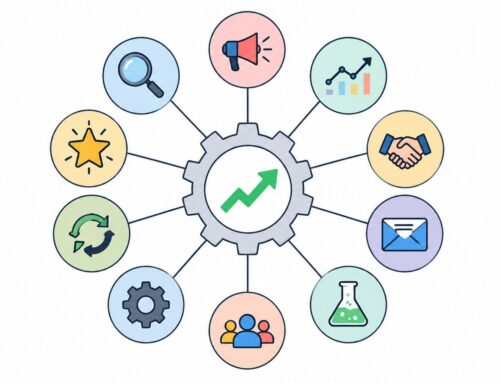
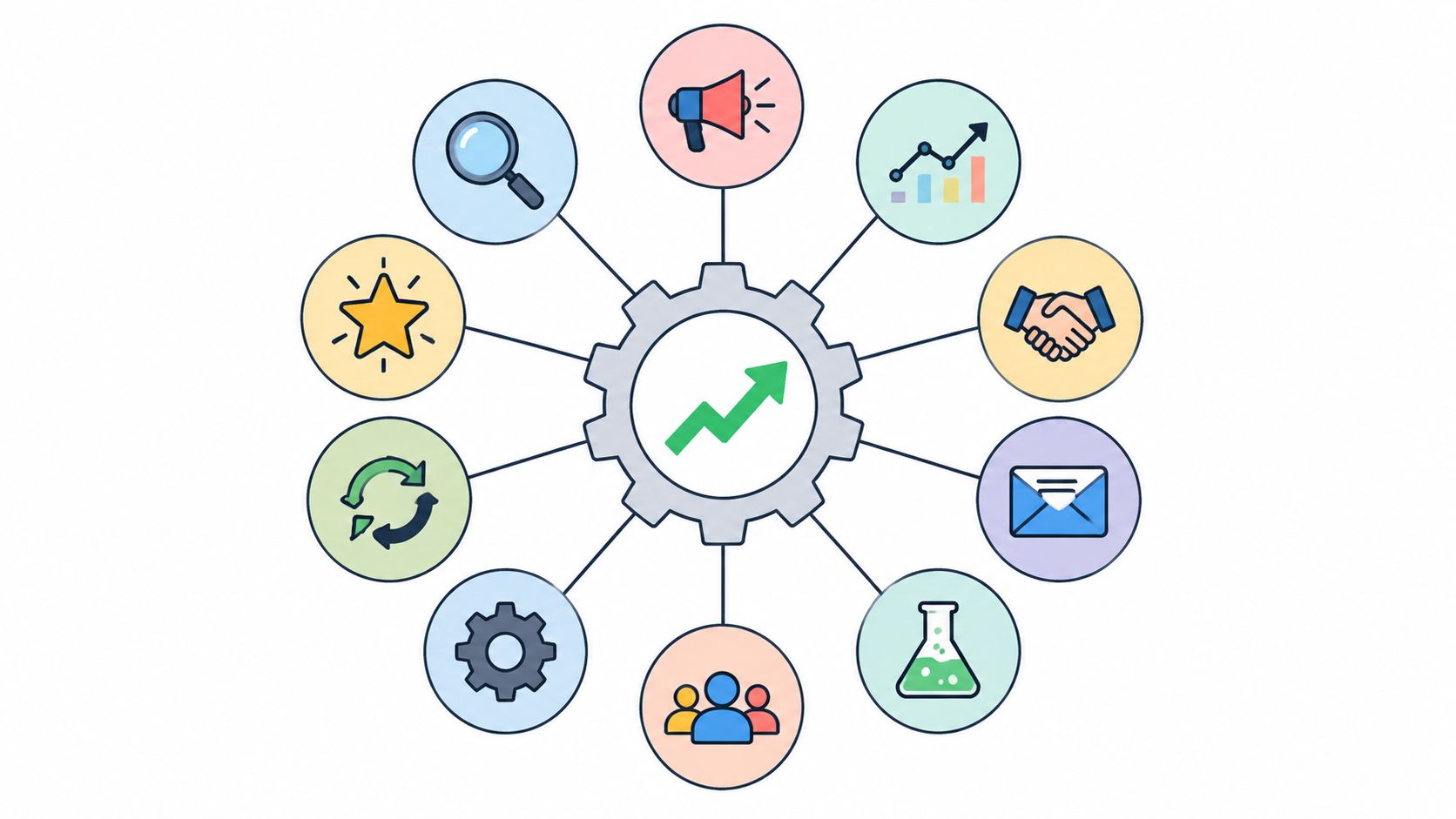
The diagram below really brings this to life, showing how these strategic pieces fit together to hit core agency goals like keeping clients happy and growing revenue.

This map makes it clear: a cohesive strategy is the central engine powering everything an agency wants to achieve for itself and its clients.
1. Deep Audience Insight
Everything—and I mean everything—starts with knowing the audience inside and out. This goes way beyond surface-level demographics like age and location. A winning strategy is built on understanding the "why" behind what people do.
- Psychographics: What do they actually value? What are their beliefs and lifestyle choices? What gets them out of bed in the morning?
- Behavioral Triggers: What are their biggest headaches? What specific problem or event sends them searching for a solution like the one your client offers?
For instance, you stop targeting "males aged 30-45." Instead, you zero in on "ambitious project managers who feel swamped by clunky workflows and are actively looking for software to save them time." That level of detail changes the entire game.
2. Strategic Channel Selection
Once you have a crystal-clear picture of who you're talking to, the next question is where to talk to them. So many agencies make the mistake of chasing every new, shiny platform or trying to be everywhere at once. That’s a recipe for burnout.
A truly strategic approach is about making data-informed decisions. You find the specific platforms where your client's ideal customers are already hanging out and are most open to hearing from them.
If your audience is B2B decision-makers, a sharp strategy focused on LinkedIn and hyper-targeted SEO will run circles around a scattergun approach on TikTok. The goal is precision, not just presence. For agencies to really scale, building in solid B2B Sales Funnel Optimization Strategies is an absolute must.
3. Cohesive Content Framework
Content is how you deliver your client's message. A cohesive framework ensures every single thing you create—from a detailed blog post to a quick social media update—feels consistent. That consistency in tone, style, and messaging is what builds brand recognition and, more importantly, trust.
A good content framework clearly defines:
- Tone of Voice: Is the brand an authoritative expert? A friendly guide? Witty and clever?
- Messaging Pillars: What are the 3-5 core ideas the brand absolutely must own?
- Content Formats: Will video, long-form articles, or detailed case studies best deliver these messages on the channels you’ve chosen?
This way, no matter where a potential customer bumps into the brand, the experience feels unified and memorable.
4. The Right Technology Stack
Look, you can't execute a modern strategy with duct tape and good intentions. You need the right tools for the job. A well-chosen technology stack is a force multiplier—it automates the grunt work, feeds you critical data, and frees up your team to be more strategic.
Your tech stack shouldn't be a random jumble of software you’ve collected over the years. It needs to be a thoughtfully curated toolkit that directly supports your strategic goals.
A great strategy with poor execution tools will always fall short. The right technology stack translates strategic vision into measurable action, providing the infrastructure needed for automation, analytics, and scalable client management.
At a minimum, this usually includes a CRM to manage customer relationships, marketing automation software to nurture leads, and powerful analytics platforms to see what’s actually working.
5. Meaningful Measurement and KPIs
At the end of the day, a strategy is only as good as the results it produces. This final pillar is all about defining what success looks like in cold, hard numbers. It’s about moving past vanity metrics like "likes" and focusing on Key Performance Indicators (KPIs) that tie directly back to business goals.
Global digital marketing spend is absolutely exploding, projected to be worth over $800 billion by 2026. That kind of investment means businesses are demanding a clear return, making precise measurement more critical than ever.
Effective measurement connects your marketing activities to tangible business outcomes, like Customer Acquisition Cost (CAC), Return on Ad Spend (ROAS), and customer Lifetime Value (LTV). You can dive deeper into structuring these components in our detailed guide on building a digital strategy framework.
Weaving AI into Your Agency's Strategic Workflow
Artificial intelligence has officially moved out of science fiction and into our daily operations. For agencies, it’s a game-changing partner in crafting a modern digital strategy. The smartest agencies aren't looking to replace their strategists with AI; they’re using it to supercharge their team's abilities, chew through complex data, and find new efficiencies.
Think of AI as your strategic co-pilot. It can analyze a mountain of market research in the time it takes you to grab a coffee, a job that would otherwise tie up your team for weeks. This lets your strategists jump straight to the good stuff—the creative thinking and client collaboration that really make your agency stand out.

This isn’t some far-off trend; it’s happening right now. AI is already changing how agencies build strategy. A recent study shows 63% of marketers are already using generative AI, and a whopping 88% feel it’s critical for staying competitive. With AI marketing spend expected to rocket past $107 billion by 2028, weaving these tools into your workflow is no longer optional.
Putting AI to Work in Your Strategy
So, what does this look like day-to-day? It’s all about letting AI handle the grunt work so your people can focus on being creative and brilliant. A solid agency digital strategy uses AI to enhance human expertise, not replace it.
Here are a few ways to get started:
- Lightning-Fast Market & Competitor Scans: AI tools can tear through thousands of competitor websites, social feeds, and industry reports in an instant. This gives your team a real-time map of market gaps and trends before anyone else sees them coming.
- True Personalization at Scale: Forget one-size-fits-all campaigns. AI can analyze customer data to build incredibly personalized ads and content that speak directly to the individual. This was a pipe dream just a few years ago, and it makes a huge difference in engagement.
- Uncovering Deep Audience Insights: Platforms like ReachLabs.ai can find the hidden signals in massive datasets, revealing subtle patterns in what customers really want. This helps you define incredibly specific audience segments and craft messages that actually resonate.
By handing off these data-heavy jobs, your human strategists get to spend their brainpower on what matters most: building strong client relationships, solving tricky problems, and crafting the big-picture vision that drives results.
Keeping the Human in the Loop
As powerful as AI is, it doesn't have taste, intuition, or a moral compass. That's why the best agencies use a "human-in-the-loop" approach. AI serves up the data, insights, and even first drafts, but a human expert always has the final say—adding context, nuance, and an ethical check.
This hybrid model ensures your output is not only smart but also true to your client’s brand. AI can generate a perfect blog post outline, but a human writer is needed to fill it with story and soul. It can identify a target audience, but a strategist has to figure out how to connect with them on an emotional level. You can see how this balance plays out in our guide to building effective marketing automation workflows.
The real magic happens when human and machine work together. AI brings the speed and scale; humans bring the creativity, strategic wisdom, and ethical judgment. That’s the combination that elevates your work and delivers incredible client results.
For agencies ready to dive in, having a clear plan is key. To get a deeper understanding of what it takes, check out an AI-native agency playbook for a solid foundation. In the end, bringing AI into your agency is about building a smarter, faster, and more insightful team that provides undeniable value.
Measuring Success with the Right KPIs
A brilliant digital strategy is only as good as the results it produces. If you can’t prove it’s working, it might as well not exist. This is where we move past the feel-good “vanity metrics” like social media likes and start focusing on what really matters: Key Performance Indicators (KPIs) that tie directly to your client’s business goals.
Think of it like a ship's navigation system. The captain isn't just obsessed with how fast the engine is spinning; they care about the ship's actual position, its speed, and whether it's heading toward the destination. Your KPIs are the instruments that prove your strategy is on course.
Leading Versus Lagging Indicators
To build a measurement system that actually works, you need to understand two different kinds of KPIs. Both are vital, but they tell you different parts of the story.
Leading Indicators are your predictive metrics. These are the daily and weekly numbers that give you an early sign that your strategy is gaining traction. They’re like smoke before the fire.
- Click-Through Rates (CTR): This tells you if your ads and content are compelling enough to make someone take the next step.
- Website Traffic: A jump in relevant visitors shows your SEO and content efforts are hitting the mark.
- Engagement Rate: When people are commenting, sharing, and saving your content, you know your message is connecting.
Lagging Indicators are your bottom-line results. They look backward to prove past success. These are the numbers the C-suite cares about because they directly connect to revenue and growth.
- Customer Acquisition Cost (CAC): How much are you actually spending to win each new customer? This is the core of efficiency.
- Return on Investment (ROI): The ultimate proof. This shows the total revenue generated from every dollar you spent.
- Customer Lifetime Value (LTV): This metric proves you're not just driving one-off sales but creating long-term, sustainable value for the client.
Building a Meaningful Measurement Framework
A measurement framework isn't just a list of metrics; it's your game plan for how you collect, analyze, and use data to make smarter decisions. It’s what turns your client conversations from simple activity reports into powerful, ROI-focused discussions.
Your measurement framework is the bridge between your marketing actions and your client's business objectives. It provides a clear, data-backed narrative that justifies budgets, proves value, and builds long-term trust.
The key is to start by asking better questions. Don't ask, "How do we get more website traffic?" Instead, ask, "How much qualified traffic do we need to generate X number of sales-ready leads?" This goal-first thinking changes everything.
Here’s a simple way to approach it:
- Define the Business Objective: What is the client’s ultimate goal? Let's say it's to increase market share by 15%.
- Set a Specific Marketing Goal: How will marketing contribute? For example, generate 500 qualified leads per quarter.
- Select Primary KPIs: Choose the lagging indicators that prove you hit the goal (e.g., Cost per Lead, MQL-to-SQL Conversion Rate).
- Identify Supporting KPIs: Pick the leading indicators that predict you're on the right track (e.g., Landing Page Conversion Rate, SEO Rankings for target keywords).
The best KPIs are always directly tied to a specific business goal. The table below illustrates how you can map different KPIs to common client objectives, ensuring your reporting always tells a story of business impact.
KPIs Mapped to Business Goals
| Business Goal | Primary KPIs | Secondary KPIs |
|---|---|---|
| Increase Brand Awareness | Share of Voice, Brand Mentions, Direct Traffic | Social Media Reach, Impression Volume, Website Traffic |
| Generate More Leads | Cost Per Lead (CPL), Marketing Qualified Leads (MQLs) | Landing Page Conversion Rate, Click-Through Rate (CTR), Form Fills |
| Improve Customer Loyalty | Customer Lifetime Value (LTV), Repeat Purchase Rate | Net Promoter Score (NPS), Email Engagement Rate, Churn Rate |
| Drive Online Sales | Return on Ad Spend (ROAS), Conversion Rate, Revenue | Average Order Value (AOV), Cart Abandonment Rate, CAC |
By linking every metric back to a core business objective, you move the conversation away from superficial numbers and toward strategic value. This structured method ensures every metric you track has a clear purpose.
For a deeper dive into specific metrics, you can use, check out our guide on essential marketing performance metrics examples. When you focus on what truly matters, your agency will consistently prove its impact on the client’s bottom line.
Real-World Examples of an Agency Digital Strategy in Action
Theory is one thing, but seeing a strategy come to life in the real world is where the magic happens. To get a feel for how these concepts translate into actual results, let's walk through two common scenarios agencies face. We'll break down the thinking from the initial business goal all the way to execution and measurement, giving you a clear blueprint to adapt for your own clients.
These examples really drive home how a sharp, well-defined strategy connects every single action to a specific business outcome. It’s the difference between just "doing marketing" and making sure no part of the budget is wasted on disconnected tactics.
Case Study 1: B2B SaaS Lead Generation
Picture a mid-sized SaaS company in the project management space. Their big-picture goal is to grow their subscriber base by 25% over the next year. The problem? The market is absolutely saturated, and their past marketing felt like throwing spaghetti at the wall—lots of low-quality leads came in, but almost none of them ever converted.
A smart agency digital strategy would immediately translate that business goal into a crystal-clear marketing objective: generate 200 high-quality, sales-qualified leads (SQLs) every month.
With that North Star in place, the rest of the strategy falls into line:
- Audience: Instead of chasing every "project manager" out there, the focus gets razor-sharp. We’re going after "team leads in tech companies with 50-250 employees who are sick of inefficient manual processes." This detailed persona now dictates every decision we make.
- Channels: The agency hones in on the platforms where this specific audience is actively looking for answers. The core channels become LinkedIn for targeted outreach and establishing thought leadership, plus organic search (SEO) to catch people with high-intent search queries.
- Content: The content plan is built entirely around the audience's biggest headaches. This means creating in-depth blog posts like "How to Streamline Your Team's Workflow," a downloadable eBook on "The ROI of Agile Project Management," and a series of webinars that actually show off the software’s best features.
- KPIs: Success isn't a vague feeling; it's measured with precision. The primary KPIs are the number of Marketing Qualified Leads (MQLs) and the MQL-to-SQL conversion rate. We'd also track secondary metrics like Cost Per Lead and keyword rankings to see how things are trending.
This targeted approach ensures every piece of content and every dollar of ad spend is aimed squarely at attracting the right kind of customer. The result is a dramatic improvement in lead quality and a much more efficient sales team.
Case Study 2: DTC Brand Awareness
Now, let's switch gears to a new direct-to-consumer (DTC) lifestyle brand selling sustainable home goods. As a fresh face in the market, their primary goal is to get their name out there and build a genuine community. The marketing objective is to increase brand awareness and achieve a 150% growth in social media engagement within six months.
Here, the agency digital strategy isn't about pushing for immediate sales. It’s about creating a vibrant, community-focused brand people want to be a part of.
For a new DTC brand, building community isn't a nice-to-have; it's the entire foundation for long-term growth. An awareness-focused strategy has to prioritize authentic connection and user-generated content to build a loyal following that will drive sales down the road.
The plan is tailored for visual and social-first platforms:
- Audience Identification: The target is "eco-conscious millennials, aged 25-40, who value aesthetics and ethical consumerism and actively follow home decor influencers." We know exactly who we're talking to.
- Strategic Channel Mix: The primary battlegrounds are Instagram and TikTok, platforms that are visual by nature and where this audience lives. Pinterest is brought in as a secondary channel to drive long-term traffic with beautiful, inspirational content.
- Content and Campaign Execution: The strategy hinges on user-generated content (UGC). The agency kicks off an influencer campaign, partnering with micro-influencers who genuinely love the brand's mission. They also launch a branded hashtag campaign, encouraging customers to share photos of the products in their own homes for a chance to be featured.
- Measurement and KPIs: The main KPIs here are reach, engagement rate, and brand sentiment. We're also tracking secondary metrics like the volume of UGC being created and follower growth to make sure the community is expanding.
By putting community and authenticity first, this strategy builds a powerful brand identity that truly resonates with its target audience, paving the way for sustainable, long-term growth.
Your Agency Digital Strategy Implementation Checklist
So, how do you actually put all this into practice? A brilliant strategy is just a document until you bring it to life, and that requires a repeatable, structured process.
This checklist is your game plan, breaking down the entire implementation into five key phases. Think of it as a roadmap to take you from abstract client goals to tangible, measurable results, ensuring nothing important gets missed along the way.

This isn't a one-and-done process. It’s a cycle of continuous improvement that moves from initial client conversations all the way through to ongoing optimization.
Phase 1: Discovery and Goal Setting
This is the foundation. It's all about deep listening and getting everyone on the same page. Before you can even think about building a roadmap, you have to know the destination and understand the terrain.
- Conduct Stakeholder Interviews: Get in a room with the key decision-makers on the client side. Your goal is to truly understand their business objectives, their biggest headaches, and what "success" actually looks like to them.
- Perform a Digital Audit: Dig into the client's current digital footprint. Analyze everything—their website performance, social media presence, SEO rankings, and any past campaign data you can get your hands on.
- Define SMART Goals: Vague goals lead to vague results. Translate their broad business objectives into Specific, Measurable, Achievable, Relevant, and Time-bound marketing goals.
Phase 2: Strategy Formulation
Once you have a firm grip on the "what" and "why," it’s time to figure out the "how." This is where you architect the strategic blueprint based on everything you learned in the discovery phase.
- Develop Audience Personas: Create detailed profiles of their ideal customer. What are their pain points? What motivates them? Where do they hang out online?
- Map the Customer Journey: Outline every key touchpoint a customer has with the brand, from the very first moment of awareness all the way through to post-purchase loyalty and advocacy.
- Select Core Channels and Tactics: Based on the audience and goals, choose your battlegrounds. Will it be SEO, PPC, social media, content marketing, or a mix?
- Establish Key Performance Indicators (KPIs): Define the exact metrics you'll use to track progress against your SMART goals. This is non-negotiable.
A strategy without clearly defined KPIs is just a wish list. Tying every tactic back to a measurable indicator is what makes your plan accountable and proves its value.
Phase 3: Execution and Launch
This is where the rubber meets the road. All that planning becomes action, and it's all about disciplined project management, creative production, and a perfectly coordinated launch.
- Create a Content Calendar: Get organized. Plan and schedule all your content, from blog posts and social updates to ad copy and video scripts.
- Configure the Tech Stack: Get your tools in order. Set up and integrate everything you need for analytics, automation, and reporting.
- Launch Initial Campaigns: Go time. Roll out your planned activities across all selected channels in a coordinated, synchronized push.
The whole point here is a smooth, organized launch that sets you up for effective measurement from day one.
Phase 4: Measurement and Optimization
A digital strategy isn't a static plan you set and forget; it's a living, breathing thing. This phase is dedicated to diving into the data, seeing what's working, and making smart, iterative improvements.
- Monitor KPIs Weekly: Keep a close eye on your primary and secondary KPIs. Regular tracking allows you to see what’s happening in near real-time and react quickly.
- Conduct A/B Tests: Never assume you have the perfect answer. Constantly test different ad creatives, headlines, landing page layouts, and calls-to-action to find what truly resonates with the audience.
Phase 5: Reporting and Iteration
Finally, this is where you close the loop. It’s about communicating results clearly and planning the next steps, which solidifies your role as an invaluable strategic partner, not just a service provider.
- Generate Monthly Performance Reports: Create clear, easy-to-digest reports that showcase results, explain trends, and directly connect your marketing activities to the client's business outcomes.
- Hold Quarterly Strategic Reviews: Get back in the room with the client. Review the overall progress against the big-picture goals, share your key insights, and refine the strategy for the quarter ahead.
Frequently Asked Questions
When it comes to digital strategy, agencies and their clients often have a lot of questions. Let's tackle some of the most common ones with straightforward, practical answers.
How Often Should an Agency Digital Strategy Be Updated?
Think of your digital strategy as a living, breathing guide, not a one-and-done document set in stone. As a rule of thumb, it's wise to sit down for a major strategic review every quarter. This is your chance to step back, look at the big picture, and see if your efforts are truly moving the needle on your high-level goals.
That said, the day-to-day tactics need a much closer eye. You should be looking at campaign data and making small adjustments weekly or bi-weekly. Of course, if something big happens—like a new competitor bursting onto the scene or your client suddenly pivoting their business goals—that's a signal for an immediate strategy huddle.
What Is the Biggest Mistake Agencies Make?
Hands down, the most common pitfall is mistaking a list of tactics for an actual strategy. It’s so easy to jump straight into the "doing"—"Let's run Facebook ads!" or "We need to be on TikTok!"—without first answering the fundamental questions: What business problem are we solving? Who exactly are we trying to reach? What message will actually resonate with them?
A real agency digital strategy makes sure every single tactic, from a tweet to a multi-million dollar ad campaign, serves a clear and measurable purpose. Without that solid foundation, you’re just performing random acts of marketing.
This "tactics-first" approach is a recipe for wasted budgets, disconnected efforts, and a complete inability to prove real ROI.
How Do You Create a Strategy with a Small Budget?
When you're working with a tight budget, focus is your superpower. You have to be absolutely ruthless in prioritizing the one or two channels where you know your target audience lives and breathes. It's about finding the place where you can make the biggest splash.
Instead of trying to be everywhere and spreading a small budget paper-thin across five different platforms, it's much smarter to go all-in on mastering just one. Maybe that means dedicating every resource to creating killer SEO content that drives organic traffic, or perhaps it’s about building a passionate, tight-knit community in a niche social media group. The goal is depth over breadth. Prove you can win on one front before you try to fight on another.
At ReachLabs.ai, we specialize in building and executing data-driven digital strategies that deliver measurable growth. Discover how our team can become your strategic partner today.