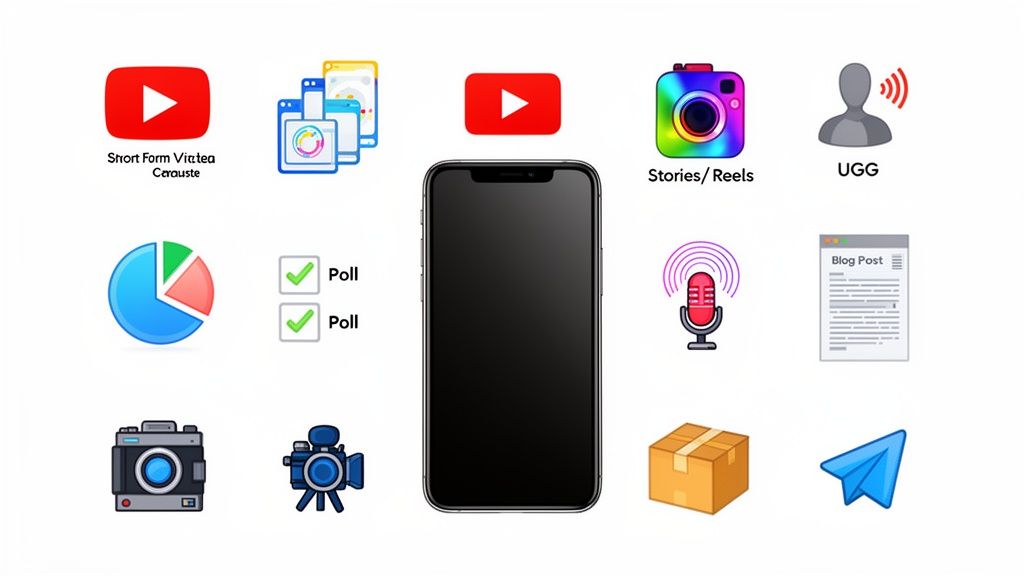
In the crowded digital landscape of 2026, simply posting on social media isn't enough. The key to capturing attention, building a community, and driving growth lies in choosing the right type of social media content for the right audience, on the right platform, at the right time. A generic approach leads to generic results. To truly succeed, marketers must master a diverse content arsenal, understanding when to deploy a viral short-form video versus an authoritative educational carousel or when to leverage authentic user-generated content over a polished brand announcement.
This guide moves beyond surface-level advice to provide a strategic blueprint for today's most effective social media formats. We will break down 12 essential content types, from interactive polls that spark conversation to in-depth webinars that establish thought leadership. For each format, you'll find a clear definition, its strategic purpose, platform-specific nuances, and actionable performance tips to help you create a dynamic content strategy that not only engages but also converts.
By understanding the 'what,' 'why,' and 'how' of each type of social media content, you can build a more resilient, effective, and impactful presence. This is not just a list; it’s a playbook designed to help you select the precise tools needed to hit your marketing objectives, foster genuine connection with your audience, and achieve measurable results. Let's dive into the formats that will define your brand's success.
1. Short-Form Video Content
Short-form video is a dominant type of social media content, consisting of vertical videos typically lasting from 15 seconds to three minutes. This format, popularized by platforms like TikTok, Instagram Reels, and YouTube Shorts, is engineered for mobile-first consumption and designed to capture audience attention instantly in a fast-scrolling environment.
Its power lies in its ability to combine entertainment, education, and authenticity into a highly shareable package. Brands leverage this format for everything from humorous skits that showcase brand personality, like Duolingo’s viral TikTok presence, to quick-hitting product tutorials, such as Glossier’s makeup application guides. The goal is to stop the scroll and deliver value immediately, whether through a laugh, a new skill, or a relatable moment.
When to Use This Format
Short-form video is exceptionally versatile. Use it to boost brand awareness by participating in trending challenges, showcase product benefits in a dynamic way, or build a community through authentic, behind-the-scenes glimpses. It’s particularly effective for reaching younger demographics and humanizing your brand.
Quick Tips for Performance
- Hook Immediately: Capture attention within the first one to two seconds with a bold statement, surprising visual, or compelling question.
- Leverage Trends: Strategically use trending audio and hashtags that align with your brand’s voice, but don’t force a fit. Authenticity is key.
- Provide Value Fast: Whether your goal is to educate, entertain, or inspire, deliver the core message quickly and concisely.
- Encourage Engagement: End your video with a clear call-to-action (CTA), such as asking a question in the caption to spark comments.
Key Insight: Consistency is more important than high-production value. Audiences on these platforms often prefer raw, authentic content over overly polished videos.
For a deeper dive into creating effective video content, review these video marketing best practices to refine your strategy.
2. Carousel Posts
Carousel posts are a versatile type of social media content that allows users to swipe through a series of images or videos within a single post. This multi-slide format, prominent on platforms like Instagram and LinkedIn, is perfect for storytelling, breaking down complex information, or showcasing a product collection without overwhelming the audience.
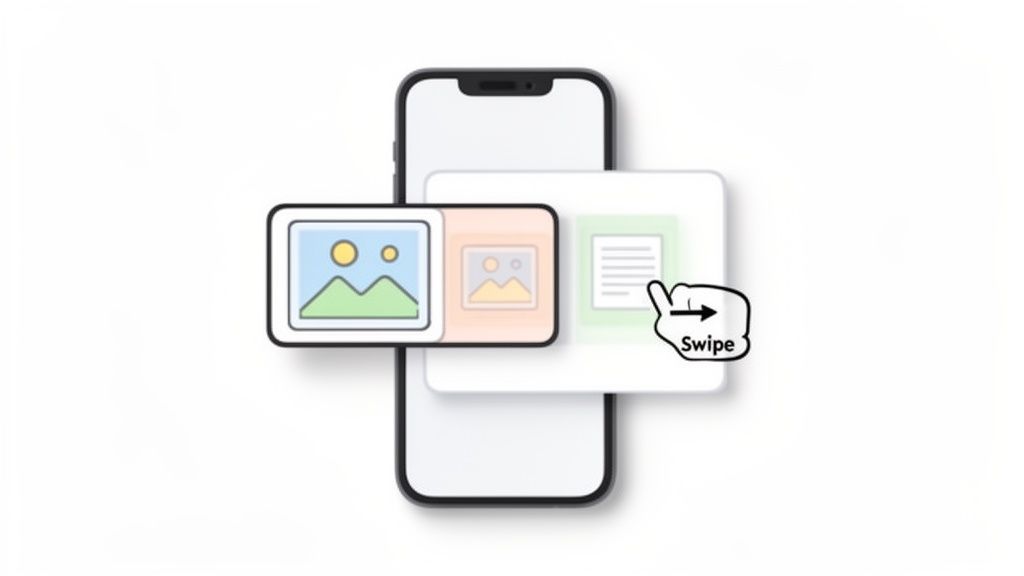
Its strength lies in its ability to hold user attention longer and deliver more in-depth value than a single image. Brands like HubSpot use educational carousels to share marketing tips, while fashion brands leverage them to display multiple products or angles. The format encourages engagement by creating a narrative flow, prompting users to swipe to see what comes next, which signals positive interaction to platform algorithms.
When to Use This Format
Use carousel posts when you need to share information that is too dense for a single image but doesn't require a full video. They are ideal for step-by-step tutorials, data visualizations, listicles, or telling a compelling brand story. This format excels on Instagram for lifestyle and product content and on LinkedIn for thought leadership and professional education.
Quick Tips for Performance
- Create a Compelling Cover: The first slide must grab attention and clearly state the value proposition to encourage users to swipe.
- Optimize Slide Count: Aim for 5-7 slides to deliver substantial information without causing viewer drop-off.
- Maintain Visual Consistency: Use consistent branding, fonts, and color schemes across all slides to create a cohesive and professional look.
- End with a CTA: The final slide is a prime opportunity to include a call-to-action, like "Save this post" or "Visit our website."
Key Insight: The primary goal of a carousel is to drive the "swipe." Use visual cues like arrows or cliffhangers between slides to create an irresistible urge to see the next piece of content.
3. User-Generated Content (UGC)
User-Generated Content (UGC) is a powerful type of social media content created and shared by customers, followers, or fans rather than the brand itself. This organic content includes photos, videos, reviews, and testimonials that feature your products or services, acting as authentic, modern-day word-of-mouth marketing. It builds trust and credibility in a way branded content often cannot.
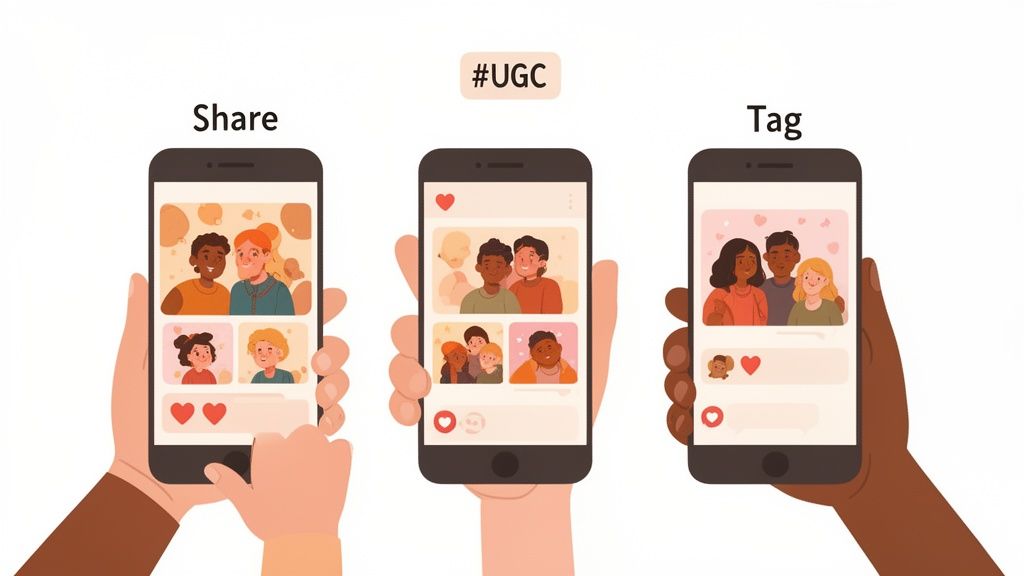
Its strength lies in social proof. When potential customers see real people enjoying a product, it validates their purchasing decision. GoPro, for instance, has built its entire marketing strategy around showcasing breathtaking videos submitted by its users, while Starbucks’ annual #RedCupContest encourages customers to share creative photos of their holiday cups, generating massive engagement and brand loyalty.
When to Use This Format
UGC is ideal for building a strong community, increasing brand trust, and sourcing authentic marketing material at a low cost. Use it to populate your content calendar, enhance product pages with real-world visuals, and create more relatable ad campaigns. It is particularly effective for consumer-facing brands in industries like fashion, beauty, travel, and technology.
Quick Tips for Performance
- Create a Branded Hashtag: Launch a simple, memorable hashtag and actively promote it across all channels to collect submissions.
- Offer Incentives: Encourage participation by offering a chance to be featured on your page, a discount, or entry into a contest.
- Always Give Credit: Properly credit and tag the original creator whenever you share their content to show appreciation and foster goodwill.
- Set Clear Guidelines: Let your community know exactly what kind of content you’re looking for and how they can submit it.
- Leverage in Ads: Test UGC in your paid social campaigns, as its authenticity often leads to higher conversion rates and better ROI.
Key Insight: The most effective UGC campaigns don't just ask for content; they create an experience or a movement that people genuinely want to be a part of.
To explore how to integrate this strategy effectively, consider these examples of successful UGC campaigns.
4. Long-Form Educational Content
Long-form educational content is a comprehensive type of social media content, typically consisting of in-depth articles (1,000+ words), detailed videos (10+ minutes), webinars, or extensive guides. Unlike quick-hitting formats, its primary goal is to establish authority, build deep trust, and provide substantial value to an audience actively seeking expertise.
This format positions your brand as a definitive resource in its niche. Think of HubSpot's exhaustive marketing guides or Moz's deep dives into technical SEO. This content is not designed for a quick scroll but for an intentional click from a user looking for a real solution. It provides detailed tutorials, industry analysis, and step-by-step frameworks that solve complex problems, fostering loyalty and often improving search engine rankings.
When to Use This Format
Use long-form content to attract a highly qualified audience, generate leads through downloadable assets, and build a library of evergreen resources that drive traffic over time. It is ideal for complex B2B topics, in-depth product education, or any subject where your audience values substance and detail over brevity. This format excels on platforms like LinkedIn, YouTube, and blogs linked from your social profiles.
Quick Tips for Performance
- Optimize for SEO: Target specific, long-tail keywords that your audience is searching for to answer their detailed questions.
- Add Visuals: Break up long blocks of text with relevant images, infographics, and embedded videos to maintain engagement.
- Include Actionable Resources: Offer downloadable checklists, templates, or PDF versions to provide tangible value and capture leads.
- Repurpose Strategically: Deconstruct your long-form piece into dozens of smaller content assets like short videos, carousels, and quote graphics.
Key Insight: The value of long-form content extends beyond a single post. It serves as a "pillar" piece that can fuel your entire social media calendar for weeks or months, creating a cohesive content ecosystem.
5. Influencer Collaborations and Partnerships
Influencer collaborations are a strategic type of social media content where brands partner with creators to leverage their credibility and reach. This format involves an influencer promoting a product or service to their established and engaged audience through sponsored posts, affiliate marketing, or co-created content.
The effectiveness of this approach stems from trust. An influencer’s recommendation acts as a powerful form of social proof, appearing more authentic than a traditional advertisement. Brands like Gymshark build their entire marketing model around athlete ambassadors, while Daniel Wellington’s early success was fueled by a widespread micro-influencer strategy. The content can range from a dedicated product review on YouTube to a subtle integration in an Instagram Story.
When to Use This Format
Use influencer marketing to rapidly build brand credibility, reach highly specific niche audiences, and drive direct sales. It is particularly effective for product launches, seasonal campaigns, and for brands looking to break into new markets where they lack an established presence. Collaborations can quickly generate high-quality user-generated content for you to repurpose.
Quick Tips for Performance
- Prioritize Alignment: Choose partners whose audience demographics and brand values perfectly match your own, rather than focusing solely on follower count.
- Embrace Micro-Influencers: Creators with 10K-100K followers often have higher engagement rates and deliver a better return on investment.
- Grant Creative Freedom: Provide clear guidelines but allow influencers the flexibility to create content in their authentic voice. Their audience follows them for their unique style.
- Establish Clear KPIs: Set and communicate specific goals upfront, whether it's clicks, conversions, or impressions, and use unique tracking links or discount codes.
Key Insight: Long-term partnerships often yield better results than one-off campaigns. Building sustained relationships makes endorsements feel more genuine and drives deeper audience trust over time.
To get started, it is crucial to understand how to create an influencer marketing strategy that aligns with your business goals.
6. Interactive Content (Polls, Quizzes, Contests)
Interactive content is a dynamic type of social media content that requires active participation from the audience. This category includes polls, quizzes, contests, and interactive Q&As, transforming passive scrollers into engaged participants by inviting them to vote, answer, or compete.
Its strength comes from its ability to create a two-way conversation, making users feel heard and valued. Brands like Starbucks leverage this format with seasonal polls asking followers to vote on their favorite drinks, while BuzzFeed's viral personality quizzes serve as a masterclass in collecting audience insights in an entertaining way. This direct engagement not only boosts metrics but also gathers valuable first-party data and deepens the user's connection to the brand.
When to Use This Format
Use interactive content to skyrocket engagement rates, generate leads by gating quiz results, and conduct informal market research. It's perfect for learning about your audience’s preferences, increasing time spent with your content, and creating a memorable brand experience that stands out in a crowded feed. Contests and giveaways are particularly effective for rapid audience growth and increasing brand visibility.
Quick Tips for Performance
- Offer Immediate Value: Provide instant results for quizzes or polls. The gratification encourages completion and sharing.
- Keep It Simple: Ensure contest rules are clear and entry is straightforward. For quizzes, aim for 5 to 10 questions to maintain user attention.
- Gamify the Experience: Incorporate elements like points, badges, or leaderboards in contests to foster a sense of competition and fun.
- Leverage the Results: Share poll outcomes or common quiz answers in follow-up content to show your community you’re listening and extend the conversation.
Key Insight: Interactive content isn't just about engagement; it's a powerful tool for data collection. Each vote, answer, or entry provides a piece of information about your audience's interests and behaviors.
7. Behind-the-Scenes Content
Behind-the-scenes (BTS) content is a powerful type of social media content that pulls back the curtain on your business operations. It offers authentic, unpolished glimpses into your company culture, production processes, and the daily lives of your team members, humanizing your brand and building a deeper emotional connection with your audience.

Its strength lies in fostering trust and relatability. By showing the real people and effort behind your products or services, you transform your brand from a faceless entity into a collective of passionate individuals. Brands like Mailchimp excel at this by spotlighting their unique culture and team stories, while Warby Parker often shares videos of their design and manufacturing processes, connecting customers to the craftsmanship of their products.
When to Use This Format
Use behind-the-scenes content to build brand loyalty and increase transparency. It’s perfect for showing off your company culture to attract talent, demystifying a complex production process, or simply sharing a day in the life to make your brand more relatable. This format works exceptionally well on platforms geared toward authentic connection, like Instagram Stories, TikTok, and LinkedIn.
Quick Tips for Performance
- Feature Your Team: Regularly showcase employees to give your brand a human face. A recurring "Meet the Team" series can build familiarity and personality.
- Show the Real Process: Don’t be afraid to show imperfections. Documenting challenges and wins transparently makes your brand more authentic.
- Encourage Co-Creation: Involve employees in the content creation process. Ask them to take over the company’s Instagram Stories for a day.
- Use Casual Formats: Leverage temporary content like Stories and Reels for spontaneous, in-the-moment sharing that feels genuine.
Key Insight: Authenticity trumps perfection. Audiences value transparency and are more likely to connect with content that feels real and unscripted rather than overly produced.
8. Educational Series and Webinars
Educational series and webinars are a structured type of social media content designed to deliver in-depth knowledge over multiple installments or live sessions. This format positions a brand as an authority by providing sequential, value-packed learning experiences, from multi-part "how-to" videos to comprehensive webinar series.
The power of this format lies in its ability to build a loyal, engaged audience that returns consistently. Instead of a one-off post, it creates an appointment-viewing habit. For instance, HubSpot Academy offers free certification courses promoted on social media, while Marketing Brew delivers a weekly email series that functions as a micro-learning event. This approach transforms passive followers into an active learning community by offering tangible skills and knowledge.
When to Use This Format
Use educational series to establish deep industry expertise, generate high-quality leads, and nurture your existing audience. This format is ideal for complex topics that cannot be covered in a single post. It is especially effective for B2B brands looking to educate prospects on their solutions or for any business aiming to build long-term customer relationships based on trust and value.
Quick Tips for Performance
- Promote and Tease: Build anticipation by creating teaser content and promotional posts for each upcoming episode or session.
- Maintain a Schedule: Publish on a consistent day and time to encourage habit-forming behavior among your audience.
- Offer Tangible Resources: Provide downloadable workbooks, checklists, or certificates of completion to enhance the learning experience.
- Repurpose Aggressively: Break down a one-hour webinar into short video clips for Reels, quote graphics for Twitter, and a summary blog post.
Key Insight: The goal is not just to attract viewers but to foster completion. Track engagement and drop-off rates to understand what content resonates most and where you can improve the learning journey.
9. Infographics and Visual Data Storytelling
Infographics are a powerful type of social media content that visually represents complex information, data, or processes. This format uses charts, graphics, and minimal text to make dense subjects digestible and highly shareable, transforming statistics and timelines into compelling visual narratives.
Their strength lies in simplifying complicated topics and establishing authority. By presenting data in an engaging way, brands can increase audience comprehension and position themselves as experts. For example, HubSpot frequently uses infographics to break down marketing statistics, while Statista shares industry data in clean, easily understood visuals. This approach captures attention in crowded feeds and encourages saves and shares.
When to Use This Format
Use infographics to present research findings, explain a multi-step process, or compare different options. This format is perfect for breaking down industry reports, visualizing survey results, or creating educational content that requires more than a simple text post. It excels on platforms like Pinterest, LinkedIn, and blogs where users seek detailed, valuable information.
Quick Tips for Performance
- Lead with a Compelling Stat: Start with your most surprising or impactful data point to hook the reader immediately.
- Maintain Brand Consistency: Use your brand’s color palette and fonts to create a recognizable and professional look.
- Let Visuals Dominate: Keep text concise and allow the graphics to tell the bulk of the story. White space is your friend.
- Cite Your Sources: Include clear data sources to build credibility and trust with your audience.
- Design for Multiple Platforms: Create both vertical (for Stories/Pinterest) and horizontal versions (for Twitter/LinkedIn) to maximize reach.
Key Insight: A single infographic can be a cornerstone content asset. Break it down into smaller, bite-sized graphics to create a series of posts for different platforms, extending its lifespan and impact.
To master this format, explore these best practices for data visualization in marketing and turn your data into engaging content.
10. Live Streaming and Live Video Events
Live streaming is a dynamic type of social media content where video is broadcast to an audience in real-time. This format, available on platforms like Instagram, Facebook, LinkedIn, and YouTube, creates a powerful sense of immediacy and exclusivity, allowing for direct, unedited interaction between the creator and the viewer.
Its strength lies in fostering a deep, personal connection. Brands and creators use live video for interactive Q&A sessions, exclusive product launches, behind-the-scenes event coverage, or in-depth tutorials. For example, a LinkedIn Live can feature an interview with an industry expert, while an Instagram Live might host a casual chat with a brand founder. The unscripted nature of live video builds trust and authenticity, making audiences feel like they are part of a unique, shared experience.
When to Use This Format
Use live streaming to make major announcements, host interactive workshops, or provide exclusive access to events. It is highly effective for building community, driving immediate engagement through real-time comments and questions, and creating a sense of urgency around a launch or promotion. This format excels at humanizing your brand and positioning you as an accessible authority in your field.
Quick Tips for Performance
- Promote in Advance: Announce your live event at least three to five days beforehand across all channels to build anticipation and maximize attendance.
- Test Your Tech: Before going live, thoroughly test your internet connection, audio, and lighting to ensure a smooth, professional broadcast.
- Engage Actively: Acknowledge viewers by name, answer questions as they come in, and encourage participation to keep the audience invested.
- Repurpose the Content: After the stream ends, save the recording and repurpose it into smaller clips, highlight reels, or even a blog post to extend its value.
Key Insight: A clear agenda provides structure, but the real magic of live video happens in the spontaneous, authentic interactions with your audience. Be prepared to be flexible.
11. Customer Testimonial and Case Study Content
Customer testimonials are a powerful type of social media content that leverages the voice of a satisfied customer to build trust and credibility. This format showcases real-world applications of your product or service, moving beyond brand claims to provide authentic social proof. It can take many forms, from detailed written case studies to heartfelt video testimonials and quote graphics.
The strength of this content lies in its ability to tell a relatable story. Instead of just listing features, it demonstrates tangible results and solutions to common pain points. Brands like Salesforce excel at this, publishing detailed customer success stories that outline the challenge, the solution, and the measurable business impact. This approach allows prospective customers to see themselves in the success of others, making the decision to purchase feel less risky and more assured.
When to Use This Format
Use testimonials and case studies during the consideration and decision stages of the buyer's journey. This content is perfect for validating your product’s value, overcoming objections, and reassuring potential buyers. It works exceptionally well on platforms like LinkedIn for B2B case studies, or as compelling video ads on Facebook and Instagram to highlight customer transformations.
Quick Tips for Performance
- Focus on the "Before and After": Structure the narrative around a clear problem, the solution your product provided, and the specific, measurable results.
- Prioritize Video: A video testimonial often feels more genuine and has a higher emotional impact than text. Capture authentic reactions and tone.
- Include Specific Metrics: Quantify success whenever possible. Phrases like "increased efficiency by 40%" are far more powerful than "improved efficiency."
- Get Permission: Always obtain written consent from your customers to use their story, name, and likeness in your marketing materials.
Key Insight: The most effective testimonials are not about your brand; they are about your customer's journey. Make the customer the hero of the story.
12. Trend-Jacking and Timely Commentary
Trend-jacking is a powerful type of social media content that involves inserting your brand into trending conversations, cultural moments, or viral memes. This real-time marketing tactic aims to capture audience attention when interest in a specific topic is at its peak, positioning your brand as culturally aware, relevant, and agile.
The strategy’s effectiveness comes from its timeliness. By providing clever or valuable commentary on something everyone is already talking about, you can gain massive organic reach and engagement. Famous examples include Wendy's witty comebacks on Twitter, Netflix’s real-time commentary during award shows, and Duolingo's masterful use of trending TikTok audio to reinforce its quirky brand persona. The goal is to join the conversation authentically, not just interrupt it.
When to Use This Format
Use trend-jacking to boost brand visibility, showcase your brand’s personality, and connect with audiences on a more human level. It is particularly effective for brands active on platforms like X (formerly Twitter) and TikTok, where conversations move quickly. This format is ideal for capturing a younger, culturally-savvy demographic and generating significant buzz with minimal production cost.
Quick Tips for Performance
- Act Quickly: Trends have a short lifespan. Establish a rapid approval process to ensure your team can respond before the moment passes.
- Ensure Brand Alignment: Only participate in trends that genuinely align with your brand’s voice and values. A forced fit feels inauthentic and can backfire.
- Add Value, Don't Just Post: Offer a unique perspective, a humorous take, or useful information. Avoid simply restating the trend.
- Know When to Stay Silent: Wisely assess sensitive topics. Participating in every conversation is not necessary, and sometimes the best move is to say nothing.
Key Insight: The goal isn't just to be fast; it's to be fast and clever. A well-executed piece of timely commentary can outperform a month's worth of planned content.
To effectively identify relevant trends and develop creative angles, using a trend angle finder can help you discover ideas with explosive growth potential before they become oversaturated.
Comparison of 12 Social Media Content Types
| Content Type | 🔄 Implementation Complexity | ⚡ Resource Needs | 📊 Expected Outcomes | Ideal Use Cases | ⭐ Key Advantages |
|---|---|---|---|---|---|
| Short-Form Video Content | Low–Medium (rapid cycles, trend-driven) | Low–Medium (mobile gear, editing) | High engagement & reach; moderate direct conversions | Product demos, quick tips, launches, entertainment | High engagement, viral potential, cost-effective per asset |
| Carousel Posts | Medium (mult-slide design & sequencing) | Low–Medium (design + copy) | Better engagement than single images; improved information retention | Tutorials, product comparisons, case studies, thought leadership | Enables narrative depth and detailed showcasing |
| User-Generated Content (UGC) | Low–Medium (collection, curation, moderation) | Low (community-sourced) + moderation/legal overhead | High trust, authenticity; boosts long-term loyalty | Social proof, community building, authenticity campaigns | Strongest trust signal; cost-efficient content source |
| Long-Form Educational Content | High (research, production, editing) | High (expertise, time, multimedia) | Strong SEO, qualified leads, authority over time | Thought leadership, SEO, lead generation, in-depth tutorials | Evergreen value; establishes expertise and drives qualified traffic |
| Influencer Collaborations & Partnerships | Medium–High (vetting, contracts, coordination) | Medium–High (budget, management) | Immediate reach and credibility transfer; measurable conversions | Launches, awareness campaigns, audience expansion | Access to engaged audiences; credibility from third-party endorsement |
| Interactive Content (Polls, Quizzes, Contests) | Medium–High (tooling, rules, moderation) | Medium (platform tools, dev, prize costs) | Very high engagement; first-party data & leads | Lead gen, market research, engagement-focused campaigns | Drives engagement and collects valuable audience data |
| Behind-the-Scenes Content | Low (casual production, internal coordination) | Low (phone/video, staff time) | Increased authenticity and community connection | Employer branding, culture, product process transparency | Humanizes brand with low production cost |
| Educational Series & Webinars | High (series planning, scheduling) | High (hosts, tech, promotion) | Repeat engagement, lead nurturing, community growth | Skill building, thought leadership, onboarding & nurture | Builds habit, deepens audience relationship, generates high-quality leads |
| Infographics & Visual Data Storytelling | Medium (data synthesis + design) | Medium (design skills, data sourcing) | Improved comprehension; high shareability and backlinks | Data presentation, reports, thought leadership, social sharing | Simplifies complex topics; highly shareable and linkable |
| Live Streaming & Live Video Events | Medium–High (tech setup, rehearsal) | Medium (streaming gear, moderation) | Real-time high engagement; FOMO; immediate feedback | Product launches, Q&A, events, interviews | Immediate interactivity and authenticity; repurposeable recordings |
| Customer Testimonial & Case Study Content | Medium (customer coordination, production) | Medium (interviews, editing, approvals) | Strong conversion lift and trust; long shelf-life | Sales enablement, conversion optimization, B2B proof points | Powerful social proof with measurable results |
| Trend-Jacking & Timely Commentary | High (fast approvals, nimble ops) | Low–Medium (rapid content creation) | Short-term spikes in visibility and engagement | Awareness campaigns, cultural relevance, real-time engagement | Rapid reach and cultural relevance when executed correctly |
From Plan to Action: Activating Your Content Strategy
You’ve explored the expansive universe of social media content, from the rapid-fire engagement of Short-Form Video to the deep trust-building power of Customer Testimonials. We've dissected a dozen distinct content formats, each with its unique strengths, platform affinities, and strategic applications. But knowledge without action is just trivia. The true value of understanding each type of social media content lies in your ability to orchestrate them into a cohesive and high-performing strategy that drives tangible business results.
The goal isn't to become a master of all twelve formats overnight. That path leads to burnout and diluted impact. Instead, the most successful brands achieve mastery through strategic selection. They don't just create content; they build a content ecosystem where different formats work in concert to guide their audience through a carefully crafted journey. A viral Reel might capture initial attention, but it’s the follow-up Educational Series or a compelling Case Study that converts that attention into loyalty and revenue.
Your Blueprint for Strategic Implementation
To move from theory to practice, you need a clear and actionable framework. The secret is to start small, be deliberate, and build momentum. Avoid the temptation to do everything at once.
Here is a simple, three-step process to activate your strategy:
Audit and Align: Review your existing business goals. Are you focused on brand awareness, lead generation, community building, or direct sales? Now, look back at the twelve content types we discussed. Select 3-4 core formats that directly align with those primary objectives and play to your team's strengths. If you have a charismatic founder, Live Streaming and Behind-the-Scenes content are natural fits. If your team excels at data analysis, Infographics and Long-Form Educational Content should be your cornerstones.
Develop Your Content Cadence: Map out a realistic content calendar that balances these chosen formats. For example, your weekly plan might include two Short-Form Videos, one Carousel Post, a weekly Interactive Story Poll, and one piece of User-Generated Content. This creates a predictable rhythm for your audience and a manageable workflow for your team. Consistency is more powerful than sporadic, high-effort campaigns.
Measure, Iterate, and Scale: Your analytics dashboard is your most honest consultant. Track key metrics for each content type. Is video driving more profile visits? Do carousels earn more saves? Use this data to refine your approach. If a particular format consistently outperforms others, double down on it. As you move to From Plan to Action: Activating Your Content Strategy, consider integrating effective content repurposing strategies to get more mileage out of your creations and maximize their impact across platforms. A successful webinar, for instance, can be sliced into a dozen clips, a carousel of key takeaways, and a series of quote graphics.
The Unifying Thread: Authenticity and Value
Ultimately, success on social media transcends any single content format. The common denominator across all high-performing strategies is a relentless commitment to authenticity and value. Your audience can spot inauthenticity from a mile away. They crave connection with real people and brands that stand for something.
Whether you're sharing a polished product demo or a raw, unedited behind-the-scenes moment, the guiding question should always be: "Does this provide genuine value to my audience?" Value can be educational, entertaining, inspiring, or simply connective. When you consistently answer "yes" to that question, you build more than just a following; you build a loyal community that trusts your brand and is eager to invest in what you offer. This is the ultimate objective, and mastering the right type of social media content is your most powerful tool to achieve it.
Feeling inspired but overwhelmed by the execution? ReachLabs.ai is a collective of specialized creators and strategists dedicated to turning ambitious content plans into reality. We help brands like yours select the right content mix, produce high-quality assets at scale, and manage a dynamic social media presence that drives real growth. Visit ReachLabs.ai to see how we can activate your strategy and transform your social media into a powerful engine for your business.