
Brand perception isn't just about marketing fluff—it's the collective gut feeling your audience has about your company. It’s not about what you say you are, but rather the reputation you've actually earned in the minds of customers. This impression is built from every single interaction, product experience, and message they come across.
Understanding What Brand Perception Really Means

Think of brand perception as your company’s public reputation. Many businesses pour resources into crafting the perfect brand identity—the logo, the color palette, the carefully worded mission statement. But brand perception is what happens on the receiving end. It's the grand total of all experiences a person has with you, both direct and indirect.
This feeling is built piece by piece, over time. A fantastic customer service call adds a positive layer. A clunky website or a disappointing product can chip away at it. Even a single inspiring social media post can subtly shift how someone views your entire operation.
Identity Is Your Blueprint, Perception Is The Finished Building
The easiest way to think about this is with a simple analogy. Your brand identity is the person you want to be at a party. You aim to be witty, charming, and intelligent. You carefully pick your outfit (visuals), practice some conversation starters (messaging), and decide what you stand for (values).
However, brand perception is who everyone at the party actually thinks you are after talking to you. Did you tell a great story, or did you interrupt someone? Were you engaging and warm, or did you come off as distant? Their collective opinion becomes your reputation for the evening, no matter what you intended.
In a crowded marketplace, this perception becomes your reality. It's the deciding factor when a customer chooses you over a competitor, trusts your promises, or becomes a loyal advocate for your business.
Grasping this fundamental difference is the first step toward actively shaping how the world sees you. It's the shift from simply broadcasting a message to managing the experiences that build your reputation. This is where the real work starts. To get a deeper handle on the foundational elements that build a strong public image, it’s worth exploring the principles of what is brand development.
Brand Identity vs Brand Perception: A Quick Comparison
To make this crystal clear, this table breaks down the core differences between the identity you create and the perception you earn from your audience.
| Aspect | Brand Identity (The Company's Goal) | Brand Perception (The Customer's Reality) |
|---|---|---|
| Origin | Created internally by the company. | Formed externally in the minds of the audience. |
| Control | Fully controlled and defined by you. | Influenced by you, but ultimately controlled by them. |
| Nature | Proactive and aspirational. | Reactive and based on real-world experiences. |
| Focus | "This is who we want to be." | "This is who we believe you are." |
Ultimately, your goal is to close the gap between these two columns. The most successful brands are the ones where the public's perception almost perfectly mirrors the identity they set out to build.
Why Positive Perception Is Your Most Valuable Asset

Let's be clear: a strong brand perception isn't just some fluffy marketing goal. It's a hard-hitting business advantage that directly beefs up your bottom line. Think of it as a force field and a magnet, working for you 24/7. It shields you when the market gets rocky and pulls customers in, even when your competitors are making more noise.
When people feel good about your brand, their decisions are driven by trust and emotion, not just price tags. This positive vibe turns a simple purchase into a real connection, setting the stage for steady growth and lasting success.
It Cultivates Unshakable Customer Loyalty
Real loyalty isn't just about repeat business. It’s about a customer choosing you even when a cheaper or more convenient option is right in front of them. A positive perception is the foundation of that kind of relationship. It makes customers feel like they're part of something, not just a number on a spreadsheet.
This emotional connection is a massive driver of consumer behavior. It’s been shown that a strong emotional link can seriously boost buying habits. In fact, a whopping 76% of consumers say they’d rather buy from brands they feel connected to over the competition.
This bond doesn't just create customers; it creates advocates who will:
- Defend your brand online and offline.
- Recommend you to friends and family without being asked.
- Offer honest feedback because they genuinely want you to succeed.
When your perception is positive, people give you the benefit of the doubt. A small product bug or a shipping delay is more likely to be forgiven because you’ve already built a bank of goodwill. You simply can't buy that kind of loyalty with ads.
It Grants You Premium Pricing Power
Ever wonder why someone would pay way more for a product that has basically the same features as a cheaper one? The answer is brand perception. When your brand is seen as top-tier, innovative, or incredibly trustworthy, you get to step out of the race to the bottom on price.
You’re no longer just selling a product; you’re selling an experience, a status symbol, or simply peace of mind. That perceived value is what allows you to set premium prices, which goes straight to your profit margins.
Positive perception gives you pricing power. It shifts the conversation from "How much does it cost?" to "How can I get it?" because the customer has already decided the value exceeds the price tag.
You can see this play out with every market leader. Their ability to charge more isn't random; it's the direct result of years spent building a reputation that people trust and want to be a part of. The data backs this up, showing that 57% of consumers are willing to open their wallets wider for brands they feel an emotional tie to.
Building Resilience in a Competitive Market
A positive brand perception acts as a crucial buffer when things get tough. Whether you're facing an economic downturn, a PR nightmare, or a new competitor trying to eat your lunch, a solid reputation can be the one thing that sees you through.
Businesses with a reservoir of public goodwill are just better equipped to handle a storm. Their loyal customers are more likely to stick around, and the market is more likely to give them a second chance after a mistake. To really get a handle on this, it's worth understanding the importance of online reputation, which is a huge piece of this puzzle.
Ultimately, investing in your brand perception is investing in the long-term health and stability of your business. It's about building an emotional connection that delivers tangible results, ensuring your brand doesn't just survive—it thrives.
The Anatomy of Brand Perception: What Really Shapes Your Reputation
Brand perception isn’t something you create with a single clever ad or a slick logo. It’s much more organic than that. Think of it as a mosaic, built piece by piece from every single interaction someone has with your business. These touchpoints, big and small, are the building blocks of what people truly think and feel about you.
When you understand these core elements, you know exactly which levers to pull to guide your brand's reputation. It’s the difference between hoping for a good perception and deliberately building one.
It All Starts with the Product and Service Experience
At the absolute core of brand perception is the experience you deliver. You can have the best marketing in the world, but it can't consistently cover up a product that falls short or a service that creates headaches. This is where your promises meet reality.
- Quality and Reliability: Does your product do what it says it will, every single time? A dependable product builds a foundation of trust. An unreliable one tears it down in an instant.
- Customer Experience (CX): What happens when someone needs help? A single positive, human interaction with your support team can transform a frustrated customer into a passionate advocate. On the flip side, one bad experience can erase years of goodwill.
This direct, hands-on experience is the most powerful perception driver because it's personal. It’s what moves a customer from thinking, "This brand seems good," to knowing, "This brand is good."
"The customer's perception is your reality." – Kate Zabriskie
This quote nails it. Your internal quality reports mean nothing if the customer feels like the experience was subpar. Their reality, shaped by their direct interactions, becomes your reputation.
The Story You Tell: Brand Messaging and Communication
While the experience is king, the story you tell about your brand is right behind it. Your messaging isn't just about advertisements; it’s the sum of your brand voice, your visual identity, and the content you put out into the world. When these elements are out of sync, it creates confusion and erodes trust.
Think about it: if your social media is full of memes and casual banter, but your website is buttoned-up and corporate, which one is the real you? Customers can't form a clear picture of who you are when you're sending mixed signals.
Make sure you’re consistent in these key areas:
- Brand Voice: Does your tone sound the same in your emails, social media posts, and support chats?
- Visual Identity: Do your logo, colors, and design feel like they all belong to the same family, everywhere they appear?
- Core Message: Are you communicating the same key benefits and values across all your marketing and sales efforts?
When your messaging is clear and unified, people know what to expect. That predictability is a crucial ingredient for building a strong, positive perception over the long haul.
More Than a Product: Your Values and Social Responsibility
Today, people don't just buy what you sell; they buy who you are. A brand's stance on social, environmental, and ethical issues is now a huge factor in shaping perception, especially for younger generations. People want to back companies that reflect their own values.
This doesn't mean you have to be an activist on every front. It’s about demonstrating clear values and acting responsibly. Whether it’s through sustainable sourcing, genuine community involvement, or ethical labor practices, your actions tell a much more powerful story than your words ever could.
This kind of commitment builds a perception of authenticity and purpose. It elevates your brand from just another product on the shelf to a company people feel good about supporting.
Building this kind of perception is a marathon, not a sprint. Positive experiences need to be delivered again and again to create real loyalty. In fact, nearly 40% of global shoppers say they need to buy from a brand five or more times before they even consider themselves loyal.
The stakes are high. In major markets like the U.S., Brazil, and China, brand reputation influences a staggering 86-92% of purchasing decisions, and 94% of Japanese consumers point to trust as a key factor. You can explore the latest findings on YouGov.com to see how consumers around the world build brand loyalty.
Ultimately, these three elements—experience, messaging, and values—work together to weave a compelling story in the mind of your customer.
How to Effectively Measure Brand Perception
You can't fix what you can't see. And while brand perception might feel like a fuzzy, intangible "vibe," it's absolutely something you can—and should—measure. The trick is to stop guessing and start listening, creating a system that lets you track how your reputation ebbs and flows over time.
This isn't just about crunching numbers or just reading reviews. The real magic happens when you combine both. You need to look at what people are saying directly (the stories) and analyze the data behind their actions (the numbers). Putting these two puzzle pieces together is how you get a crystal-clear picture of where you stand, which is the first step to telling the story you want to tell.
Capturing the Numbers with Quantitative Methods
Quantitative methods are your go-to for hard data. They help you spot trends, benchmark your performance against competitors, and get a high-level view of your brand’s health. Think of these as the vital signs for your brand's reputation.
Here are a few of the most reliable ways to get those numbers:
- Net Promoter Score (NPS): This is the classic "how likely are you to recommend us?" question. It elegantly sorts customers into Promoters, Passives, and Detractors, boiling down loyalty into a single, powerful score.
- Customer Satisfaction (CSAT): This is all about the "right now." Usually a quick, one-question survey after a specific event (like a support ticket or a purchase), CSAT measures immediate satisfaction with that touchpoint.
- Social Media Sentiment Analysis: Tools can scan social media for mentions of your brand and automatically tag them as positive, negative, or neutral. It’s like having a real-time public mood ring.
- Branded Search Volume: Are more people typing your company’s name directly into Google? That's a fantastic sign that your top-of-mind awareness is growing.
To get the most accurate read, it’s vital to design effective brand awareness surveys that dig deeper than surface-level questions. These quantitative checks are non-negotiable for seeing if your marketing and business strategies are actually working. For a deeper dive into connecting this to your bottom line, our guide on how to measure brand equity is a great next step.
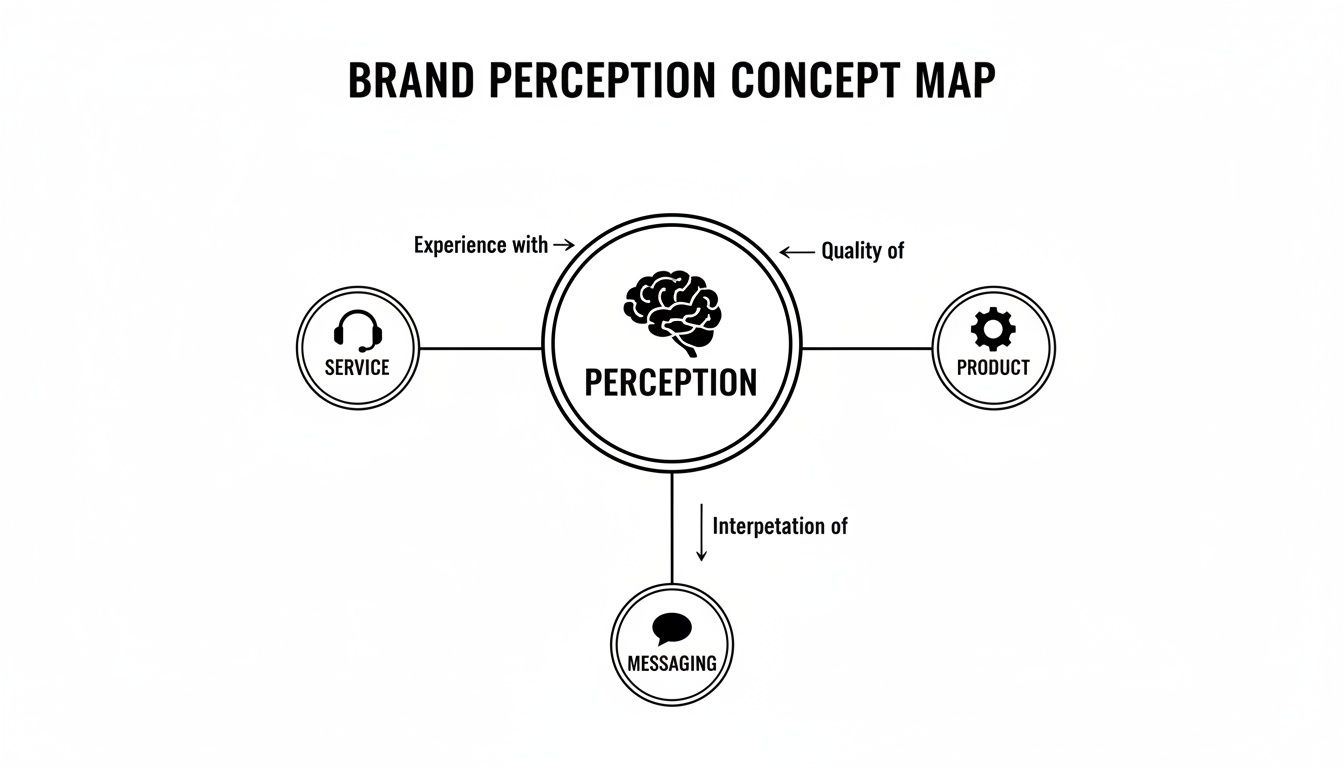
As you can see, perception isn't just one thing. It’s a direct result of all the distinct, measurable experiences a customer has with you.
Understanding the Story with Qualitative Methods
If the numbers tell you what is happening, the qualitative side tells you why. This is where you get into the real human stuff—the emotions, opinions, and stories that shape how people feel about you. It's how you uncover the details that data alone can never show you.
Here’s how you can start gathering those stories:
- Dive Into Customer Reviews: Don't just glance at the star rating. Actually read the comments on Google, Yelp, G2, or wherever your customers hang out. This is where you find out exactly what they love (or really, really don't).
- Run Focus Groups: Getting a small group of your ideal customers in a room for a guided conversation can uncover insights you’d never think to ask about in a survey. The nuances that come out of these chats are pure gold.
- Conduct One-on-One Interviews: Nothing beats a direct conversation. Interviews give you the freedom to ask follow-up questions and really dig into the "why" behind someone's feelings.
The real breakthrough comes when you pair the numbers with the narrative. The data points out a trend, and the stories tell you what’s actually driving it.
This dual-pronged approach isn’t just a nice-to-have; it’s what the pros do. For instance, YouGov’s Best Global Brands 2023 report determines brand health with an Index score that blends multiple factors—like Impression, Quality, Value, and Reputation—from millions of survey responses. It shows how top-tier brands stay tuned in, even when the economy gets rocky.
Essential Tools for Measuring Brand Perception
To put all this into practice, you’ll need the right toolkit. Here’s a rundown of software and platforms that can help you track and analyze brand perception across different channels.
| Tool Category | Example Tools | What It Measures |
|---|---|---|
| Survey Platforms | SurveyMonkey, Typeform, Google Forms | NPS, CSAT, customer feedback, and targeted survey responses. |
| Social Listening | Brandwatch, Sprout Social, Mention | Social media sentiment, brand mention volume, share of voice. |
| Review Management | Podium, BirdEye, Yext | Aggregated customer reviews, star ratings, and review response rates. |
| Web Analytics | Google Analytics, SEMrush | Branded search volume, direct traffic, and user engagement metrics. |
These tools make it possible to gather both quantitative and qualitative data systematically, turning a complex concept into a manageable, ongoing process. Whether you're a startup or a global enterprise, the right stack empowers you to create that essential feedback loop for constant improvement.
Actionable Strategies to Improve Your Brand Perception

Getting a handle on your brand perception is one thing. Actually shaping it is where the real work begins. Improving how people see your brand isn't about a single grand campaign; it's a deliberate, consistent effort woven into everything you do.
It’s about taking those hard-earned insights from your measurements and turning them into actions that genuinely build trust. Let’s look at how you can close the gap between the brand you want to be and the one your customers actually experience.
Develop a Consistent Brand Voice and Proposition
Consistency is the cornerstone of a strong brand. Think about it: when your messaging, visuals, and tone feel the same everywhere—from your website to your social media to your customer service emails—you create a reliable and predictable experience. That’s how you build familiarity and trust.
Your audience needs to know what you stand for and what sets you apart. The first step is to nail down your unique brand proposition. From there, make sure every single piece of communication reinforces that core idea. When your identity is crystal clear, it’s much easier for people to form a stable, positive view of who you are. To get this foundational piece right, check out our guide on effective brand positioning strategies.
Actively Engage with All Customer Feedback
Your customers are giving you a running commentary on your brand perception every single day. You just have to listen. One of the most powerful things you can do is to actively seek out and respond to feedback—especially the negative stuff. It proves you’re listening, you care, and you’re committed to getting better.
- Respond Promptly: A quick reply to a review, comment, or message shows you're paying attention and you value what people have to say.
- Turn Negatives into Positives: Don’t dread bad feedback; see it as a gift. Address the concern publicly, offer a real solution, and show that you’re fixing the root cause. A well-handled complaint can turn a critic into a loyal advocate.
- Show, Don’t Just Tell: It’s easy to say you have great service. Prove it in every interaction. Let your actions speak for themselves.
By jumping into the conversation, you stop being a passive subject of your brand’s story. You become an active participant in shaping it, showing customers that their voice truly matters.
Use Storytelling to Forge Emotional Connections
Facts and features are forgettable. Stories are what stick with us. When you humanize your brand with compelling narratives, you create an emotional connection that logic just can’t touch. Share the origin story of your company, the mission that drives you, and the people behind the scenes.
Forrester's Brand Experience Index revealed something fascinating: elite brands are masters at creating an interconnected perception between their brand and their customers. In fact, their customers' scores are often 5-30 points higher than those of non-customers. This just goes to show how a powerful story can elevate your brand from a simple product to something people feel deeply connected to. You can learn more about how top brands build this connection on YouGov.com.
By putting these strategies into play, you’ll shift from just asking “what is brand perception?” to actively building a reputation that inspires loyalty, commands respect, and forges a lasting bond with your audience.
Answering Your Top Brand Perception Questions
As we've unpacked what brand perception is all about, a few common questions tend to pop up. Let's tackle some of the most practical ones to clear up any confusion and give you some solid takeaways.
How Long Does It Take to Fix a Bad Reputation?
Honestly? It's a long game. Turning around a negative brand perception isn't something that happens overnight with a clever ad campaign. We're usually talking about a timeline of several months, and sometimes even a few years.
The speed of that change really depends on how deep the problem is, how big your audience is, and—most importantly—how relentlessly consistent you are with your fix. It takes a solid strategy built on genuine action, open communication, and delivering great experiences time and time again to earn back trust. A quick PR blitz might offer a temporary boost, but real change only happens when you fix the problem at its source.
Can a Small Business Actually Shape Its Brand Perception on a Tight Budget?
Yes, absolutely. In fact, small businesses have a secret weapon: agility and a direct line to their customers. You don't need a Super Bowl ad budget to make a real impact.
Instead of trying to outspend bigger players, focus your energy on what you can control. Pour your effort into creating an unforgettable customer service experience, actively ask for and respond to every online review, and build a genuine community on the one or two social media channels where your customers actually hang out. Authenticity and direct connection will always punch above their weight class.
If You Had to Pick One Thing, What's the Most Crucial Factor for a Positive Perception?
If I had to boil it all down to one single ingredient, it would be consistency. A strong, positive brand perception is built when what you promise is exactly what your customers get, every single time.
Think about it—this means being consistent across the board:
- The quality and performance of your product or service.
- The tone and helpfulness of every customer support chat, email, and phone call.
- The look, feel, and message of your marketing.
- The values you stand for and how you show up in the world.
When people know precisely what to expect from you—and you deliver on that promise without fail—you build unshakable trust. That trust is the very foundation of a great brand perception.
At ReachLabs.ai, we specialize in creating and executing strategies that build powerful, positive brand perceptions. Our team combines data-driven insights with creative excellence to ensure your brand's voice resonates with your target audience, driving both loyalty and growth. Discover how our full-service marketing approach can elevate your brand's reputation.