You publish a campaign, a blog post, a landing page, or an email. It looks fine in draft. Then the live version exposes what the draft hid. A broken link. A claim nobody re-verified. A headline that sounds like a different brand wrote it. A mobile layout that pushes the CTA below a messy image crop.
That moment is often treated as a proofreading failure. It usually isn't. It's an operating model failure.
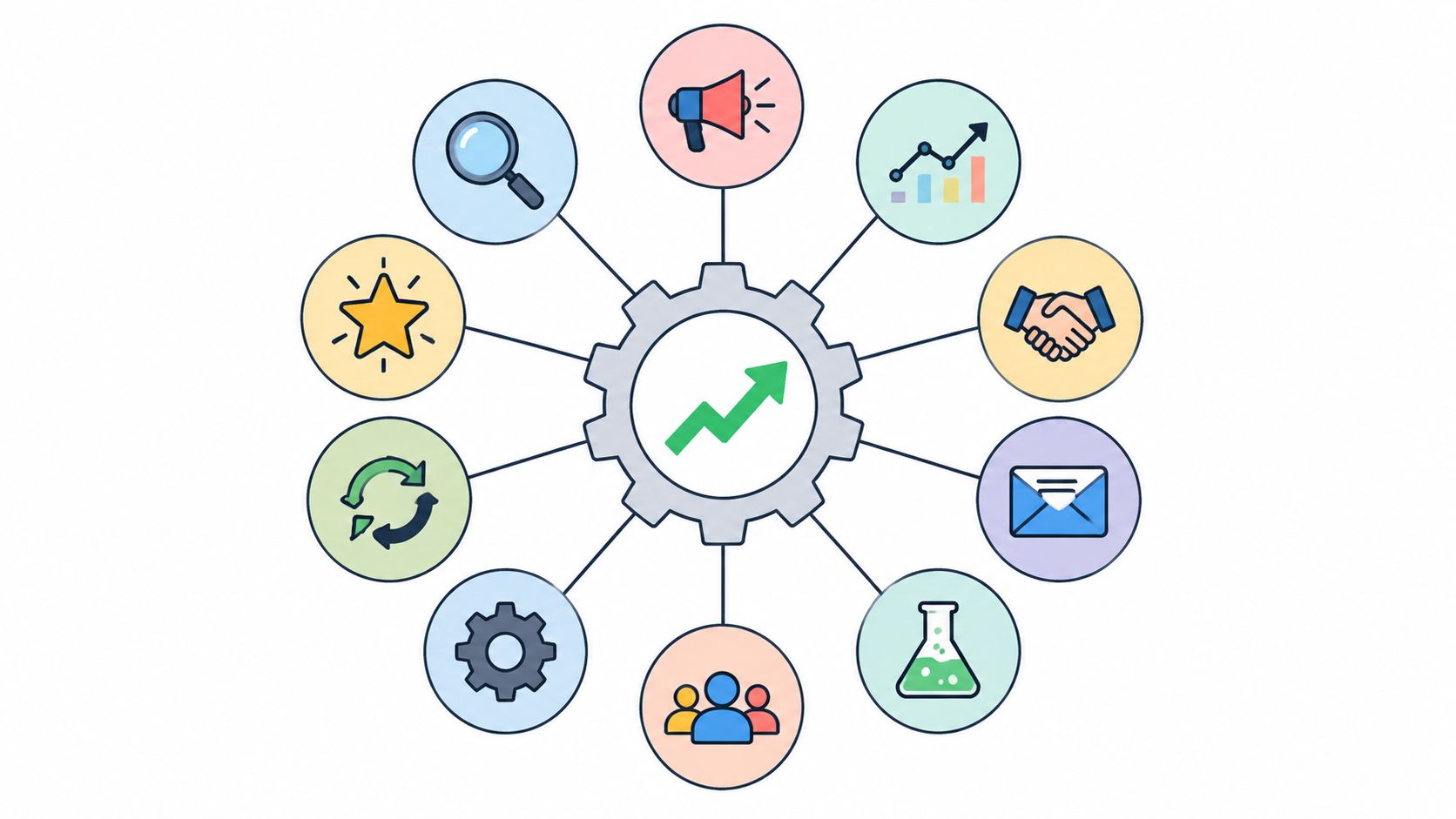
Content quality assurance only works when it stops being the last-minute cleanup step and becomes part of how content gets planned, created, reviewed, approved, and maintained.
Why Most Content Quality Assurance Fails
The old model is simple. Write the content. Send it around. Ask for edits. Fix whatever people happen to notice. Publish.
That model breaks because it assumes quality problems appear at the end. They don't. They start much earlier, when the brief is vague, the owner isn't clear, the source material is weak, or nobody agrees on what "ready" means.
Historically, many teams treated content QA like a quick proofread before publishing. That has changed. As of 2024, 67% of organizations globally have embedded content quality assurance into core operational workflows, reflecting a shift toward lifecycle-based quality systems rather than final-pass review alone, according to WhisperTranscribe's overview of content quality assurance.
The proofread-only model misses the real failures
A typo is visible, so teams fixate on it. The larger failures are less obvious:
- Misaligned messaging: The content is grammatically clean but says the wrong thing for the audience.
- Weak factual controls: Claims make it into copy because they sounded right during drafting.
- Technical sloppiness: Metadata, links, alt text, and headings get skipped because nobody owns them.
- Approval chaos: Too many reviewers comment too late, and nobody makes the final call.
- No maintenance plan: Evergreen content ships once, then gradually ages into a liability.
Those aren't editing issues. They're workflow issues.
Practical rule: If your team only checks quality at the end, you're not running QA. You're running damage control.
More reviewers don't fix a broken system
A common reaction is to add more approvals. That feels responsible, but it usually creates friction without improving output. Legal checks wording. SEO checks keywords. Brand checks tone. Product checks accuracy. Design checks layout. Everyone assumes someone else checked the links, disclaimers, or accessibility basics.
The result is familiar. Lots of comments. Slow turnaround. Missed basics anyway.
A strong content quality assurance system does three things instead:
| Failure pattern | What teams often do | What actually works |
|---|---|---|
| Errors found late | Add another approval layer | Move checks earlier in the workflow |
| Conflicting feedback | Let everyone edit the same draft | Define roles and decision rights |
| Inconsistent quality | Rely on memory and good intentions | Document standards and use checklists |
Quality isn't a final gate. It's a production system. When teams build it that way, content gets cleaner, faster, and easier to scale.
Establish Your North Star for Content Quality
A content team ships a page that reads well, ranks decently, and still misses revenue goals because the offer is unclear, the screenshots are outdated, and the CTA sends the wrong audience to the wrong next step.
That is a quality failure.
Quality needs a shared definition tied to business results, not a vague promise to "publish better content." If one group scores quality by polish, another by traffic, and another by approval speed, the team will produce friction instead of consistency.
You need a Quality North Star. Keep it short, specific, and operational. It should define what good content must do across brand, search, usability, governance, and performance. It should also make trade-offs visible. A launch page can tolerate lighter SEO work if speed matters. A regulated product page cannot tolerate factual ambiguity, even if that slows production.

Start with a one-page quality manifesto
Skip the long playbook at first. Write one page your team can readily use during production and review.
It should answer five questions:
- What must be true before content goes live?
- What changes by channel, funnel stage, or format?
- Which standards are required every time?
- Who decides when standards conflict?
- Which metrics prove the standards are improving outcomes?
Keep this document close to planning and briefing, not buried in a brand folder. Teams that already document goals, audience, and channel priorities in a guide to developing a content strategy have a much easier time turning quality from opinion into an operating system.
Define five pillars your team can score
A useful North Star turns abstract quality into criteria people can review quickly and consistently.
Accuracy and credibility
Start here. If the content is wrong, strong design and clean prose do not save it.
Set a verification rule for each content type. Product pages may require SME signoff on claims, pricing language, and comparisons. Thought leadership may require source checks, attribution standards, and date reviews on examples. The goal is to remove guesswork before review starts.
Brand voice and message discipline
Many style guides fail because they describe personality but not decisions. Writers need rules they can apply under deadline pressure.
Define tone range by channel, approved terminology, banned phrasing, and message priorities. For example, demand gen copy can be more direct than customer education content. Executive ghostwriting may need tighter language controls than blog posts. Quality improves when reviewers can point to a standard instead of arguing from preference.
Readability and user experience
Content quality includes the page experience. If readers cannot scan it, trust it, or use it on mobile, the content is underperforming even if the copy is clean.
Document formatting and accessibility expectations clearly: heading hierarchy, alt text, link clarity, table usability, contrast, mobile rendering, and CTA placement. The W3C's WCAG 2.1 overview is a better reference point here because it gives teams a stable baseline for accessible content decisions without turning review into a subjective debate.
Teams managing localized content should also define how translated pages get checked for layout, truncation, and language-specific defects. Technical teams that automate Django i18n testing can catch issues earlier, but the standard still needs to be written down.
SEO and performance readiness
SEO belongs in the North Star because discoverability affects business value, but it should be tied to page intent rather than treated as a fixed checklist.
Define what "ready" means by content type. A high-intent landing page may need search intent alignment, internal links, metadata, schema, and conversion path checks. A sales enablement asset may need almost none of that. This keeps SEO work proportional and prevents teams from overprocessing pages that will never earn organic traffic.
Compliance and brand safety
Compliance rules should be explicit, not tribal knowledge. That includes legal review thresholds, regulated claims, required disclaimers, competitor references, and any topics that trigger executive or product approval.
At this point, many QA systems either stall or fail. The practical fix is decision rights. Name the approver, define the trigger, and document the acceptable fallback if the approver is unavailable.
Keep it short enough to use under pressure
The strongest quality standards fit on one page because the point is execution, not theory. If reviewers need a meeting to interpret the standard, the standard is too loose.
A simple table works:
| Pillar | Required standard | Owner |
|---|---|---|
| Accuracy | Claims, dates, and product details checked before approval | Content lead or subject expert |
| Voice | Copy follows channel-specific tone and terminology rules | Editor or brand reviewer |
| UX and accessibility | Headings, links, alt text, layout, and mobile readability reviewed | Editor or designer |
| SEO | Search intent, metadata, and internal linking reviewed where relevant | SEO reviewer |
| Compliance | Required disclaimers and approvals completed | Legal or designated approver |
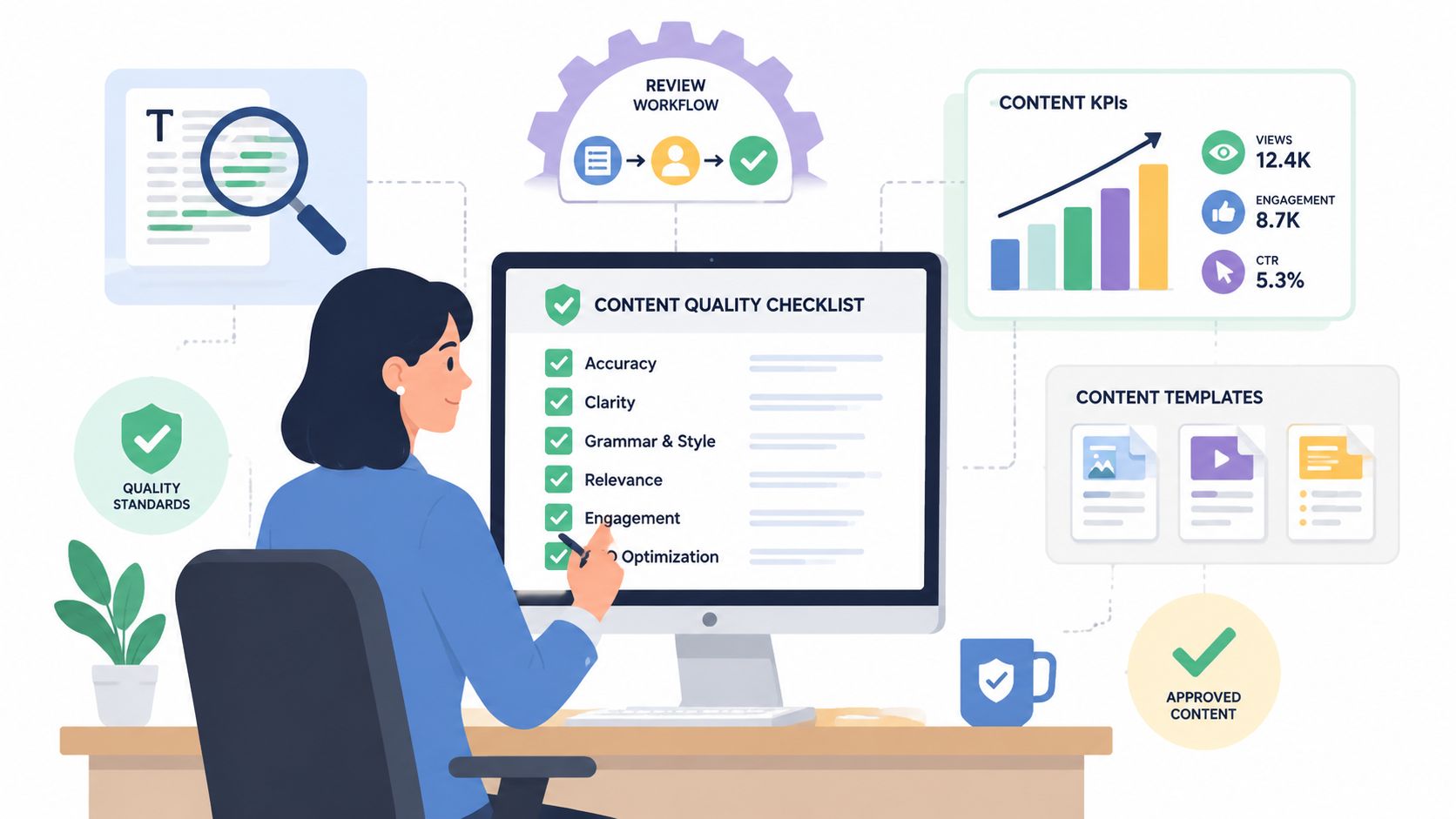
A North Star only works if it connects to performance. Track whether content that passes these standards drives better engagement, lower revision volume, faster approvals, stronger conversion rates, or fewer post-publication fixes. That is how content QA becomes a scalable operating model instead of a proofreading exercise.
Building an Efficient QA Workflow That Works
A good standard without a workflow is just a wish. Without a structured workflow, organizations often either overcomplicate the process or leave it so loose that QA depends on whoever happens to be diligent that week.
The fix is not more bureaucracy. It's clearer swim lanes.
Early QA integration matters. Shift-left testing and AI-assisted QA can detect defects earlier, reducing post-launch rework by 30 to 50% and accelerating time-to-market by 20% in major markets, according to Proofed's guidance on improving the content QA process.
The workflow below works because each checkpoint answers a different question.

Use four checkpoints, not endless review loops
Creator self-check
The writer or producer should never hand off a raw draft. That sounds obvious, but many teams skip it because deadlines compress and people assume editorial will catch everything.
The self-check should cover the basics:
- Intent match: Does the draft answer the brief, target audience, and CTA requirement?
- Source integrity: Are factual claims checked and unsupported lines removed?
- Structural readiness: Are headings, links, images, and obvious metadata needs in place?
This stage removes preventable noise before the draft touches anyone else's queue.
Peer or editorial review
Here, quality becomes visible. The reviewer checks clarity, logic, tone, flow, and factual confidence. They should not be spending the whole pass fixing obvious spelling mistakes the creator could have handled.
A practical editorial review asks:
- Is the argument clear?
- Does the piece sound like the brand?
- Are any claims too loose?
- Is the content useful enough to publish?
Technical and channel QA
This step catches the issues that often survive a strong editorial pass. Metadata, formatting, links, accessibility, embedded media, mobile display, taxonomy, CMS quirks, and page-level SEO all live here.
For multilingual or localized content, technical QA gets even more important. Teams handling translated interfaces or region-specific pages should look at resources on how to automate Django i18n testing, because localization issues often hide in templates, variables, and UI strings rather than body copy.
Later in your operations stack, this checkpoint should connect cleanly to your broader content marketing workflow, so ownership doesn't disappear once the draft leaves editorial.
A short visual walkthrough can help teams see where handoffs usually fail:
Final approval
Final approval should be narrow. One person, or one clearly designated function, confirms the asset meets release standards. This is not the place for fresh strategic debate.
Approvals should answer "is this ready?" not "can we reopen the whole brief?"
Assign owners by decision, not by department
A workflow gets slow when responsibilities are defined by who wants to comment instead of who owns the decision.
Use a simple ownership model:
| Stage | Primary owner | Main decision |
|---|---|---|
| Draft prep | Creator | Is this ready for review? |
| Editorial QA | Editor or peer reviewer | Is this clear, accurate, and on-brand? |
| Technical QA | SEO, web, or ops reviewer | Is this publish-ready in the channel? |
| Final approval | Content lead or designated approver | Does it meet release standards? |
This prevents three common problems. Too many approvers. Duplicate comments. Last-minute reversals.
Build for speed by limiting exceptions
The fastest QA systems aren't loose. They're predictable. Standard content types should use standard workflows. Only high-risk assets should trigger expanded legal, executive, or compliance review.
That keeps the system lean enough to run every week, not just when a team has spare time.
The Practical Checklists That Prevent Errors
A page is minutes from publish. The copy reads clean, the design looks right, and then someone spots the old pricing screenshot, a broken CTA, and a claim with no source. That is what weak QA looks like in practice. The content is close enough to ship, but not controlled enough to trust at scale.
Checklists solve that problem only when they reflect how your team fails. Generic lists become ceremony. Useful lists catch the errors that hurt performance, delay launches, and force cleanup after publication.

The goal is not a longer checklist. The goal is an operational one. Build a review system that protects output quality without turning every publish into a committee exercise. I have seen teams cut avoidable errors fast once the checklist was tied to real failure patterns and applied at the right stage.
Build the checklist from shipped mistakes
Start with your incident log, not a template.
Pull the last 20 to 30 content issues that escaped review. Group them by type. You will usually find a small set of repeat offenders:
- broken internal links
- outdated screenshots
- inconsistent CTA wording
- missing alt text
- weak metadata
- formatting problems on mobile
- unsupported claims
- off-brand openings
That list becomes the backbone of your checklist. If the issue never happens in your operation, it does not deserve permanent space. If it happens twice in a quarter and affects trust, conversion, or rework time, it probably does.
This is also where content QA starts acting like an operating system instead of a proofreading pass. Patterns in the checklist should map back to business outcomes. Broken links and weak metadata affect discoverability and conversion. Unsupported claims create risk. Poor mobile formatting hurts engagement. If your team tracks content performance metrics tied to production and results, it becomes much easier to decide which checks belong on every asset and which belong only on high-risk pages.
Use three layers instead of one overloaded list
One giant checklist slows reviewers down because it forces everyone to check everything, even when they are not the right person to make the call. A layered structure keeps review focused.
Editorial layer
This layer checks whether the content deserves attention.
- Accuracy: Verify claims, names, dates, product references, and quoted material.
- Clarity: Remove repetition, tighten weak sentences, and confirm the piece answers the audience need defined in the brief.
- Voice: Check that tone, terminology, and level of specificity fit the brand and the channel.
- Freshness: Replace stale examples, outdated references, and old screenshots.
Editorial QA should also ask a harder question than "is this well written?" Ask whether the page is useful enough to earn the next action.
Technical layer
Technical misses create expensive rework because they often show up after publish.
- Links: Test internal links, external links, jump links, and CTA buttons.
- Metadata: Confirm title tags, meta descriptions, social previews, canonicals, and category tags where relevant.
- Accessibility: Review alt text, heading order, descriptive anchor text, and color contrast.
- Layout: Check image crops, tables, embeds, spacing, and mobile behavior.
Teams handling larger content volumes often use specialist tools to automate part of this pass. Toolradar's AI QA guide is a useful reference if you are comparing options for recurring checks such as link validation, layout issues, and regression testing across pages.
Brand and compliance layer
This layer protects consistency and reduces avoidable risk.
- Brand consistency: Product names, approved terminology, messaging priorities, and visual conventions match current standards.
- Legal or regulated content: Required disclaimers, approval notes, and restricted claims are handled correctly.
- Audience fit: The asset speaks to the intended reader, supports the right action, and does not drift from the brief.
Field note: If reviewers leave the same corrective comment more than once, add it to the checklist or fix the upstream process that keeps causing it.
Keep the checklist dynamic
A checklist should change when the operation learns something.
If a team ships outdated pricing language, add a pricing verification step. If authors keep missing source support, require claim validation before editorial review starts. If mobile tables break every month, that is not a design quirk anymore. It is a standing QA item.
A simple review sheet can be enough:
| Checklist area | Example prompt |
|---|---|
| Editorial | Is every claim supportable and every paragraph useful? |
| SEO | Does the page match search intent and include complete metadata? |
| UX | Does the content scan well on desktop and mobile? |
| Accessibility | Are alt text, heading structure, and link labels complete? |
| Compliance | Are required disclaimers and approvals present? |
Good checklists do not replace judgment. They reserve judgment for the work that requires expertise, while routine errors get caught the same way every time.
Using Tools and KPIs to Drive Improvement
If your QA system can't show evidence of improvement, leadership will eventually treat it like overhead.
You need tools that reduce manual checking and KPIs that connect quality work to production efficiency and content performance. Not every issue needs software, but software helps when volume rises and standards need to hold across multiple contributors.
The broader market direction supports this shift. The global Quality Assurance Service market was valued at USD 45.12 million in 2024 and is projected to reach USD 65.8 million by 2033, according to Market Reports World's analysis of the Quality Assurance Service market. That same market view also points to quality benchmarks such as 95% accuracy in customer data to improve engagement and notes 20% engagement lift as a benchmark tied to that data accuracy in marketing contexts.

Pick tools by failure type
Don't buy a stack because the category sounds mature. Start with the problems.
| Problem | Useful tool category | What it should catch |
|---|---|---|
| Writing inconsistency | Writing assistant or editorial QA tool | Grammar, tone drift, readability issues |
| Search and metadata gaps | SEO audit platform such as SEMrush | Metadata gaps, broken links, on-page SEO issues |
| Accessibility misses | Accessibility checker | Alt text, heading hierarchy, contrast issues |
| Workflow confusion | Project management platform such as Asana | Ownership, status, review timing |
| CMS publishing errors | CMS workflow rules or approval triggers | Missing fields, unapproved releases |
For teams exploring automation, Toolradar's AI QA guide is a useful starting point for comparing where AI helps and where human review still matters.
Measure the system, not just the content
A lot of teams only track page views, conversions, or rankings. Those matter, but they don't tell you whether your QA operation is healthy.
Track two groups of KPIs.
Operational KPIs
These show whether the process works.
- Error rate: What issues still appear before launch and after launch?
- Review time: How long does each checkpoint take?
- Rework volume: How often does content bounce backward for avoidable fixes?
- Time to resolution: How quickly do teams fix discovered issues?
Performance KPIs
These show whether quality is helping business outcomes.
- Engagement: Are users spending meaningful time with the content and interacting with it?
- Conversion behavior: Does the page support the intended next step?
- Search performance: Are optimized pages earning visibility and click-through over time?
- Content decay indicators: Are once-strong assets slipping because they aren't maintained?
A tighter measurement model should also connect to a broader set of content performance metrics, because quality work earns support faster when teams can tie it to outcomes leadership already watches.
Better QA isn't just fewer mistakes. It's fewer delays, less rework, cleaner launches, and stronger performance from the same content budget.
Watch for false efficiency
Automation can create the illusion of control. A tool can flag passive voice, missing metadata, or accessibility problems. It can't decide whether a page makes a weak strategic promise or answers the wrong audience problem.
Use tools to handle repetitive checks. Use people for judgment, prioritization, and trade-offs. That's where the advantage lies.
Making Quality Your Competitive Advantage
Content quality assurance is still often framed as insurance against embarrassment. That's too narrow.
The stronger case is competitive. Reliable quality makes your brand easier to trust. It makes campaigns easier to launch. It reduces cleanup work that steals time from strategy. It also helps teams scale output without letting every new contributor invent their own standards.
The companies that do this well don't obsess over perfection. They build repeatable quality where it counts. Clear standards. Defined owners. Early checks. Lean approvals. Strong checklists. Useful measurement.
Start smaller than you think
Don't roll out a giant operating system in one week. Pick one content type that creates visible business value, such as blog posts, landing pages, or lifecycle emails. Then apply a simple version of the model:
- Document one standard: Define what good looks like for that format.
- Create one workflow: Decide who checks what, and when.
- Use one checklist: Focus on the mistakes that keep recurring.
- Track a few KPIs: Watch error rates, review speed, and downstream performance.
The trade-off is worth it
A real QA system does add structure. That's the point. But good structure removes confusion, duplicate reviews, and sloppy launches. Bad structure creates theater. Good structure creates momentum.
If your team keeps fixing the same kinds of problems after publish, the answer isn't more hustle. It's operational content quality assurance that treats quality as part of production, not a cleanup task after the fact.
The payoff is straightforward. Cleaner execution. Better consistency. Fewer avoidable errors. More trust in what goes live.
ReachLabs.ai helps brands build content systems that perform, from strategy and production to measurement and optimization. If your team needs a smarter way to scale high-quality content without adding process drag, explore how ReachLabs.ai approaches modern marketing execution.