Everyone wants reach. Most small businesses indeed need relevance.
That runs against the most common advice in marketing, which still sounds like this: post everywhere, widen the top of funnel, chase trends, and aim for scale first. In practice, that approach usually burns time, dilutes messaging, and attracts people who were never going to buy. Broad visibility feels productive. It often isn't.
The stronger play is narrower. Niche marketing strategies work because they force you to say something specific to people with a specific problem in a specific context. That usually means lower vanity metrics and better business metrics. You may get fewer clicks, but more qualified conversations. You may publish less, but your content lands harder. You may stop trying to win the whole category and start owning one profitable corner of it.
That's also why niche doesn't mean small forever. It means focused enough to build trust, referrals, and repeat demand before you expand. If you're still trying to how to identify your target audience, start there. Most niche campaigns fail because the business picked a channel before it picked a customer.
The businesses that last don't shout into the void. They speak clearly to the people already looking for help. They build systems around intent, community, and credibility. And they accept the trade-off that comes with focus. You will exclude some buyers. Good. That's how the right buyers know you're for them.
Below are seven niche marketing strategies that hold up in practice. Each one includes practical ways to implement it, where teams get stuck, and what tends to work better for SMBs than the polished advice you usually hear.
1. Micro-Influencer Marketing
Bigger creator budgets do not automatically produce better niche results. For SMBs, they often do the opposite. You pay a premium for reach you cannot use, while the right smaller creator can explain your product in the language your buyers already trust.
That is why micro-influencer marketing works best as a distribution and credibility play, not a vanity play. A niche audience does not need to see your brand everywhere. It needs to hear a relevant recommendation from someone whose opinion already carries weight in that category.
In one common SMB scenario, a skincare founder sends product to ten beauty creators with tight, responsive communities instead of paying one larger lifestyle account for a single mention. The smaller creators usually do a better job showing texture, routine order, skin-type fit, and realistic results. That context is what gets prospects to move from curiosity to purchase.

HubSpot notes that influencer marketing can generate strong returns for brands that match the right creators to the right audience, which explains why this channel has become a core budget line for many teams instead of a side experiment. The practical takeaway is simpler. Specificity usually beats scale.
How to run it without wasting budget
Start with creators whose audience behavior shows buying intent. Check the comments. Are people asking specific questions about use cases, pricing, results, or comparisons? Does the creator answer with substance? That is a much better signal than follower count.
Use this screening checklist before you send a single outreach email:
- Audience fit: The creator speaks to the customer segment you want, not a broad group that vaguely overlaps.
- Content fit: Their format matches your product. Tutorials, reviews, before-and-after posts, and workflow demos usually convert better than generic lifestyle placement.
- Trust signals: Comments look like real conversations, not giveaway traffic or copied reactions.
- Commercial fit: They have handled sponsored content before without making it feel forced.
- Action fit: You know the one action you want from the campaign, such as a trial signup, product purchase, booked consult, or email capture.
If you need a faster way to build a shortlist, a workflow for finding niche creators for your brand can save hours of manual searching across platforms.
A simple campaign structure that SMBs can actually manage
Keep the offer narrow. Broad briefs create weak content.
A workable starter campaign looks like this:
- Send product or provide access with a clear use case.
- Ask for one primary content asset, such as a short demo, comparison, or honest review.
- Give the creator 3 to 5 proof points, not a script.
- Set one conversion goal and one tracking method, such as a unique code, landing page, or affiliate link.
- Review results after two to four weeks, then decide who deserves a second collaboration.
Here is the trade-off. One-off sponsorships are easier to approve, but repeated partnerships usually perform better because niche buyers often need multiple exposures before they act. If budget is tight, reduce the number of creators and extend the relationship with the best two or three. That tends to outperform spreading spend across ten shallow placements.
Mini-case pattern: what good execution looks like
A local fitness equipment brand does not need a celebrity trainer. It needs credible coaches who train the exact type of customer it wants, such as garage gym beginners, busy parents, or women rebuilding strength after pregnancy. The strongest creator content will not look polished. It will look useful.
In practice, we usually see three content angles pull more weight than a generic endorsement:
- A problem-specific demo
- A comparison against the buyer's current workaround
- A realistic routine showing where the product fits
That last point matters. Buyers in niche categories want to know how a product fits into real life, not just whether it exists.
What usually goes wrong
Brands overscript. Creators then sound like junior copywriters reading claims they would never make in their own voice. Performance drops because the audience can feel the mismatch.
A better brief includes:
- the target customer
- the product truth you need covered
- any claims or topics that are off-limits
- the desired call to action
- examples of past content that felt natural
Leave the phrasing to the creator. You are buying context and trust, not just a placement.
One more caution. Do not judge success only by last-click sales. Micro-influencer campaigns often assist conversion through branded search, retargeting, direct traffic, and word of mouth. Track coupon use or affiliate sales, but also watch lift in site visits, saves, reply quality, and repeat mentions from prospects who say they "kept seeing" your brand in relevant circles.
2. Community-Driven Marketing
A niche brand gets stronger when customers start helping each other without needing the brand in every conversation. That's what community-driven marketing does. It creates a place where users exchange advice, show progress, ask questions, and normalize buying from you.
This isn't the same as starting a social media group and hoping people post. Communities only work when there's a reason to return that has nothing to do with promotions. Harley riders had identity. Notion users had templates and workflows. Peloton users had shared effort. The product was the entry point, not the whole experience.
For SMBs, the simplest version is often enough. A private Facebook Group for local service clients, a Discord for hobbyists, a Slack space for practitioners, or a customer circle tied to workshops can all work if the interaction is useful.
The setup most teams skip
Most communities fail because the brand launches the platform before defining the behavior it wants. Start with a core group of members who already care. Invite customers who ask thoughtful questions, leave detailed feedback, or refer others. Give them a role beyond consumption.
Use this starter structure:
- Weekly ritual: Office hours, feedback thread, spotlight post, or challenge.
- Member utility: Templates, early access, troubleshooting, peer recommendations.
- Recognition mechanic: Featured member posts, badges, shout-outs, or beta access.
Community space matters, but management matters more. Someone on your team needs to prompt discussion, connect members with each other, and protect the tone of the room.
A quiet community isn't always a failed community. But a promotional community usually is.
Where niche communities outperform broad channels
The reason this belongs on any serious list of niche marketing strategies is trust density. Small groups can outperform public feeds because members know everyone there shares a problem, profession, or passion. Advice lands faster in that environment.
That dynamic is one reason niche strategies increasingly show up in private spaces like Discord and closed Facebook groups, where participants often become brand advocates through repeated interaction and word-of-mouth. If you're a small business, that's one of the few channels where you can compete with bigger brands without matching their spend.
A useful mini-scenario is a boutique accounting firm serving creators. Instead of posting generic tax content to Instagram every day, the firm builds a small creator finance group with monthly Q&A sessions, invoice templates, and bookkeeping checklists. Over time, members start tagging friends, sharing wins, and asking service questions publicly inside the group. That's a healthier pipeline than broad content that earns likes from people who will never hire you.
3. Content Marketing for Niche Audiences
Most niche content fails because it tries to sound broad and authoritative instead of specific and useful. If you're writing for a narrow audience, general education is rarely enough. People want language that matches their exact use case, buying stage, and level of expertise.
Niche Audience SEO works because long-tail keywords let smaller brands compete where intent is clearer and competition is lower, especially when teams use tools like SurferSEO, Clearscope, and Frase to refine pages around targeted queries and search intent. This isn't glamorous work. It's usually the content that drives the best pipeline.
A practical example is a software company that stops publishing "what is CRM" and starts publishing "CRM workflow for franchise sales teams" or "how to route leads by territory in HubSpot." One attracts students and random browsers. The other attracts operators close to a decision.
The content engine that actually compounds
Build one strong pillar page around a narrow commercial topic. Then create supporting content that answers adjacent questions, objections, comparisons, and implementation details. Keep each page tied to a real stage in the customer journey.
If you need the audience definition work first, use a sharper process for building a niche audience profile. Content doesn't rescue weak positioning.
Three content types usually pull the most weight for SMBs:
- Use-case pages: Show how your offer solves a problem for a specific role, industry, or scenario.
- Comparison pages: Help buyers evaluate your category, method, or alternative.
- Process guides: Teach the task your ideal customer is already trying to do.
A tactical template for one article
Use this simple flow:
- Problem framing: Name the exact issue in the audience's language.
- Decision context: Explain when the problem becomes expensive or urgent.
- Practical resolution: Give steps, examples, tools, and common mistakes.
- Offer bridge: Show where your service or product shortens the process.
Pinterest's growth to 578 million monthly active users in Q1 2025, up 10% year over year, is a useful reminder that discovery doesn't happen only in Google. For certain niches, visual search and idea-driven platforms can support specialized content that people save, revisit, and act on later.
What doesn't work is publishing around volume alone. A lower-volume query with buying intent is often worth more than a broad topic that inflates traffic and buries your sales team in weak leads.
4. Personal Brand Positioning
In many niche markets, buyers trust a person before they trust a company. That's why personal brand positioning can outperform polished corporate messaging, especially for consultants, agencies, coaches, founders, and technical experts selling high-trust services.
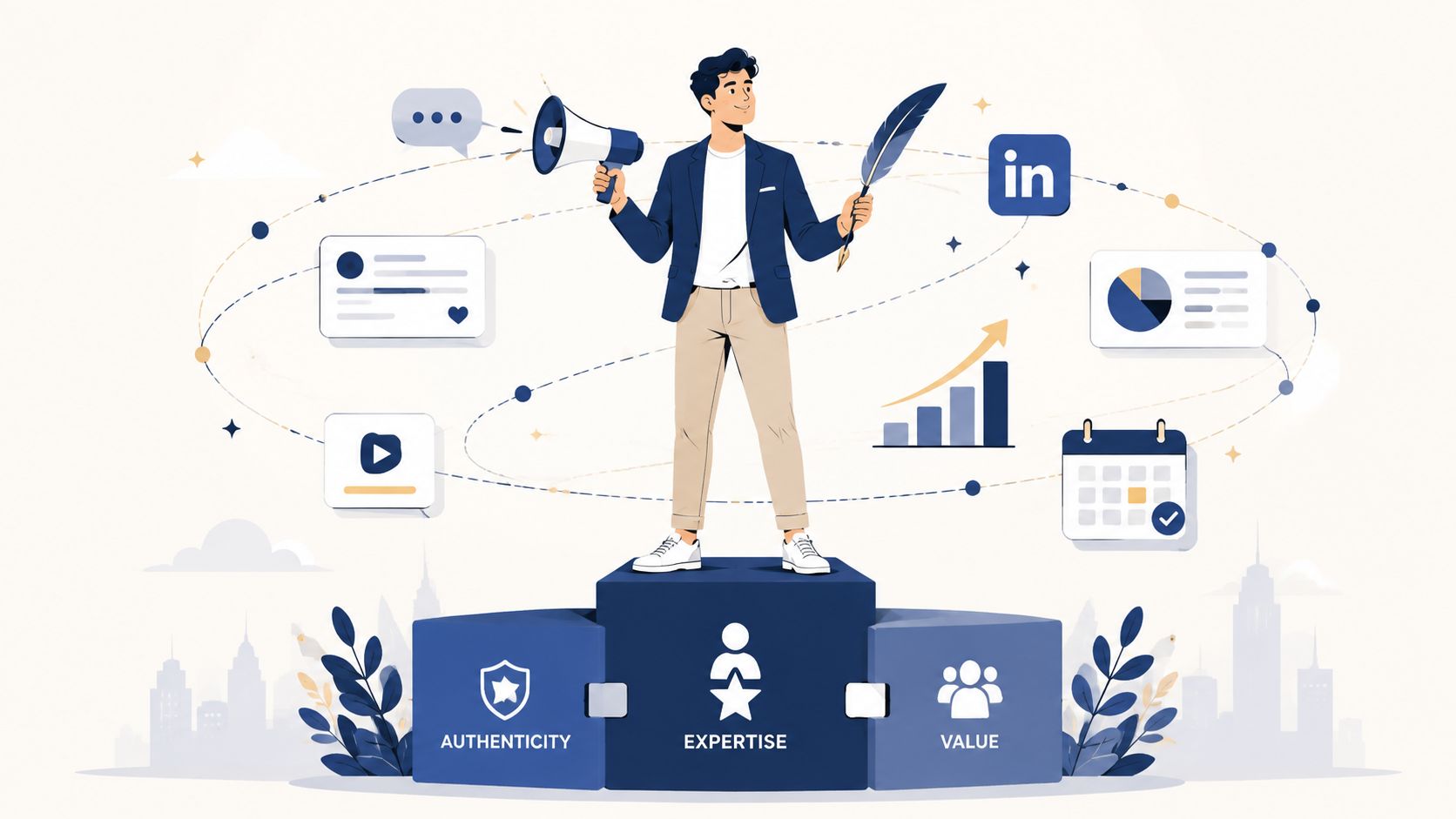
A strong personal brand isn't self-promotion. It's repeated evidence that you understand a narrow problem better than others who discuss it. That evidence can come through LinkedIn posts, podcast appearances, essays, webinars, or practical teardown content. The format matters less than consistency and point of view.
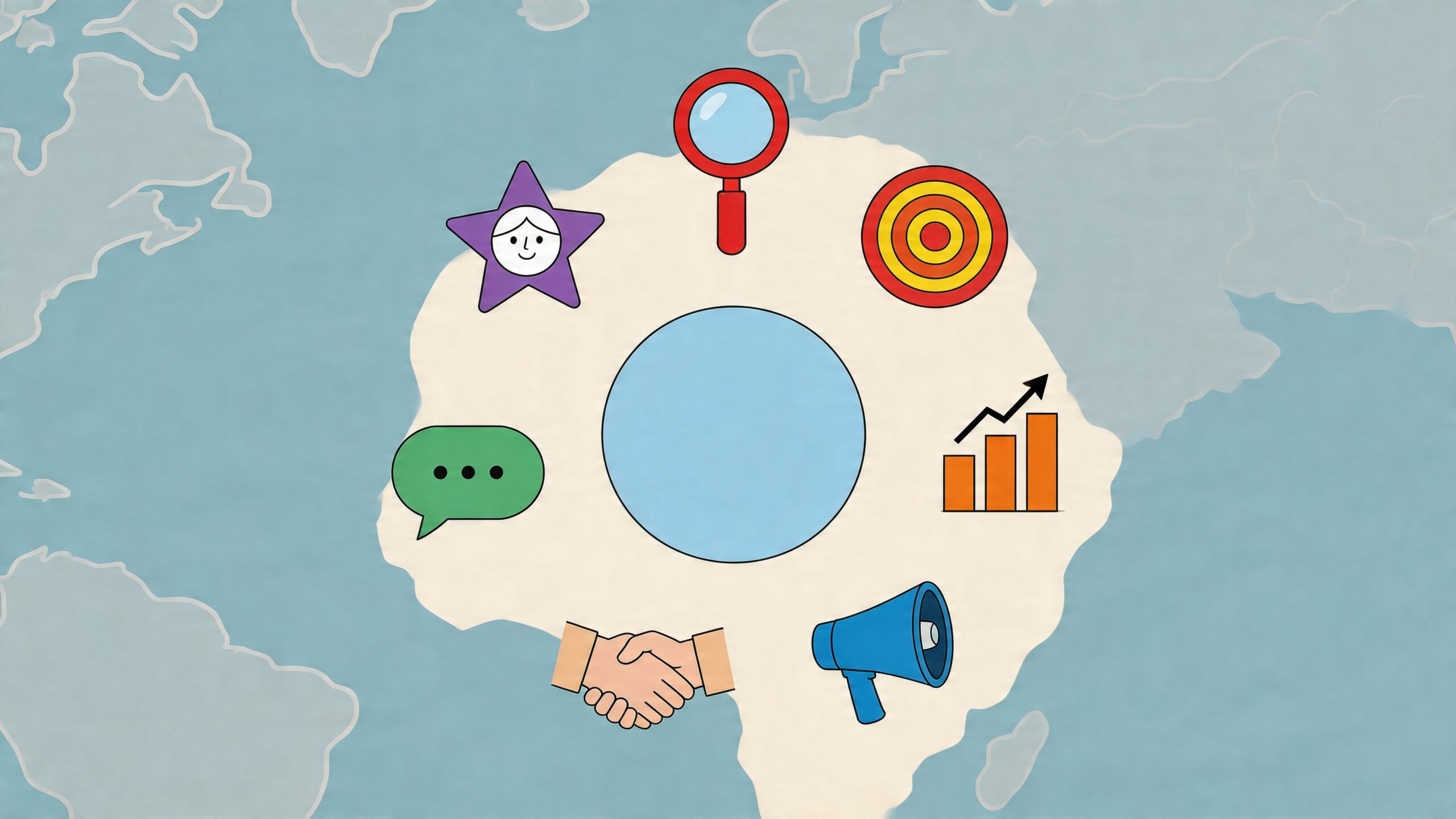
Here’s a visual model for how that ecosystem fits together.

A founder in B2B compliance software doesn't need to post hot takes on everything in tech. They need to become known for a few useful ideas, such as how regulation changes affect implementation, what buyers misunderstand during procurement, and where projects fail after purchase. That's enough to build recognition with the right audience.
What to publish when you don't want to become a full-time creator
Keep your operating model simple. Pick two content pillars you can sustain and one format you can produce without friction. A common reason for failure is choosing a content plan that requires a media team.
A practical cadence might look like this:
- Weekly insight post: One observation from sales calls, client work, or product feedback.
- Monthly deep piece: A long-form essay, webinar, or interview.
- Email recap: A short note that collects your best thinking and drives people back to owned channels.
A lot of founders also need help tightening the message itself. If you're still wrestling with that, this guide to creating a strong personal brand statement is a useful starting point.
Your personal brand doesn't need broader appeal. It needs sharper recall.
What buyers actually respond to
People respond to specificity, pattern recognition, and honesty about trade-offs. They don't need a guru voice. They need someone who can say, "Here's where this breaks in practice, and here's how I'd handle it."
Video can help, especially for service businesses that sell trust before they sell process.
What doesn't work is trying to imitate celebrity creators. Most niche authority grows from useful repetition. Say the same core thing in enough practical ways that the right buyers start associating that problem space with your name.
5. Vertical SaaS and B2B Niche Solutions Marketing
Vertical SaaS wins when the product feels native to the buyer's workflow. Generic software gets compared on features and price. Vertical software gets judged on fit, implementation friction, and whether the vendor understands the daily realities of the industry.
That's why Toast resonates with restaurants and why Veeva became synonymous with life sciences. They don't market software in the abstract. They market operational alignment. For SMB software companies, that's the difference between sounding flexible and sounding credible.
The biggest messaging mistake in this category is trying to sound universal. A platform for dental groups, logistics brokers, or property managers should lean harder into sector language, not soften it.

A better go-to-market structure for SMB teams
Build your marketing around one vertical narrative at a time. That means your homepage can stay broad if needed, but your campaigns, landing pages, demos, and sales scripts should be industry-specific.
Use this structure:
- Industry pain: Show the costly friction your buyer already knows.
- Workflow fit: Explain how your product fits the process they use now.
- Proof assets: Include demos, sales decks, and onboarding flows suited for that vertical.
- Risk reduction: Address compliance, migration, stakeholder buy-in, and training concerns.
One underserved opportunity matters here. Smaller niche segments often need simplified, lower-cost versions of mainstream solutions, especially when complexity and pricing shut them out. That gap is especially relevant for startups, smaller associations, and specialized service firms that need a fit-for-purpose offer without enterprise overhead.
What this looks like in practice
Take a scheduling and billing tool selling into independent wellness clinics. Instead of generic software claims, it creates one landing page for physical therapists, one for med spas, and one for mental health practices. Each page uses the language of that segment, highlights the daily tasks that matter there, and shows an onboarding path relevant to that business model.
That doesn't mean building three products. It means packaging one product through three buyer realities.
What fails is vague positioning like "all-in-one growth platform for modern businesses." Buyers in niche industries don't want modern. They want relevant. If your product solves a specialized problem, your marketing should sound specialized too.
6. Creator Economy and Online Course Marketing
Creator businesses are often overmarketed and under-served. The buyer does not need another promise about "growing faster." They need a clearer path from audience attention to predictable revenue, with fewer tools, fewer manual steps, and less launch chaos.
That changes the job of marketing. If you sell email software, course hosting, memberships, or creator operations tools, your message has to map to the business model the creator is already running. A newsletter operator has different pressure points than a cohort-course educator. A podcaster selling sponsorships thinks differently than a coach selling a $300 workshop.
The opportunity is real, but competition is tighter than many teams assume. According to Goldman Sachs research on the creator economy, the creator economy could approach half a trillion dollars by 2027. That does not guarantee demand for your product. It means buyers have options, and generic positioning gets ignored.
What actually works with creator audiences
Teach the operating system, not just the product.
Creators buy tools in moments of friction. Their list is growing but sales are uneven. Their course launches work, but delivery is messy. Their audience trusts them, but the backend is patched together across five subscriptions. Good marketing enters at that friction point and shows a better workflow.
A practical campaign stack for SMBs usually includes:
- Stage-based messaging: Separate pages and emails for first-sale creators, growing educators, and established operators.
- Business-model proof: Use examples for newsletter businesses, paid communities, cohort courses, evergreen courses, coaching offers, and podcasts.
- Execution content: Publish launch calendars, welcome sequence templates, lesson-release plans, and pricing tests.
- Hands-on trust builders: Run office hours, teardown webinars, migration support sessions, or creator Q&A events.
One pattern shows up repeatedly. Creator buyers respond better to usable guidance than brand theater. A polished campaign with vague inspiration loses to a plainspoken tutorial that helps them set up a checkout flow, improve completion rates, or reduce refund risk.
A tactical playbook for SMB teams
For a platform selling to course creators, I would build the funnel around three jobs.
First, capture demand with practical search and social content. Publish pieces like "How to launch a 4-week cohort course," "Best welcome email flow for paid students," and "How to move from 1:1 coaching to a repeatable curriculum." If your team also sells through founder-led channels, this pairs well with a focused distribution plan similar to these LinkedIn lead generation strategies for expert-led offers.
Second, qualify by creator type. Ask one question early: "What are you selling today?" Then route newsletter writers, coaches, and course sellers into different demo paths, onboarding emails, and case studies.
Third, reduce switching fear. Show migration checklists, sample student portals, launch timelines, and support response expectations. Creators do not only ask, "Will this tool work?" They ask, "Can I move without breaking revenue this month?"
Mini-case scenario
Take a small platform targeting course creators with fewer than 20,000 subscribers. Broad "build your knowledge business" ads usually pull in weak-fit traffic. A tighter approach works better.
The platform creates three assets. A cohort-course launch checklist, a student onboarding email template, and a webinar on cleaning up a tool stack after the first successful launch. It then partners with credible mid-market educators, not celebrity creators, to show actual setup decisions, pricing trade-offs, and lessons from launches that were profitable but imperfect.
That kind of proof converts because it feels attainable.
What fails is aspirational marketing built around outlier creators with giant teams, paid media budgets, and production support. Small and midsize creator businesses need examples they can copy this quarter. Show the workflow, the setup time, the trade-offs, and the first win. That is what gets attention, and that is what gets trials to turn into paying accounts.
7. LinkedIn B2B Thought Leadership and Managed Outreach
LinkedIn is one of the few platforms where niche B2B attention and direct access can still sit in the same workflow. That doesn't mean blasting connection requests. It means combining public credibility with private relevance.
Most outreach fails because the sender hasn't earned even a little familiarity before the first message. If your profile is vague, your content is absent, and your note asks for a call immediately, you're giving the prospect no reason to engage. In niche B2B markets, that gap shows up fast.
Paid search can support this kind of targeted demand capture because PPC advertising converts 50% better than organic traffic and lifts brand awareness by 80%. But LinkedIn is where many service businesses turn interest into conversations, especially when the sale depends on expertise and timing.
The operating model that works
Treat LinkedIn as a coordinated system, not a tactic. Your profile, content, comment activity, and outreach should reinforce the same positioning.
A lean weekly system looks like this:
- Profile clarity: Headline, banner, and About section tied to one buyer problem.
- Thoughtful posting: Insights from client work, objections you hear, and practical lessons.
- Warm engagement: Comment on prospects' posts before sending a message.
- Targeted outreach: Send concise notes that reference context, not generic compliments.
If your team wants a more structured process, this playbook on LinkedIn lead generation for niche B2B teams is the right place to tighten targeting and outreach sequencing.
"Comment before you connect. Connect before you pitch."
A practical sequence for SMBs
A simple sequence often works better than complicated automation.
Day one, engage with a prospect's post if they publish. Day two or three, send a short connection request tied to shared context, industry issue, or a useful resource. After they accept, wait. Then send a message that offers one relevant idea, not a calendar link. If they engage, move to a real conversation.
What doesn't work is volume-first automation. It creates noise, weakens your brand, and fills the pipeline with people who accepted out of politeness, not intent. Niche outreach gets stronger when the list is smaller and the context is better.
7-Point Niche Marketing Strategy Comparison
| Strategy | 🔄 Implementation Complexity | ⚡ Resource Requirements | ⭐ Expected Effectiveness | 📊 Expected Outcomes | 💡 Ideal Use Cases & Key Advantages |
|---|---|---|---|---|---|
| Micro-Influencer Marketing | Moderate, many small partnerships to manage | Low–Medium budget; tools for discovery & coordination | High engagement and conversion within niches | Strong ROI, authentic advocacy, moderate reach | Niche D2C and SMBs; advantage: authentic, cost-effective advocacy |
| Community-Driven Marketing | High, ongoing moderation and engagement needed | Medium–High: dedicated community managers and content | Very high long-term loyalty and advocacy | Increased CLV, organic referrals, slower initial growth | Passionate niches, subscription models; advantage: defensible brand moat |
| Content Marketing for Niche Audiences | Medium, research-driven content strategy | Medium–High: expert writers, SEO, research resources | High for qualified leads and authority building | Evergreen assets, improved SEO, slower time-to-impact | B2B/technical products; advantage: thought leadership & qualified traffic |
| Personal Brand Positioning | Medium–High, consistent public visibility required | Low–Medium: time, content, PR support | High for trust, premium pricing, relationship generation | Organic opportunities, long-term reputation value | Founders, consultants, service providers; advantage: unique, hard-to-replicate authority |
| Vertical SaaS & B2B Niche Solutions | High, deep industry expertise and compliance | High: vertical product work, case studies, sales enablement | High within verticals for conversion and pricing power | Higher conversion & retention, limited total addressable market | Industry-specific SaaS (healthcare, legal); advantage: premium pricing & strong PMF |
| Creator Economy & Online Course Marketing | Medium, platform + creator relations to manage | Medium: platform features, creator support, community ops | High when network effects take hold | Recurring revenue, strong referrals, competitive landscape | Creator platforms and course builders; advantage: network effects & creator advocacy |
| LinkedIn B2B Thought Leadership & Outreach | Medium, consistent content + personalized outreach | Low–Medium: time, content, outreach tools or managed service | High for qualified B2B leads and professional credibility | Quality leads, longer nurture cycles, scalable via systems | B2B services, consultancies, enterprise sales; advantage: direct access to decision-makers |
Your Niche Is Your Strength, Not Your Limit
These seven approaches all point to the same truth. Focus beats sprawl when you're building a durable business. The point of niche marketing strategies isn't to make your market smaller for the sake of it. It's to make your message sharper, your channel mix cleaner, and your sales process easier to trust.
That requires discipline. Most SMBs don't fail because they lack options. They fail because they chase too many options at once. They run paid ads before the landing page is specific. They publish content before the audience is defined. They start outreach before the profile and proof assets are credible. They build communities with no operating rhythm. They hire influencers with no fit. None of that is a channel problem. It's a positioning problem.
The better path is simpler. Pick one niche where you already have traction, insight, or operational advantage. Then choose the strategy that best matches how that niche buys. If your buyers trust creators, start with micro-influencers. If they need peer validation, build community. If they research thoroughly, invest in niche content and SEO. If your founder carries the sale, build a personal brand. If you sell specialized software, lean into vertical language and proof. If your market lives on LinkedIn, combine thought leadership with disciplined outreach.
There are trade-offs in every path. Community takes patience. Influencer work requires vetting and relationship management. SEO compounds slowly. Personal branding demands consistency. Vertical positioning can make you feel narrower before it makes you stronger. LinkedIn outreach needs human judgment to avoid becoming spam. But those are healthy trade-offs because they force clarity.
Clarity creates better execution. When your niche is defined, you know which objections matter, which examples to use, which channels deserve attention, and which content to stop creating. Your sales calls improve because prospects feel understood faster. Your campaigns improve because creative is built around a real buyer, not a hypothetical broad audience. Your team improves because everyone starts making decisions from the same market reality.
This is also where smaller businesses can beat larger competitors. Bigger companies often default to broad messaging because internal alignment is harder. Smaller teams can move faster, speak more specifically, and build tighter feedback loops. You can test a niche landing page, creator partnership, community ritual, or outreach sequence without months of committee review. That's an advantage if you use it.
If you're unsure where to begin, don't start with seven strategies at once. Start with one market, one message, and one repeatable motion. Document what converts. Keep what creates qualified demand. Cut what only creates activity. That's how focused marketing turns into a moat.
Reach matters. Resonance matters more. When you become indispensable to a select group of buyers, growth stops feeling random. It becomes engineered.
If you're ready to turn these niche marketing strategies into a working acquisition system, ReachLabs.ai can help you build the plan and execute it across the channels that fit your market, from influencer campaigns and community building to content, personal branding, and managed LinkedIn outreach.