Let's be honest, the term "organic social media" gets thrown around a lot. So, what does it actually mean in a world where it feels like you have to pay to get anyone to see your posts?
Think of it like this: organic social is the digital equivalent of good old-fashioned word-of-mouth. It’s the conversations, the community-building, and the content you share for free on platforms like Instagram, Facebook, and LinkedIn. You're not buying an ad; you're earning attention.
Instead of interrupting someone's scroll with a promotion, the goal is to become a natural, welcome part of their feed. You do this by creating posts, videos, and stories that are so interesting, helpful, or entertaining that people want to follow you, comment, and share what you have to say.
A Quick Glance at the Core Idea
For those who just need the essentials, this table breaks down the concept.
| Organic Social Media at a Glance | |||
|---|---|---|---|
| Core Principle | Primary Goal | Key Tactics | Cost |
| Earning attention, not buying it. | Building authentic community and brand loyalty. | High-quality content, genuine engagement, consistency. | Time and creativity, but no direct ad spend. |
At its heart, organic social is about playing the long game—building real relationships that pay off in trust and loyalty over time.
How We Got Here: The Foundation of Digital Community
Organic social was the original blueprint for social media marketing. Back in the early days, brands could post and have a pretty good shot at reaching most of their followers. It was a direct line of communication, built on providing consistent value.
But things have changed. A lot. As these platforms grew into massive advertising businesses, their algorithms naturally started to favor paid content. Posts from friends and family got top billing, and content from business pages was pushed further down the feed.
It's a different world now. Back in 2012, a Facebook post could organically reach up to 16% of your followers. Today? The game has been completely reset by algorithms that prioritize paid ads and personal connections over brand content.
Understanding Organic Reach Today
Let's be realistic about the numbers. The average organic reach for a Facebook business page now hovers around a tiny 1.65%. That means if you have 10,000 followers, maybe 165 of them will see your post without you paying for it. Instagram is a bit better, with an average organic reach of 3.50%. You can get a deeper look into these trends by understanding the evolution of social media reach and engagement.
So, is organic social dead? Absolutely not. Its job has just evolved. It’s no longer a megaphone for reaching the masses. Instead, it’s a powerful tool for building a tight-knit community. It's less about reaching everyone and more about connecting deeply with the right people—the ones who will become your most loyal fans.
This is where you build the kind of authentic brand love that paid ads just can't buy on their own.
Organic vs. Paid Social: Understanding the Critical Differences
To really get a feel for what organic social media can do, it helps to put it side-by-side with its counterpart: paid social.
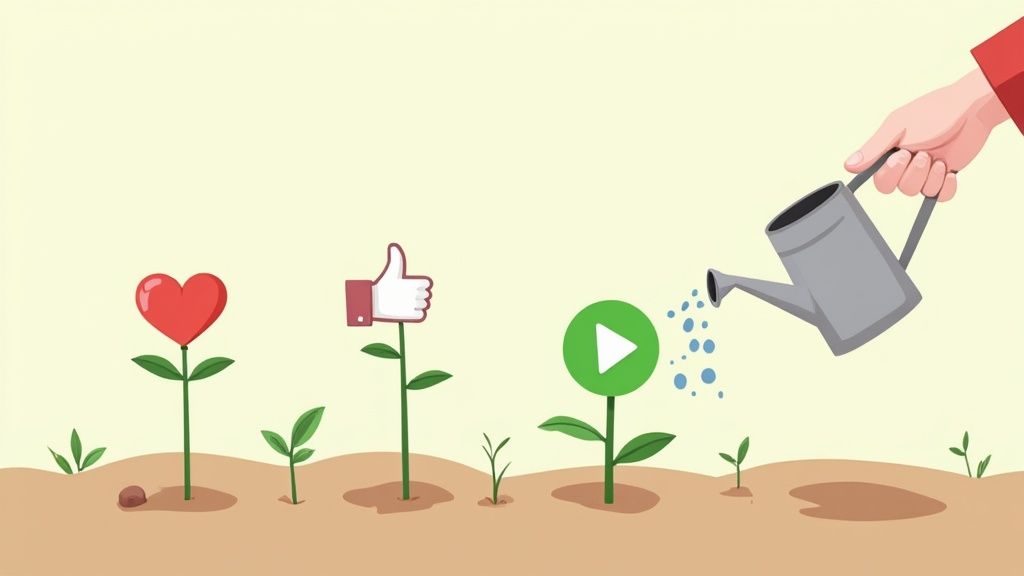
Think of it this way: organic social is like tending a community garden. You invest time, care, and consistent effort to nurture something authentic that eventually sustains itself. It's a long game, but the harvest is genuine connection.
Paid social, on the other hand, is like renting a giant, flashy billboard on the busiest highway in town. It guarantees eyeballs and gets you in front of a very specific crowd, fast. But the second you stop paying the rent, that billboard comes down, and the visibility disappears. One builds lasting roots; the other makes a temporary, high-impact splash.
This simple diagram breaks down the core pillars of an organic approach—it's unpaid, it’s all about community, and it's built on delivering real value.
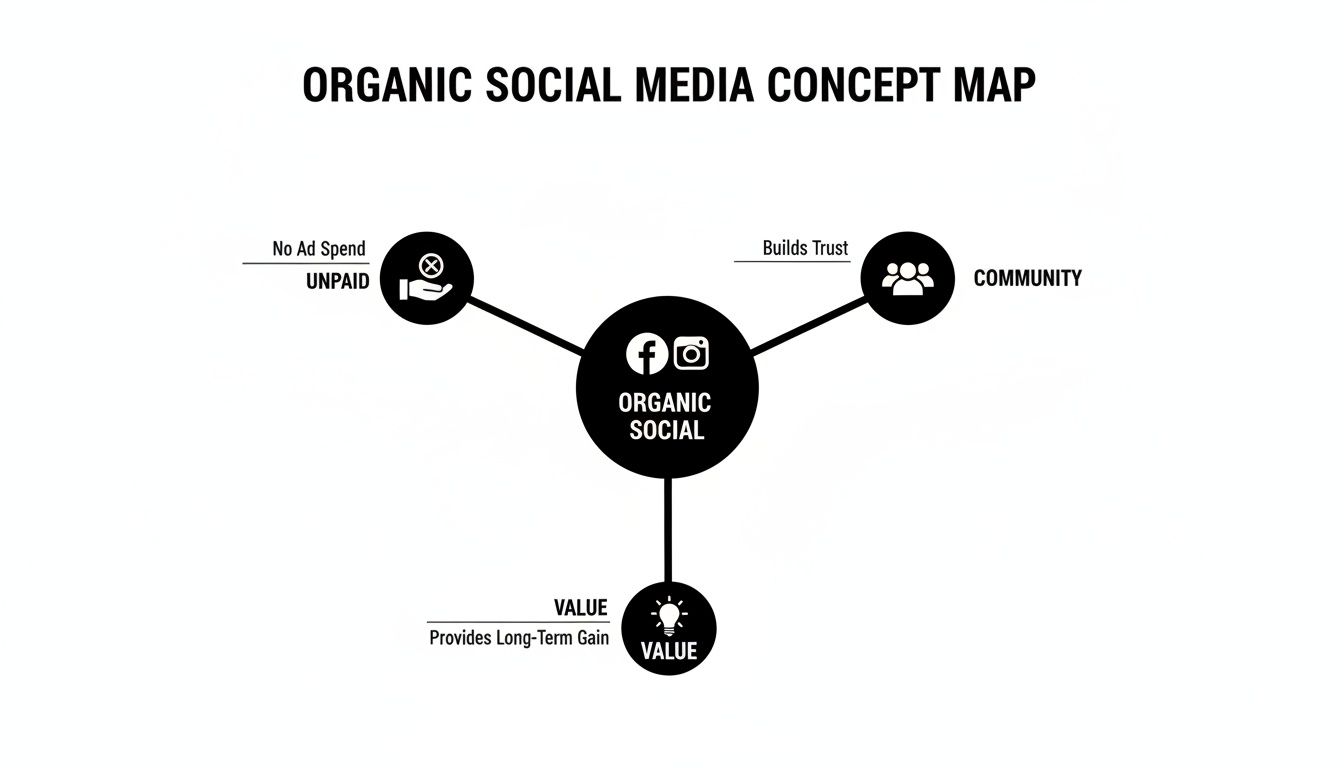
You can see how these three elements weave together to form the foundation of a solid organic strategy, setting it apart from paid methods that are fueled by budget, not connection.
Feature Comparison Organic Social vs Paid Social
While both organic and paid strategies aim to connect with an audience, their methods, timelines, and outcomes couldn't be more different. The table below breaks down these distinctions to help you see where each one shines.
| Feature | Organic Social | Paid Social |
|---|---|---|
| Primary Goal | Build community, trust, and brand loyalty. | Drive specific, immediate actions (sales, leads, clicks). |
| Cost | "Free" to post, but requires heavy investment in time, creativity, and staff. | Requires a direct ad budget; costs can scale quickly. |
| Speed to Results | Slow and steady. Takes months to build momentum and see significant results. | Almost instantaneous. You see impressions and clicks as soon as the campaign is live. |
| Targeting | Limited to current followers and algorithmic discovery (hashtags, explore pages). | Highly specific. You can target users by demographics, interests, behavior, and more. |
| Longevity | High. Great content can circulate and provide value for weeks, months, or even years. | Low. Visibility ends the moment you turn off the ad spend. |
| Authenticity | Perceived as highly authentic and trustworthy, as it's not a direct sales pitch. | Often seen as an advertisement, which can sometimes lead to lower trust. |
Understanding these differences is the key to building a balanced social media plan that uses the unique strengths of each. They aren't opposing forces—they're complementary tools. The trust you build organically makes your paid campaigns more effective, and the audience insights from paid ads can give you fantastic ideas for your organic content.
Longevity and Authenticity
Perhaps the biggest difference between the two lies in the lasting impact and the way your audience perceives your content.
Organic content has a much longer shelf life. A genuinely helpful guide or an entertaining video can be discovered, shared, and revisited for weeks or even months, continuing to provide value long after you've posted it. It keeps working for you.
"Organic is where your voice, values, and vibe come through. It’s where your audience says, ‘I like how this brand thinks.’ It creates that layer of trust.” – Peter Murphy Lewis, Fractional CMO
Paid ads, by their very nature, are temporary. Their impact is tied directly to your budget.
What’s more, people see organic content as more authentic. When someone engages with a post that isn't clearly trying to sell them something, it fosters a genuine sense of connection and loyalty. That’s something paid efforts, on their own, really struggle to replicate. This authentic bond is the true superpower of an organic approach.
Is an Organic Social Strategy Still Worth It?
Let's be honest: with organic reach on the decline, it's easy to wonder if putting all that time and creative energy into an organic social strategy even makes sense anymore. The answer is a resounding yes. While paid ads are great for grabbing attention, they can't buy the things that truly matter in the long run.
Think of it this way: paid ads are like renting a billboard. They get eyes on your message for a short time. Organic social, on the other hand, is like building your own storefront. It's the place where you create a genuine brand personality, live out your values, and have real conversations. Paid ads bring people to the door, but your organic presence is what makes them want to come inside and stick around.
It's Where You Build Real Connections
In a world full of ads, authenticity is everything. Organic social is where you earn it. This is your space for sharing behind-the-scenes moments, celebrating your team, or just jumping into a fun conversation without a sales pitch attached. It's that consistent, human interaction that builds unshakable trust.
"Organic is where your voice, values, and vibe come through. It’s where your audience says, ‘I like how this brand thinks.’ It creates that layer of trust.” – Peter Murphy Lewis, Fractional CMO
When you get this right, you're not just collecting followers; you're building a community. These are the people who will become your biggest fans—the ones who will cheer you on, defend your brand in the comments, and become your most powerful source of word-of-mouth marketing.
A Free-for-All Testing Lab
Beyond the warm and fuzzy community-building, your organic feed serves a killer strategic purpose: it's your R&D lab for what works. Before you pour a single dollar into a paid campaign, you can throw ideas at the wall and see what sticks with your most loyal audience.
- Test your visuals: Do people react more to polished graphics or candid phone pics?
- Hone your messaging: Find out which headlines actually get people talking.
- Check the temperature: Float a new product idea and see if anyone gets excited.
The feedback you get is priceless. Every comment, share, and even the deafening silence on a post that flops is pure, actionable data. You can take what you learn and build paid campaigns that you know will connect, making every ad dollar work smarter.
Even with all the algorithm changes, the strategic value of organic social media isn't going anywhere. In fact, a whopping 73% of businesses see it as their top tool for engaging with what will soon be 5.42 billion global users in 2025. It's why more than half of companies use it hand-in-hand with paid ads—they know organic builds the foundation of trust that makes advertising actually work. You can dig into more social media marketing statistics and insights at Sprinklr.com.
Crafting Content That Organically Stops the Scroll
Alright, let's get practical. Knowing what organic social media is and actually making it work are two different things. The secret is realizing that not all content is created equal. Your mission is to give people a reason to stop scrolling—and that rarely means hitting them with another sales pitch. It's about providing genuine value.
Every time someone shares, comments on, or saves your post, they're sending a tiny signal to the platform's algorithm. These signals say, "Hey, this is good stuff!" The more signals you get, the more the algorithm shows your content to other people. It’s that simple.
Building a Killer Content Mix
Sticking to just one type of post is a recipe for a stale feed. A strong organic strategy blends different formats together to keep your audience hooked and cater to their different moods and needs. Your feed should feel like a real conversation, not a monologue.
Here are a few proven content pillars that drive real organic growth:
-
Educational Content: This is your bread and butter for building trust and authority. We're talking short "how-to" videos, handy tips in a carousel post, or infographics that make complicated ideas easy to grasp. When you solve your audience's problems, they see you as the expert.
-
User-Generated Content (UGC): Nothing beats authentic social proof. When you share photos or reviews from your actual customers, you're not just selling a product; you're showcasing a community. It puts your audience in the spotlight and tells new followers, "Look, real people love this!"
-
Interactive Posts: Get the conversation started! Polls, quizzes, and "Ask Me Anything" (AMA) sessions are fantastic for pulling your followers into the action. They're low-effort for the user but incredibly powerful for making people feel seen and heard.
If you want to get more granular with your planning, exploring different social media content categories can give you a great framework to build from.
The Human Element of Engagement
So, why do these formats connect so well? It's basic psychology. They tap into our core desires for learning, belonging, and connection. Educational content feeds our curiosity, UGC creates a sense of community, and interactive posts turn a one-way broadcast into a two-way dialogue.
An organic post wins when it gives something away for free—a laugh, a new skill, a feeling of connection—without asking for anything in return right away. That’s how you build the trust that makes a future sales pitch feel like a helpful suggestion, not a jarring ad.
By putting value first, you stop shouting at an audience and start building a loyal community that genuinely wants to participate. For some next-level ideas, you can learn how to create truly engaging social media content that fosters these deep connections. A smart content mix doesn't just get you more followers; it turns those followers into your biggest fans.
Building Your Organic Social Media Strategy Step by Step

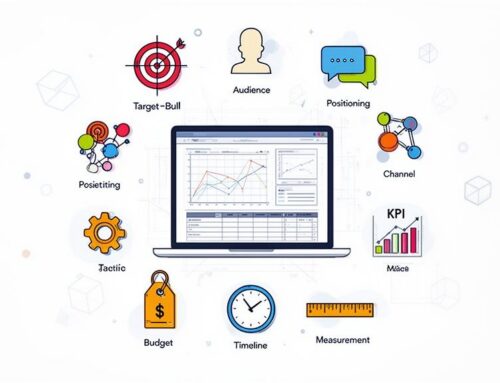
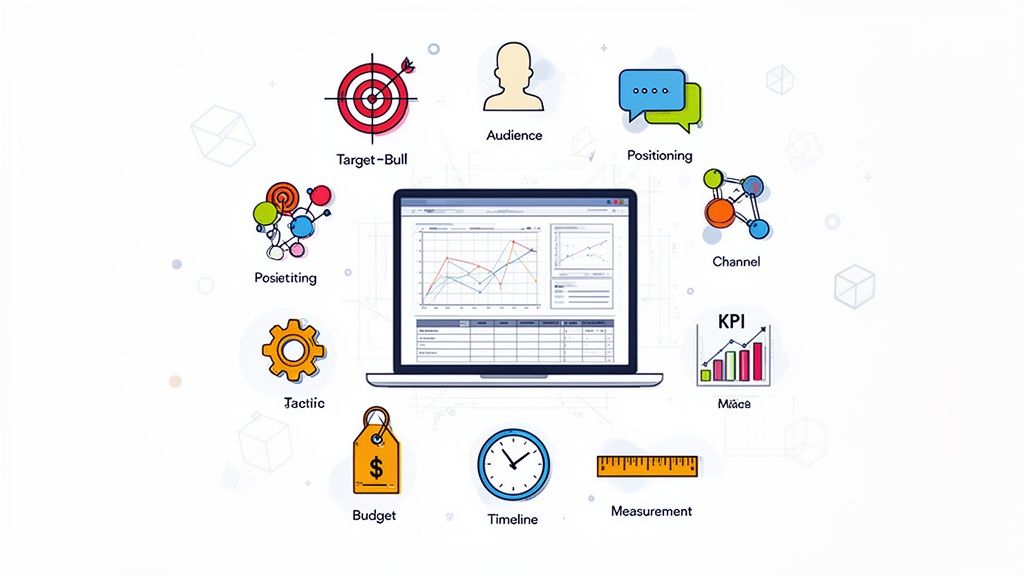
Knowing what organic social media is gives you the "why," but a real strategy gives you the "how." A winning plan isn't about throwing content at the wall and hoping something sticks; it's a thoughtful process that connects your creative work to real business outcomes. Let's walk through the essential steps.
Think of your strategy as a roadmap. Without it, you’re just posting into the void, hoping for the best. With it, every single post, comment, and campaign has a clear purpose tied to your bigger goals.
Define Your Goals and Audience
Before you even think about writing a post, you need to know exactly who you're talking to and what you're trying to accomplish. Vague goals like "get more followers" won't cut it. You need to get specific and set targets you can actually measure.
Are you trying to boost brand awareness by 20% this quarter? Drive 15% more traffic to your new blog series? Generate a certain number of qualified leads for your sales team? These goals will shape your entire approach.
Just as important is getting laser-focused on your audience. Go beyond basic demographics and build out detailed personas. What are their biggest challenges? What do they love? Where do they hang out online?
Your organic strategy is compound interest—it takes time, consistency, and a clear point of view to build momentum. Knowing your audience and goals is the critical first deposit.
Choose the Right Platforms
Here’s a common mistake: trying to be everywhere at once. Spreading yourself too thin is a one-way ticket to burnout and mediocre results. The smarter move is to focus your energy where it counts—on the platforms your audience actually uses.
A B2B software company, for example, will almost certainly get more traction on LinkedIn. A boutique fashion brand? They belong on visually-driven platforms like Instagram and Pinterest. Do a little homework to find out where your ideal customers spend their time, then commit to mastering one or two of those channels before even thinking about expanding.
Create a Sustainable Content Calendar
In the world of organic social, consistency is everything. A content calendar is your secret weapon for making that happen. It eliminates the last-minute panic of "What do I post today?" and ensures you have a steady stream of valuable content ready to go.
Plan out your content themes, formats, and posting schedule ahead of time. A great calendar mixes things up with different types of posts—some that educate, some that entertain, and some that build community—to keep your feed from feeling stale. The key word here is sustainable. It’s better to post three great things a week, every week, than to post ten things one week and then disappear for a month.
For a deep dive into building out this framework, check out our guide on how to create a social media strategy.
Engage Authentically and Analyze Performance
These last two pieces of the puzzle are never "done." Organic social is a conversation, not a broadcast. That means you need to actively engage with your community. Respond to comments, answer questions, and jump into relevant discussions. It's this genuine interaction that builds the trust and loyalty that both people and platform algorithms love.
Finally, you have to track your performance against the goals you set from the start. Dive into your native platform analytics to keep an eye on key metrics like reach, engagement rate, and clicks to your website. This data is gold—it tells you what's resonating and what's falling flat, allowing you to constantly tweak and improve your strategy over time.
Measuring the ROI of Your Organic Social Efforts
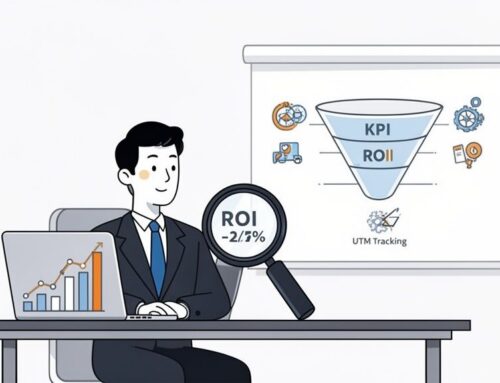
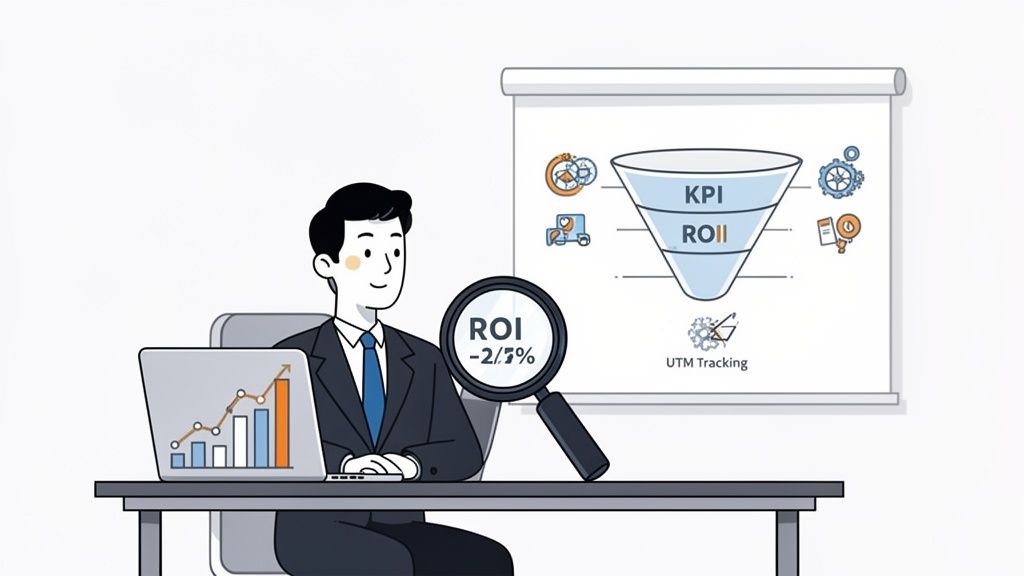
So, how do you actually prove your organic social strategy is working? Without a clear ad spend to point to, measuring the return on investment (ROI) can feel a bit like trying to catch smoke. But it's not impossible—not by a long shot.
The trick is to stop thinking about direct ad metrics like cost-per-click. Instead, you need to track the value generated against the resources you're putting in, like your team's time and creative energy. This value isn't just about immediate sales. It's about building your brand, creating a loyal community, and fueling long-term growth. Think of it as measuring the strength of your brand's relationships.
Key Metrics to Track
To get a clear picture, it helps to organize your metrics into a few key buckets. Each one tells a different part of the story, from how many people you're reaching to how they're interacting with your brand.
Here are the three core areas you should be watching:
-
Awareness Metrics: This is your top-of-funnel view. It's all about how many eyeballs are on your content. The big numbers here are Reach (how many unique people saw your post) and Impressions (the total number of times your content was shown).
-
Engagement Metrics: This is where you see if your content is actually hitting the mark. We're talking about likes, comments, shares, and saves. These aren't just vanity metrics; they're direct signals that people find what you're posting valuable.
-
Conversion Metrics: Now we're getting down to business. This is where you connect your social media activity to tangible outcomes. Keep a close eye on website clicks from your profile, your follower growth rate, and even things like newsletter sign-ups that came directly from a social post.
The real magic in organic social ROI comes from connecting these dots. High engagement should lead to more website clicks, which in turn should contribute to your business goals. That’s how you prove authentic connection is a real, tangible asset.
Connecting Metrics to Business Goals
These numbers don't mean much on their own. The final, crucial step is to tie them directly to your company's objectives.
For example, if your goal is to build brand awareness, then a steady climb in follower count and reach is a clear win. If you're focused on lead generation, then the number of clicks to your website from your social bios is a powerful indicator of success.
By consistently tracking and reporting on these KPIs, you can show exactly how your organic social efforts are building a solid foundation for the business. If you want to go even deeper, our complete guide on how to measure social media ROI lays out a detailed framework to help you track and prove your impact. This turns organic social from a 'nice-to-have' into a measurable engine for growth.
Frequently Asked Questions
Even with a solid plan, a few key questions always come up when talking about organic social media. Let's clear the air and get you some straight answers so you can set the right expectations.
Is Organic Social Media Dead?
Not even close, but its job has definitely changed. Gone are the days of easy, massive organic reach for every post. Today, organic social is the bedrock of your brand's community and loyalty. It's where you build real relationships and have authentic conversations with your most dedicated followers.
Think of it this way: organic is the conversation starter, and paid is the megaphone you use to amplify it.
How Long Does It Take to See Results?
Organic social media is a marathon, not a sprint. If you're looking for instant visibility, paid ads are your ticket. But if you're building something that lasts, you need to play the long game.
With a consistent strategy and high-quality content, you should start seeing real traction in engagement and follower growth within 3 to 6 months.
Patience is everything here. You're building trust and a genuine community, and that just takes time. Trying to rush it with spammy tactics will almost always do more harm than good.
Which Platform Is Best for Organic Reach?
This is the million-dollar question, and the answer is always: it depends entirely on your audience.
Generally, you'll find more organic potential on platforms with powerful discovery algorithms (like TikTok) or those built for specific niches. For B2B, understanding how to analyze content performance on LinkedIn can give you a huge advantage, as its professional focus can be a goldmine. Saturated networks like Facebook, on the other hand, are much tougher to crack organically.
The winning move isn't to be everywhere. It's to figure out where your people hang out and create content that speaks their language, fitting in naturally with the platform's culture.
Ready to build an organic social strategy that drives real results? At ReachLabs.ai, we blend data-driven insights with world-class creative to build communities and elevate your brand's voice. Discover how we can help.