
Social responsibility marketing is much more than a feel-good campaign. It’s a strategic decision to weave your brand's social and environmental mission into the very DNA of your marketing. This approach goes way beyond one-off donations, making your positive impact a central part of who you are and what you offer to your customers.
What Is Social Responsibility Marketing Really?

Let's cut right to it. Social responsibility marketing isn't about temporary gestures or just looking good. It's a deep-seated strategy where your commitment to doing good in the world is baked into every message you send and every interaction you have with your audience.
Think of it less like an annual charity drive and more like your brand's mission statement brought to life. It’s an acknowledgment that today's consumers expect more than a great product; they want to align themselves with businesses that are actively trying to make the world a better place.
The Shift From Product to Purpose
Something fundamental has changed in the way people shop. Consumers are actively looking for authenticity and want to see brands stand for something meaningful. The data backs this up in a big way: a powerful 77% of global consumers say they feel more motivated to buy from companies that are committed to positive change.
This isn't just a passing phase. We've seen this evolution reflected in the corporate world, too. Back in 2011, only 20% of S&P 500 companies even bothered to publish a Corporate Social Responsibility (CSR) report. Fast forward to 2019, and that number exploded to 90%. As detailed in these Harvard Business School Online corporate responsibility insights, this massive jump shows that businesses are responding directly to customer demands for transparency and purpose.
"Authentic social responsibility marketing isn’t about what you say; it's about what you do. It’s the consistent, measurable action behind your brand's promises that builds unshakable trust and loyalty."
Social Responsibility Marketing vs Traditional Marketing
To really get a handle on this concept, it helps to see it side-by-side with traditional marketing. While both ultimately aim to grow the business, their playbooks, scorecards, and end goals look quite different. One is focused solely on selling a product; the other is selling that product and a credible promise for a better future.
This table clearly lays out the core differences.
| Aspect | Social Responsibility Marketing | Traditional Marketing |
|---|---|---|
| Core Focus | Promoting brand values and social impact alongside the product. | Promoting product features, benefits, and price. |
| Primary Goal | Building long-term brand trust, loyalty, and positive social change. | Driving short-term sales, market share, and lead generation. |
| Key Metrics | Brand sentiment, community engagement, social impact KPIs, customer loyalty. | Sales volume, conversion rates, cost per acquisition (CPA), ROI. |
| Consumer Appeal | Appeals to a customer's values, ethics, and desire to make a difference. | Appeals to a customer's practical needs, desires, and budget. |
As you can see, social responsibility marketing plays the long game. It’s about building a loyal community around shared values, where the purchase is just one part of a much larger, more meaningful relationship.
The Business Case for Purpose-Driven Marketing
For any ROI-focused manager or business owner, the real question isn't just what social responsibility marketing is, but why it matters to the bottom line. This isn't just about feeling good; it’s a powerful strategy for tangible growth, brand resilience, and carving out a real competitive edge. It’s how you turn your company's values from a plaque on the wall into a measurable asset.
Think of your brand's reputation like a "trust bank." Every authentic, socially responsible action you take is a deposit. These deposits build serious equity that not only attracts customers but also gives you a much-needed buffer if a PR crisis or market downturn ever hits.
Boosting Brand Reputation and Loyalty
In a sea of competitors, a strong purpose is one of the best ways to stand out. It goes far beyond features and price, connecting with people on a deeper, more human level. That emotional connection is the bedrock of real customer loyalty.
When customers see a brand actively supporting a cause they believe in, their purchase feels different. They aren't just buying a product; they feel like they’re part of a shared mission. This shift from a simple transaction to a genuine partnership is incredibly powerful, turning quiet buyers into your most vocal advocates.
The numbers don't lie. Recent studies show that a staggering 90% of consumers put more trust in socially responsible businesses. What's more, 77% will actively choose to buy from them. That’s a game-changing advantage. You can dig into the full CSR trends report from Harness to see just how this trust translates into loyalty and word-of-mouth marketing.
A strong social responsibility strategy is no longer a "nice-to-have"—it's a core driver of consumer trust and a significant competitive advantage that directly impacts your bottom line.
Attracting Talent and Inspiring Employees
The ripple effects of social responsibility marketing go well beyond your customer base. It has a profound impact on your internal culture and is a secret weapon for recruiting and keeping great people, especially as younger generations demand more from their employers.
A clear, authentic commitment to social good makes your company a place where people want to work. It sends a strong signal that you care about more than just profits, which fosters a genuine sense of pride and shared purpose among the team. This gives you several key advantages:
- Improved Recruitment: You'll stand out to top talent who are looking for employers whose values match their own.
- Higher Employee Engagement: When your team believes in the company's mission, they're more motivated, productive, and invested in its success.
- Reduced Turnover: A positive work environment built on shared values is a major factor in employee satisfaction and retention, which cuts down on the high costs of hiring and training.
Driving Financial Performance and Investment
At the end of the day, social responsibility is a key part of a modern, sustainable business strategy that drives financial results. Investors are increasingly using Environmental, Social, and Governance (ESG) criteria to vet a company's long-term health and risk profile. A solid CSR program is a huge green flag.
For example, committing to specific environmental goals often leads to operational efficiencies and cost savings. Understanding the tangible benefits of e-waste recycling for ESG goals shows how a specific action can boost security and create value while also strengthening your marketing. By weaving social responsibility into your operations, you build a stronger, more profitable, and more resilient business.
How to Build Your Social Responsibility Strategy
Putting together a social responsibility strategy that actually works isn't about some grand, sweeping gesture. It’s about being thoughtful and deliberate. Think of it like building a house—if you rush it with a flimsy blueprint and cheap materials, everyone will see the cracks. The same goes for a purpose-driven strategy that feels tacked-on or inauthentic.
Done right, this process weaves social responsibility into the very fabric of your brand. It’s no longer just a “campaign,” but a core part of who you are. This means taking an honest look inward at your company's DNA, looking outward at the challenges the world faces, and then building a solid bridge between the two.
Find Your Authentic Cause
This is the first, and honestly, the most critical piece of the puzzle. You have to choose a cause that feels like a natural extension of your brand. Authenticity is the only currency that matters here, and today's consumers have a finely-tuned radar for phoniness. Jumping on a cause just because it’s trending is a one-way ticket to being called out for "greenwashing."
Instead, search for that genuine connection between what your business does, what your company truly values, and a social or environmental issue you can realistically impact.
- Look at Your Brand's Mission: What do you stand for, really? Beyond the bottom line. Your core mission is often a compass pointing directly toward a relevant cause. If you're still defining this, our guide on developing a brand strategy is a great place to start.
- Consider Your Operations: The link should feel intuitive. If you're a tech company, focusing on digital literacy or tackling e-waste makes perfect sense. A food brand? Fighting hunger or championing sustainable agriculture is a no-brainer.
- Listen to Your People: What issues keep your employees and your most passionate customers up at night? Surveying your internal teams and your community can reveal powerful, shared values and get you crucial buy-in from day one.
A local coffee shop committing to fair-trade sourcing is a perfect example. It's directly tied to their product, strengthens their supply chain, and speaks to customers who care about where their coffee comes from.
The most powerful social responsibility strategies emerge from the intersection of what your brand does best and a real-world need you can genuinely address.
Set Clear and Measurable Goals
Once you've found your cause, you can't just stop at "we want to help." Vague goals like "making a difference" are impossible to measure and feel hollow. You need to get specific about what success looks like. This is where you set concrete objectives that will steer your marketing and prove your impact. The SMART goal framework is a fantastic tool for this.
Your goals need to be:
- Specific: Don't "support education." Instead, "Provide 1,000 hours of coding education to local high school students." See the difference?
- Measurable: How will you track progress? It could be dollars raised, volunteer hours logged, or pounds of waste diverted from landfills.
- Achievable: Aim high, but be realistic. Set targets that stretch your team but are still within reach given your resources.
- Relevant: Make sure every goal directly supports your chosen cause while also tying back to your broader business objectives.
- Time-bound: Give yourself a deadline. For instance, "We will achieve carbon neutrality in our shipping operations by the end of 2025."
Setting these clear targets does more than just focus your team. It gives you the transparent data you need to tell your story, building trust through accountability.
Engage Your Key Stakeholders
A social responsibility strategy can't thrive in a vacuum. It needs to be a collaborative movement that brings everyone connected to your brand along for the ride, turning them from passive observers into active partners. Getting your stakeholders involved is the key to both executing the plan and amplifying its message.
Who do you need to bring into the fold?
- Your Employees: Your team members are your very first, and most powerful, brand ambassadors. Involve them in the initial brainstorming, create meaningful volunteer opportunities, and celebrate every win together. Their genuine passion is infectious.
- Your Customers: Give your customers simple, clear ways to participate. This could be a round-up donation at checkout, a buy-one-give-one model, or a campaign that highlights user-generated content related to your cause. When customers feel like they're part of the solution, their loyalty skyrockets.
- Your Community and Partners: Don't go it alone. Team up with established non-profits, local community groups, and even other like-minded businesses. These partnerships lend instant credibility and expand your reach in ways you couldn't manage by yourself. Partnering with a respected environmental non-profit, for example, validates your efforts and allows you to lean on their expertise.
By looping these groups in, you transform your social responsibility marketing from a simple corporate announcement into a living, breathing community effort that drives real, lasting change.
Real-World Examples of Social Responsibility Marketing
Theory is one thing, but seeing social responsibility marketing in action is where the real inspiration comes from. The best purpose-driven campaigns aren’t about one-off grand gestures; they’re built on authentic, consistent actions that genuinely connect with an audience.
Let’s break down a few killer examples. These brands, from global giants to nimble startups, prove that a powerful purpose can drive incredible business results when done right.
Patagonia: Don't Buy This Jacket
Patagonia has been a champion for environmental advocacy for so long that the brand name itself is practically synonymous with activism. Their commitment isn’t just a slogan—it’s baked into everything they do, from their supply chain right down to their marketing.
The Situation: Patagonia needed to confront the hyper-consumerism of Black Friday, an event that runs completely counter to its mission of sustainability and reducing waste. They wanted to make a statement that would cut through the noise, even if it meant telling people not to shop.
The Move: On Black Friday back in 2011, Patagonia ran a legendary full-page ad in The New York Times. The headline was audacious: "Don't Buy This Jacket." The ad laid bare the environmental cost of that single piece of clothing and urged people to buy only what they truly needed. It was a masterclass in counterintuitive marketing.
The Payoff: The campaign was a smash hit. It sparked a massive media conversation, cementing Patagonia’s reputation as a company that puts its money where its mouth is. And the paradox? Sales actually went up. Customers who shared their values felt an even deeper loyalty, proving that standing for something can be far more profitable than just selling something.
"Patagonia's campaign teaches a vital lesson: when your social responsibility is authentic, you can take bold risks that strengthen customer loyalty far more than a traditional sales-focused ad ever could."
Bombas: The One-for-One Model Reimagined
You’ve probably heard of the "buy-one-give-one" model, made famous by TOMS Shoes. But Bombas took that simple, powerful concept and applied it to an area of need that most of us overlook.
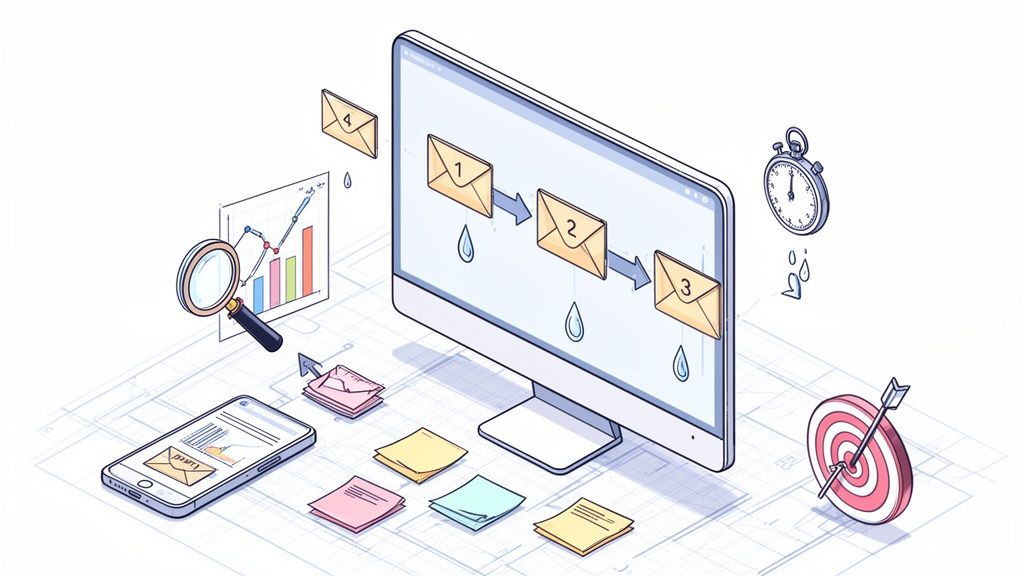
This visual captures the general journey of building out a CSR strategy, from getting clear on your values to getting your message out there.

It’s a clear roadmap: align your mission with your business, plan how you’ll make an impact, and then bring your community along for the ride.
The Situation: The founders of Bombas stumbled upon a startling fact: socks are the #1 most requested item in homeless shelters. They saw an opportunity to build a business that could tackle this specific, unmet need in a real, scalable way.
The Move: Bombas built their entire company around one simple promise: for every pair of socks you buy, they donate a specially designed pair to someone in need. Their marketing isn't just about comfy socks; it’s about the story and the impact behind every single donation. The purpose isn't an add-on; it's the core selling point.
The Payoff: To date, Bombas has donated over 100 million items. That crystal-clear mission has built a fiercely loyal customer base that feels genuinely good about where their money is going. It’s the ultimate proof that your social mission can be the very foundation of your business model.
LEGO: Building a Sustainable Future
What happens when your entire product is made of plastic? For a brand like LEGO, sustainability isn’t just a buzzword—it's a massive, complex challenge. Instead of shying away from it, they’ve made it a central part of their story.
The Situation: LEGO knew it had to address the environmental footprint of its iconic bricks to meet modern consumer expectations and, frankly, to future-proof the business. The trick was finding a way to become more sustainable without sacrificing the quality and durability that makes a LEGO brick a LEGO brick.
The Move: The company has put serious money behind its goals, investing over $1.4 billion in sustainability initiatives. A huge part of their strategy is just being transparent about the journey. They openly share their goals, like making all packaging sustainable by 2025 and their ongoing search for alternatives to oil-based plastics.
The Payoff: By tackling the issue head-on and being transparent about their progress (and their challenges), LEGO has kept customer trust. They’ve managed to turn a potential brand risk into a compelling story about innovation and responsibility. It goes to show that even a legacy brand can pivot toward a purpose-driven future.
How to Measure the Impact of Your CSR Marketing
Sooner or later, every marketer gets asked the big question: "Is this actually working?" When you're running social responsibility campaigns, that question gets a little more complex. You can't just point to a sales chart. The real impact of purpose-driven marketing is a mix of hard numbers and something much more human.
Think of it like checking the health of a forest. You can count the trees, which gives you important, concrete data. But to really know if the forest is thriving, you also have to check the air quality and see what's living in the undergrowth. You need both the quantitative and the qualitative to see the full picture.
Blending Hard Data with Human Stories
To get a true feel for your impact, you need to look at two sides of the same coin. On one side, you have your quantitative metrics—the numbers you can count, track, and put in a spreadsheet. This is the data that speaks volumes in the boardroom and helps you justify your budget.
On the other side are the qualitative insights. These are the stories, the comments, and the shifts in perception that show you're building a real connection. They're the "why" behind the numbers. A truly effective strategy doesn't just track one or the other; it weaves them together. If you want to go deeper on this, our guide on how to measure marketing effectiveness is a great next step.
A successful social responsibility marketing initiative doesn't just increase sales; it shifts perceptions, builds communities, and earns genuine trust that a simple ad campaign never could.
Key Performance Indicators for Social Responsibility Marketing
Alright, so what should you actually be tracking? Turning broad goals into specific KPIs is what separates wishful thinking from a real, measurable strategy. It's crucial to learn how to measure marketing ROI with the right formulas, because this is what proves your value and secures buy-in for future projects.
Here’s a breakdown of the KPIs that matter most, broken down by what they measure and the tools you can use to track them.
Key Performance Indicators for Social Responsibility Marketing
This table gives you a clear look at the metrics you can start tracking today to measure the true success of your social responsibility initiatives.
| KPI Category | Specific Metric | How to Measure It |
|---|---|---|
| Brand Perception | Brand Sentiment: The tone of conversation around your brand (positive, neutral, negative) in relation to your cause. | Use social listening tools (like Brand24 or Awario) to analyze mentions and comments. |
| Share of Voice (SOV): Your brand's percentage of the total conversation about your chosen social issue. | Track mentions of your brand alongside keywords related to your cause versus competitors. | |
| Community Engagement | Social Media Engagement Rate: Likes, shares, comments, and saves on your CSR-focused content. | Monitor your social media analytics dashboards for post-by-post performance. |
| User-Generated Content (UGC): The volume of content created by your audience related to your campaign. | Create a unique campaign hashtag and use tools to track its usage and reach. | |
| Business Impact | Sales Lift: Direct increase in sales attributed to a specific CSR campaign or promotion. | Analyze sales data during campaign periods compared to a baseline, using promo codes for tracking. |
| Referral Traffic: The amount of traffic coming to your site from content about your CSR initiatives. | Use Google Analytics to check referral sources from partner non-profits or media coverage. | |
| Internal Impact | Employee Engagement: Employee participation rates in volunteer programs or internal CSR initiatives. | Track sign-ups and participation through internal surveys and HR data. |
| Employee Net Promoter Score (eNPS): How likely your employees are to recommend your company as a place to work. | Conduct regular, anonymous employee surveys to gauge morale and alignment with company values. |
By tracking these KPIs, you can move beyond simple reporting and start telling a compelling story. You can confidently show that your campaign not only drove a 15% increase in sales but also boosted positive brand sentiment by 40% and resulted in 500 employee volunteer hours. That’s a powerful narrative that proves the incredible, multi-layered return on doing good.
How to Avoid Greenwashing and Build Genuine Trust

When you're marketing your social impact, authenticity isn't just a nice-to-have; it's everything. Today’s customers are incredibly savvy and can spot disingenuous claims from a mile away. Nothing torpedoes brand trust faster than greenwashing—making your company seem more environmentally or socially responsible than it actually is.
Think of it like a real friendship. You don't build a strong bond with one grand, empty gesture. It's built on a foundation of small, consistent, and honest actions over a long period. One exaggeration can shatter years of work, which is why transparency has to be your north star.
The Bedrock of Trust: Total Transparency
True authenticity starts with being completely open about your journey—the good, the bad, and the "we're still figuring this out." People don't expect you to be perfect. In fact, they're more likely to connect with your honesty. A recent poll even found that 74% of consumers would drop a brand for crossing an ethical line.
Sometimes, being upfront about where you fall short is more powerful than pretending you have it all together. It proves you're committed to real progress, not just chasing a PR win.
Your marketing claims are a promise. If your actions don't back them up, you're not building a brand—you're just making noise.
To keep your claims firmly rooted in reality, every statement needs proof. It's time to move past vague phrases like "we're eco-friendly" and get specific with data. This isn't just about building credibility; it's a critical part of solid reputation management and social media strategy.
Your Authenticity Checklist
Before you hit 'publish' on any campaign, run your messaging through this quick gut-check. It will help you make sure your marketing is built on a solid foundation of action, not just clever words.
Is Our Claim Specific and Measurable?
- Don't say: "We're reducing our carbon footprint."
- Do say: "We've cut our shipping emissions by 15% this year by optimizing delivery routes."
Can We Prove It Easily?
- Your statements must be backed by data, third-party certifications (like B Corp or Fair Trade), or public reports. If a customer asks for the receipts, you better have them ready.
Is the Hype Proportional to the Impact?
- Don't launch a massive campaign around a minor initiative. If you donate 0.1% of profits, it shouldn't be the core of your brand identity. The scale of your marketing needs to honestly reflect the scale of your impact.
Are We Honest About Our Limitations?
- It's okay to admit you're not there yet. For instance, "While our boxes are now 100% recycled, we're still finding a sustainable option for our plastic bottle caps and aim to make the switch by 2026."
This unwavering commitment to honesty is the only way to build a brand that people not only buy from but truly believe in.
Your Social Responsibility Marketing Questions, Answered
Okay, so you're moving from theory to action. That's when the real questions pop up. Let's tackle some of the most common hurdles marketers and business owners run into when trying to get social responsibility marketing off the ground.
What if I Have a Small Budget?
This is the number one question I hear, and the answer is simple: you don't need a huge budget to make a real difference. In fact, some of the most powerful initiatives are built on creativity and authenticity, not just big checks.
For small and medium-sized businesses, the key is to think local. Your efforts can have a massive ripple effect in your own community.
Try one of these budget-friendly ideas:
- Organize a Team Volunteer Day: Connect with a local charity and dedicate a day to helping out. It’s fantastic for team morale and often gets you some positive local attention.
- Skill-Based Volunteering: Put your team’s professional talents to good use. If you’re a marketing agency, maybe you can help a non-profit with their website. A design firm could create a new logo for a community group, pro bono.
- In-Kind Donations: Donate what you have instead of cash. A restaurant can give food to a local shelter, or a software company can provide free licenses to a school. It’s all about using your existing resources for good.
How Should I Handle Negative Feedback?
First, don't panic. If your brand gets called out or criticized, your first instinct might be to get defensive, but that’s the worst thing you can do. Believe it or not, negative feedback can be a gift.
Remember, a 2023 study found that 74% of younger consumers will ditch a brand that crosses an ethical line. How you handle criticism speaks volumes about your true commitment.
When you get called out, treat it like a conversation, not an accusation. The best response is always fast, transparent, and focused on action. It shows you’re serious about your promises.
Listen to what people are actually saying to get to the heart of the issue. Then, respond publicly with humility—thank them for raising the concern. Finally, and most importantly, tell everyone what concrete steps you're taking to address it. This turns a potential PR disaster into a moment to prove you’re accountable and willing to improve.
Bringing your social responsibility story to life can feel complex, but it doesn't have to be. At ReachLabs.ai, our experts help brands weave their values into their marketing to build trust and drive growth. Let us help you tell your story. See what we can do for your brand at ReachLabs.ai.