

In a landscape saturated with advertising, influencer marketing has emerged as a powerful channel for cutting through the noise and connecting with audiences authentically. The challenge, however, isn’t just finding influencers; it’s designing campaigns that genuinely resonate, drive engagement, and deliver measurable results. Simply replicating a viral trend is not a strategy. True success comes from understanding the nuanced interplay between brand identity, creator authenticity, and audience expectations.
This guide moves beyond generic advice to provide a strategic breakdown of standout influencer marketing campaign examples. We will dissect the objectives, tactics, and outcomes of real-world successes, offering a blueprint for marketers aiming to elevate their own initiatives. Instead of just showing you what worked, we will explain why it worked and how you can apply those core principles.
Inside, you will find detailed analyses from leading platforms and agencies that are shaping the industry, including HubSpot, Later, and Upfluence. Each example includes a deep dive into the campaign’s mechanics, offering replicable strategies and actionable takeaways. We’ll explore everything from micro-influencer collaborations to large-scale brand ambassadorships, providing the insights you need to build campaigns that not only reach but also inspire your target audience. Let’s get started.
1. 2025 Influencer Marketing Agencies for Brand Growth by ReachLabs.ai
Kicking off our list is not a singular campaign, but an essential strategic resource for any brand looking to execute one. ReachLabs.ai’s “2025 Influencer Marketing Agencies for Brand Growth” is a comprehensive guide and directory that provides a strategic framework for identifying and partnering with the right agency. This platform stands out because it moves beyond a simple list, offering deep insights into what makes a modern influencer agency effective.
For marketing professionals and brand strategists, this resource is a critical first step in building successful influencer marketing campaign examples of their own. It details the methodologies used by top-tier agencies, emphasizing data-driven strategies over vanity metrics. The guide meticulously breaks down how to vet potential partners, ensuring they align with specific brand objectives, whether that’s boosting e-commerce sales, increasing brand awareness, or generating qualified leads.
Strategic Advantages and Key Offerings
What elevates this resource is its focus on a holistic, integrated approach. ReachLabs.ai champions a model where influencer marketing is not a siloed activity but a core component of a larger digital strategy.
- Data-Driven Vetting: The guide explains how to analyze an agency’s approach to data, from audience demographics and psychographics to performance tracking and ROI measurement. This ensures your campaigns are built on a foundation of tangible insights.
- Comprehensive Service Integration: It highlights agencies that offer more than just influencer matchmaking. This includes content creation, performance marketing, personal brand building, and even business solutions like managed LinkedIn outreach, creating a more cohesive and cost-efficient marketing ecosystem.
- Cost Optimization: A key takeaway is how a full-service agency can streamline marketing spend. By integrating multiple functions under one roof, brands can achieve greater efficiency and impact compared to managing several disparate, niche vendors.
Practical Application for Brands
This guide serves as a masterclass in agency selection, providing actionable criteria to make an informed decision. The content is structured to help you understand the nuances of the agency landscape and what questions to ask to find the perfect fit. For those new to this process, the article provides a clear roadmap.
This resource is an indispensable tool for any brand aiming to level up its influencer marketing efforts. It provides the strategic foresight needed to build partnerships that deliver measurable results and long-term growth. To further assist in this crucial decision, exploring their guide on how to choose a marketing agency can provide even more detailed selection criteria.
Access the full guide here: https://www.reachlabs.ai/influencer-marketing-agencies/
2. Influencer Marketing Hub
Influencer Marketing Hub serves as a comprehensive public library filled with curated influencer marketing campaign examples and detailed case studies. Unlike platforms that focus solely on tools, this site is a knowledge base, making it an invaluable resource for marketers seeking inspiration and strategic insights. It aggregates real campaign narratives, offering concrete metrics and direct links to creator posts.
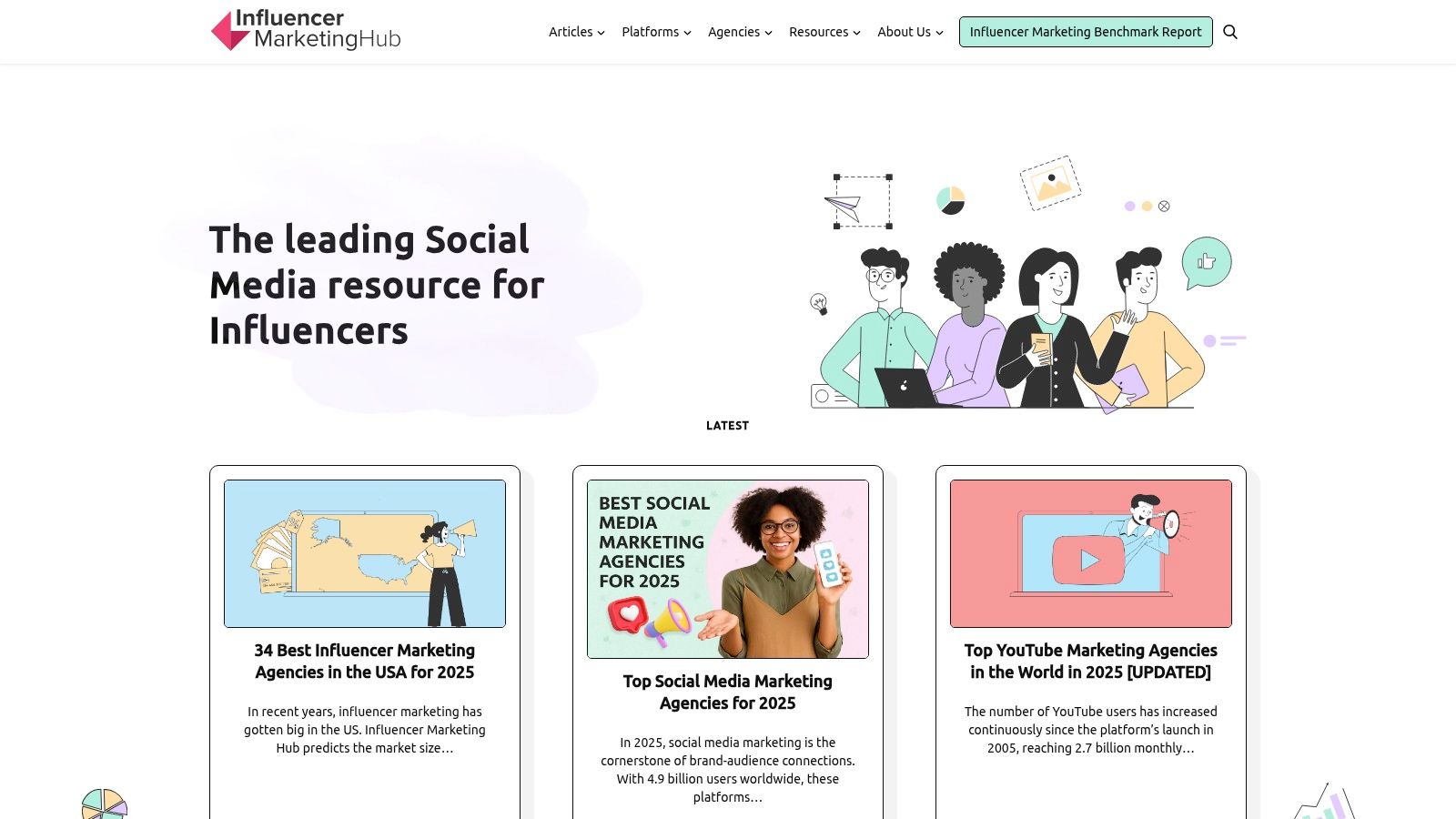
The platform’s strength lies in its sector-specific organization. Users can easily navigate hubs dedicated to beauty, retail, fintech, luxury, and other industries to find relevant examples. This structure helps brand managers understand the specific mechanics and performance benchmarks within their niche.
Key Features and User Experience
Influencer Marketing Hub’s user interface is straightforward, resembling a well-organized blog. Access is completely free with no signup required, removing any barriers to information. Each case study typically breaks down the campaign’s objectives, strategy, and results, often including specific numbers like impressions, engagement rates, and ROI.
- Cross-Industry Coverage: Find inspiration from DTC ecommerce brands, B2B tech companies, and even non-profits.
- Concrete Metrics: Many examples provide hard data, which is crucial for campaign planning and forecasting.
- Updated Content: The site is regularly updated with fresh examples, ensuring the information remains current through 2025.
Why It Stands Out
What makes Influencer Marketing Hub unique is its blend of high-level strategy and granular detail, all available for free. While some entries are more summary-level than others, the sheer volume and diversity of campaigns covered are exceptional. The platform is especially useful for those looking to understand the nuances of various campaigns before committing to a strategy, an approach particularly beneficial for smaller operations. For more on this, you can explore strategies for influencer marketing for small business.
Pros & Cons
| Pros | Cons |
|---|---|
| Completely free access | Depth of analysis varies between examples |
| Specific metrics and campaign mechanics | Occasional affiliate links may introduce bias |
| Excellent for sector-specific research | Not a campaign management tool |
| Regularly updated with new case studies | Navigation can feel like a content blog |
Website: https://influencermarketinghub.com
3. HubSpot Blog
The HubSpot Blog is a trusted marketing resource that offers timely roundups and strategic breakdowns of influencer marketing campaign examples. Rather than acting as a simple database, it contextualizes each campaign within broader marketing principles, providing actionable lessons for strategists. Its articles are ideal for pulling presentation-ready examples to secure stakeholder buy-in.
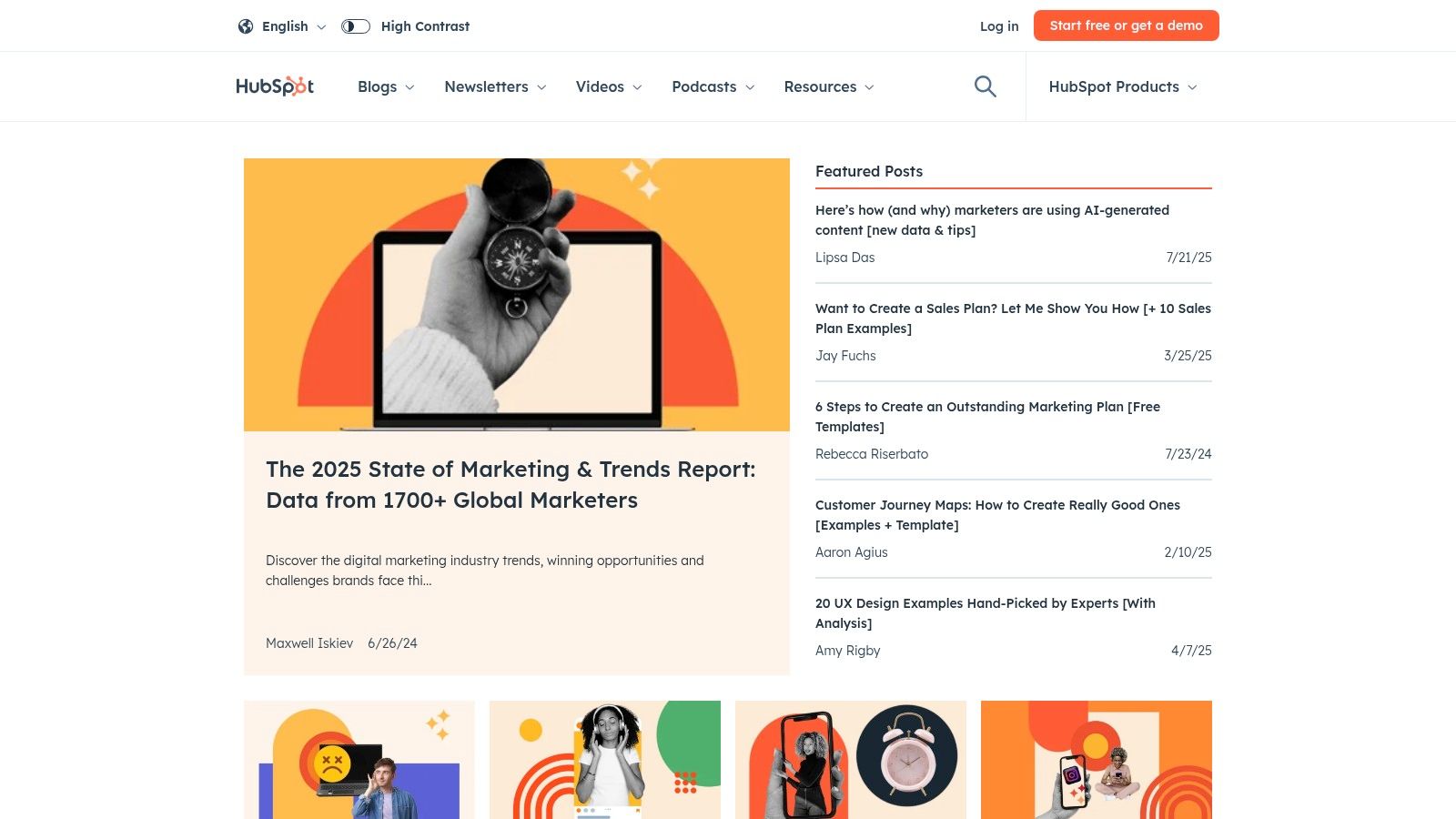
HubSpot excels at explaining why a campaign was successful, connecting specific tactics to tangible marketing goals. This makes it an excellent tool for marketers who need to understand the strategic thinking behind a campaign’s execution and translate those insights into their own planning.
Key Features and User Experience
The user experience is clean and intuitive, characteristic of HubSpot’s content-driven approach. While not a dedicated case study library, its search function allows users to easily find articles featuring campaign examples. Many articles are supplemented with downloadable templates and checklists to help marketers apply what they’ve learned.
- Actionable Lessons: Each campaign breakdown is paired with key takeaways and strategic advice.
- How-To Guides: Connects different campaign types to specific marketing objectives, like brand awareness or lead generation.
- Planning Resources: Offers free templates and checklists for campaign planning, execution, and measurement, often available after a simple form submission.
Why It Stands Out
HubSpot’s unique value lies in its combination of inspiration and education. It doesn’t just show you what other brands have done; it teaches you how to replicate their strategic success. The content is consistently updated by a well-regarded US-based marketing authority, ensuring the examples and advice are current and credible. This makes it an invaluable resource for building a strong business case for influencer marketing initiatives.
Pros & Cons
| Pros | Cons |
|---|---|
| Frequent updates from a trusted source | Examples are embedded within articles, not a dedicated database |
| Provides insights that help with executive buy-in | Some templates and resources are gated (require email) |
| Covers multiple platforms and industries | Focus is more on strategy than granular performance metrics |
| Free, high-quality educational content | Can feel less focused than a dedicated case study platform |
Website: https://blog.hubspot.com
4. Later
Later is well-known as a social media scheduling tool, but its blog is a goldmine for marketers looking for current and data-rich influencer marketing campaign examples. The platform regularly publishes detailed roundups that dissect successful campaigns across TikTok, Instagram Reels, and even emerging channels like Twitch. Unlike purely informational sites, Later connects inspiration directly to execution through its proprietary platform, Later Influence.
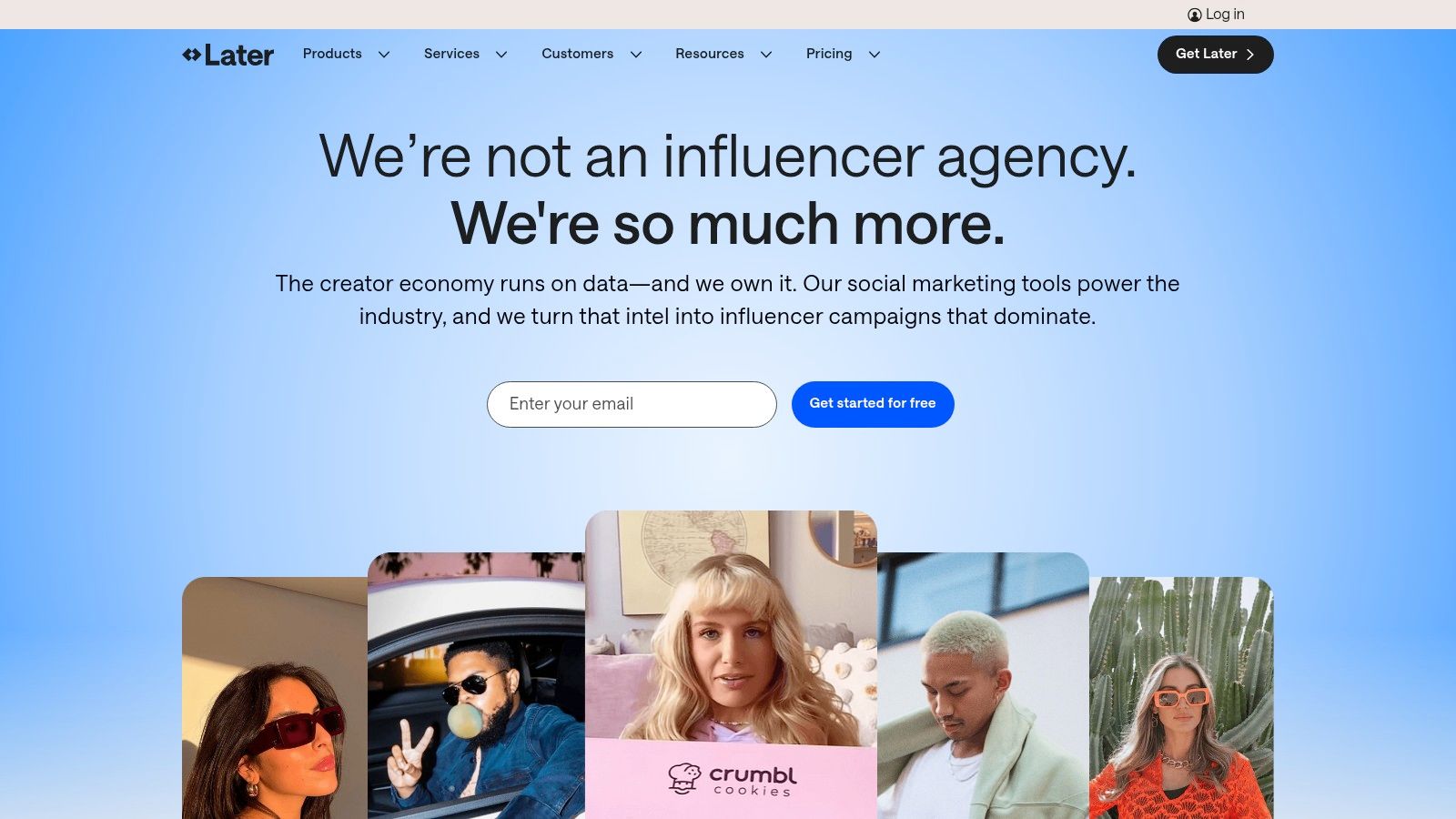
The strength of Later’s content lies in its focus on actionable insights. Each example is broken down with concrete metrics like impressions, engagement rates, and follower growth, providing tangible benchmarks for brands. This makes it an excellent resource for teams planning campaigns and needing to forecast potential outcomes based on real-world data.
Key Features and User Experience
Later’s blog is clean, modern, and easy to navigate, with a strong focus on visual content. Access to the campaign examples is free, though their influencer management platform, Later Influence, requires a demo to access pricing and features. The case studies are practical, offering clear takeaways on creative strategy and performance.
- Actionable Metrics: Examples frequently include specific performance data, which is invaluable for setting realistic campaign goals.
- Multi-Platform Coverage: Find inspiration for a variety of formats, from short-form video on Reels to long-form streams on Twitch.
- Inspiration-to-Execution Pathway: The content serves as a gateway to their managed services and platform, offering a seamless transition for brands ready to launch a campaign.
Why It Stands Out
Later uniquely bridges the gap between strategic inspiration and operational execution. While other platforms offer one or the other, Later provides both high-quality, free case studies and the tools to implement similar strategies. This integrated approach is particularly useful for marketing teams who want to learn from the best and then immediately put those lessons into practice using a professional-grade platform.
Pros & Cons
| Pros | Cons |
|---|---|
| Includes actionable campaign metrics | Some examples may feature Later-run programs, creating a selection bias |
| Clear creative takeaways from each example | Platform pricing is not public and requires a demo |
| Focuses on recent and relevant examples | Access to the management tool is gated |
| Content is free and easily accessible | The blog’s primary goal is to generate leads for their paid services |
Website: https://later.com
5. Aspire
Aspire offers a robust library of influencer marketing campaign examples presented as detailed case studies with verified, concrete outcomes. More than just a blog, this resource is integrated into an end-to-end influencer marketing platform, making it a powerful tool for brands looking to move from inspiration directly to execution. It showcases how real brands achieved specific goals, providing a clear blueprint for success.

The platform’s library is particularly effective because it’s built around marketing objectives. Brands can filter examples by goals like product seeding, driving sales, or boosting brand awareness, which allows for highly relevant and actionable research. The case studies span industries from CPG and beauty to pets and home goods.
Key Features and User Experience
Aspire’s “Stories” hub is clean, professional, and easy to navigate. Each case study clearly outlines the brand’s challenge, the solution Aspire provided, and the quantifiable results. Since Aspire is also a campaign management tool, the examples often highlight how the platform’s features, like influencer sourcing and reporting, contributed to the outcomes.
- Objective-Based Filtering: Easily find case studies sorted by specific marketing goals.
- Enterprise-Ready Platform: The examples are backed by a full suite of tools for influencer discovery, management, and analytics.
- Diverse Industry Examples: Includes campaigns from well-known brands in beauty, CPG, home, outdoors, and more.
Why It Stands Out
Aspire excels at connecting strategic inspiration with tactical execution. The case studies are not just stories; they are data-driven proof points designed for leadership presentations and strategic planning decks. This direct link between a featured campaign’s tactics and its measurable business impact is invaluable for marketers needing to justify their influencer marketing spend. It’s an ideal resource for teams that need both compelling examples and the software to replicate that success.
Pros & Cons
| Pros | Cons |
|---|---|
| Data-driven stories ideal for strategic decks | Pricing is custom and targets larger budgets |
| Clear link between tactics and measurable ROI | Full product experience requires a demo |
| Offers both software and managed services | Case studies are tied to promoting its own platform |
| In-depth, high-quality analysis | Less focused on providing a broad public library |
Website: https://www.aspire.io/stories
6. Upfluence
Upfluence offers a collection of influencer marketing case studies that are strongly tied to ecommerce and direct sales outcomes. Unlike platforms focused purely on awareness, its examples are built around revenue attribution and ROI multipliers, making it a go-to resource for performance-driven brands. The site showcases how collaborations translate into tangible results for DTC and retail companies.
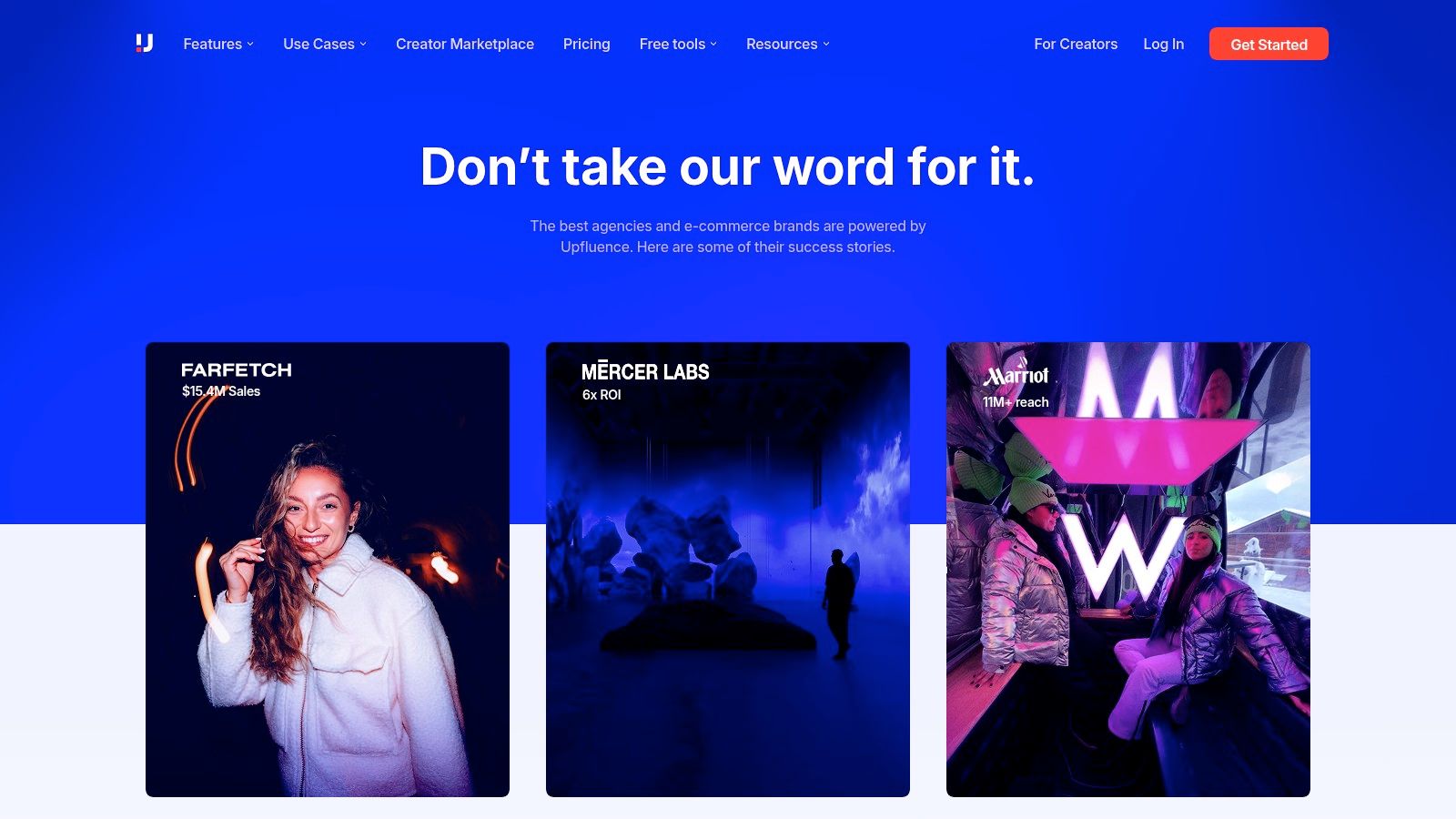
The platform’s case studies often highlight how brands leverage Upfluence’s own software to achieve their goals. This provides a clear path from strategy to execution, demonstrating how to use tools for influencer discovery, affiliate link generation, and sales tracking. This integrated approach is particularly useful for ecommerce managers looking to understand a full-funnel strategy.
Key Features and User Experience
The Upfluence case studies page is designed to convert, presenting influencer marketing campaign examples in a clean, results-oriented format. Each case study typically summarizes the challenge, solution, and key performance indicators like ROI or sales lift. Access to the summaries is free, though deeper insights often require contacting their sales team.
- Ecommerce and Sales Focus: Examples are heavily weighted toward sales, affiliate marketing, and ROI.
- Vertical-Specific Content: Covers fashion, beauty, travel, and online marketplaces with credible brand success stories.
- Integrated Platform Showcase: Demonstrates how specific software features were used to achieve the results, providing a tactical roadmap.
Why It Stands Out
Upfluence excels by directly connecting influencer activities to bottom-line metrics. While many resources talk about engagement, Upfluence’s examples focus on revenue, providing a powerful benchmarking tool for brands prioritizing sales. Their case studies offer a glimpse into how enterprise-level brands structure campaigns, which can provide valuable lessons for creators hoping to learn how to get brand deals.
Pros & Cons
| Pros | Cons |
|---|---|
| Strong focus on sales and ROI metrics | Full case study details may be gated |
| Credible examples from well-known brands | Pricing is custom and targets mid-market clients |
| Wide vertical coverage in ecommerce | Case studies serve as a lead magnet for their software |
| Shows how to replicate tactics with tools | Less focus on brand awareness campaigns |
Website: https://www.upfluence.com/case-studies
7. Etsy
Etsy has emerged as an unexpected but highly practical resource for marketers seeking tangible influencer marketing campaign examples in the form of downloadable templates. Rather than offering case studies, the platform provides a marketplace for campaign briefs, strategy documents, media kits, and planning spreadsheets created by experienced marketing professionals. This makes it ideal for those who learn best by deconstructing and customizing real-world documents.
The platform’s value lies in providing the foundational paperwork needed to launch a campaign. Marketers can purchase and instantly download templates for everything from initial influencer outreach emails to detailed campaign reporting. These documents serve as a structural guide, helping teams ensure no critical detail is missed during planning and execution.
Key Features and User Experience
Etsy’s interface is a familiar ecommerce storefront, making it easy to search, filter, and compare different templates. Listings are created by individual sellers and typically come with detailed descriptions, images, and user reviews, which are crucial for assessing quality before purchase. Most templates are designed for easy editing in common tools like Canva, Google Slides, or Notion.
- Instant Digital Downloads: Gain immediate access to files after purchase, with no shipping or waiting periods.
- Wide Variety of Templates: Find everything from influencer contracts and media kits to content calendars and campaign briefs.
- User Ratings and Reviews: Leverage community feedback to select high-quality, effective, and well-designed documents.
Why It Stands Out
What makes Etsy unique is its focus on providing the actual tools and documents used to run a campaign, rather than just post-campaign analysis. This hands-on approach is incredibly valuable for small businesses or new marketing managers who need a starting point for their internal processes. The low cost and immediate availability make it an accessible resource for creating professional-grade documentation without designing it from scratch.
Pros & Cons
| Pros | Cons |
|---|---|
| Low-cost access to professional templates | Quality and detail vary significantly by seller |
| Immediate digital delivery; no waiting | Templates are generic and require customization |
| Large selection of document types | May not provide strategic campaign insights |
| User reviews help gauge quality | Lacks centralized quality control |
Website: https://www.etsy.com
7 Influencer Marketing Campaign Examples Comparison
| Platform/Service | Implementation Complexity 🔄 | Resource Requirements ⚡ | Expected Outcomes 📊 | Ideal Use Cases 💡 | Key Advantages ⭐ |
|---|---|---|---|---|---|
| 2025 Influencer Marketing Agencies for Brand Growth (ReachLabs.ai) | High – full-service, tailored strategy onboarding | Medium-High – specialized teams, creative & data resources | High – measurable brand growth, optimized marketing spend | Brands seeking comprehensive influencer marketing & strategic growth | Data-driven, integrated marketing with cost-efficiency |
| Influencer Marketing Hub | Low – browse curated case studies freely | Low – free access, online library | Medium – varied depth case insights | Marketers seeking free, cross-industry campaign examples | Free, no signup, sector-specific metrics, broad coverage |
| HubSpot Blog | Low-Medium – consuming articles and guides | Low – mostly free with some gated templates | Medium – strategic insights and stakeholder-ready examples | Marketers needing timely insights, strategy tips, templates | Trusted source, frequent updates, actionable campaign lessons |
| Later | Medium – platform plus example browsing | Medium – platform demo required for execution | Medium-High – actionable benchmarks with campaign management | US-centric brands wanting inspiration plus influencer software | Concrete campaign metrics, creative insights, operational tools |
| Aspire | High – platform demo, enterprise-level tools | High – custom pricing, enterprise-ready software | High – data-driven stories with strategic linkage | Brands requiring end-to-end influencer campaign management | Deep, verified outcomes; combines software with execution |
| Upfluence | Medium-High – ecommerce/affiliate focused | Medium-High – platform tools, custom pricing | High – revenue and ROI focused case studies | Ecommerce brands looking for sales-driven influencer benchmarks | Sales-oriented case studies, ecommerce integrations |
| Etsy | Low – instant downloadable templates | Low – affordable one-time purchase | Low-Medium – customizable basic campaign documents | Marketers needing ready-to-use influencer campaign templates | Quick access, wide format variety, user-rated quality |
From Inspiration to Implementation: Your Next Steps
The powerful influencer marketing campaign examples we’ve explored demonstrate a clear, undeniable trend: authenticity, strategic alignment, and data-driven execution are the cornerstones of success. From Etsy’s hyper-niche creator partnerships to the broad-reaching strategies highlighted by industry leaders like HubSpot and Later, the path to impactful campaigns is multifaceted. These case studies prove that success isn’t about the biggest budget or the most famous influencer; it’s about creating genuine connections that resonate with a target audience.
The core lesson is that a one-size-fits-all approach no longer works. Your brand’s unique goals, whether they are boosting brand awareness, driving direct sales, or generating user-generated content, must dictate your strategy. The most effective campaigns are born from a deep understanding of both the brand’s identity and the influencer’s community.
Key Takeaways to Action
To transform these insights into your own winning strategy, focus on these critical takeaways:
- Prioritize Authenticity Above All: Audiences can spot inauthentic partnerships from a mile away. Partner with creators who genuinely align with your brand values and have an organic connection to your product or service.
- Embrace Data-Driven Decisions: Don’t guess, measure. Use analytics to identify the right influencers, track campaign performance in real-time, and calculate your return on investment. Tools like Upfluence and Aspire are built for this precision.
- Define Clear Objectives (KPIs): Know what success looks like before you begin. Are you tracking engagement rates, conversion rates, website traffic, or brand mentions? Clear KPIs are essential for evaluating campaign effectiveness.
- Trust Your Creators: You chose them for their creativity and connection with their audience. Give them the creative freedom to produce content that feels natural to their style, as this will ultimately drive better results.
Choosing Your Toolkit and Launching Your Campaign
With these principles in mind, the next step is to select the right tools to bring your vision to life. Your choice should be guided by your specific needs and the scale of your ambitions.
- For comprehensive discovery and management: Platforms like Upfluence and Aspire offer robust databases and end-to-end campaign management features, ideal for teams running multiple campaigns.
- For educational resources and strategic insights: Resources like Influencer Marketing Hub and the HubSpot Blog are invaluable for staying on top of trends and refining your strategy.
- For content scheduling and planning: A tool like Later is perfect for organizing your content calendar and ensuring a cohesive social media presence across all channels.
As you move forward, remember that the best influencer marketing campaign examples are not just copied; they are used as a blueprint. Analyze what made them successful, adapt their core strategies to fit your unique brand voice, and always be prepared to test, learn, and optimize. The landscape is constantly evolving, and agility is your greatest asset. Your brand’s next breakthrough campaign begins now.
Ready to move beyond inspiration and into execution with unparalleled precision? ReachLabs.ai uses advanced AI to identify and engage the perfect micro-influencers for your brand, ensuring authentic partnerships that drive real results. Discover your next high-impact collaborators and streamline your entire workflow at ReachLabs.ai.