
You can’t just cross your fingers and hope for referrals. If you’re waiting for word-of-mouth to magically happen, you’re leaving your best growth channel completely up to chance. The secret is to build a proactive system.
It really boils down to three things: find your happiest customers, ask them when they’re feeling that peak satisfaction, and make it ridiculously easy for them to say yes. That’s how you turn random introductions into a predictable engine for growth.
Building a Predictable Referral Engine
Let’s stop treating referrals like happy accidents. We’re going to build a repeatable process that turns those valuable introductions into a reliable pipeline of fantastic customers. This isn’t about luck; it’s about engineering an approach that consistently works.
First, you have to appreciate just how powerful referrals are. The data doesn’t lie—customers who come to you through a referral are simply better. They have a 37% higher retention rate and a 16% higher lifetime value.
Why? Trust is already built-in. That’s also why companies with actual, formal referral programs see 86% higher revenue growth than those without. If you’re curious, you can read more about the compelling data behind referral marketing to see the full picture.
Shifting from Reactive to Proactive
The big change here is a mental one. You need to move from a passive mindset (“I hope someone sends a client my way”) to an active one (“I’m going to create the perfect conditions for referrals to happen”).
This breaks down into a few key actions:
- Pinpointing Your Advocates: You’re not just looking for satisfied clients. You’re looking for your true champions.
- Mastering the Timing: There are golden moments to ask for a referral. Knowing when they are is half the battle.
- Simplifying the “Ask”: Your job is to remove every possible obstacle, making it absolutely effortless for someone to introduce you.
A predictable referral engine does more than just bring in leads. It builds loyalty. When a client refers you, they’re putting their own reputation on the line, which only strengthens their commitment to you and your work.
The Components of a Referral System
Building this system doesn’t mean you need complicated software or a huge budget. It all starts with a clear, repeatable process.
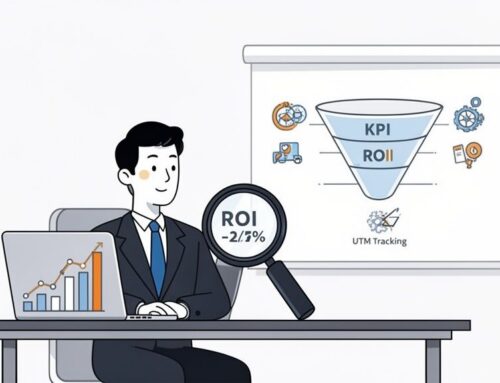
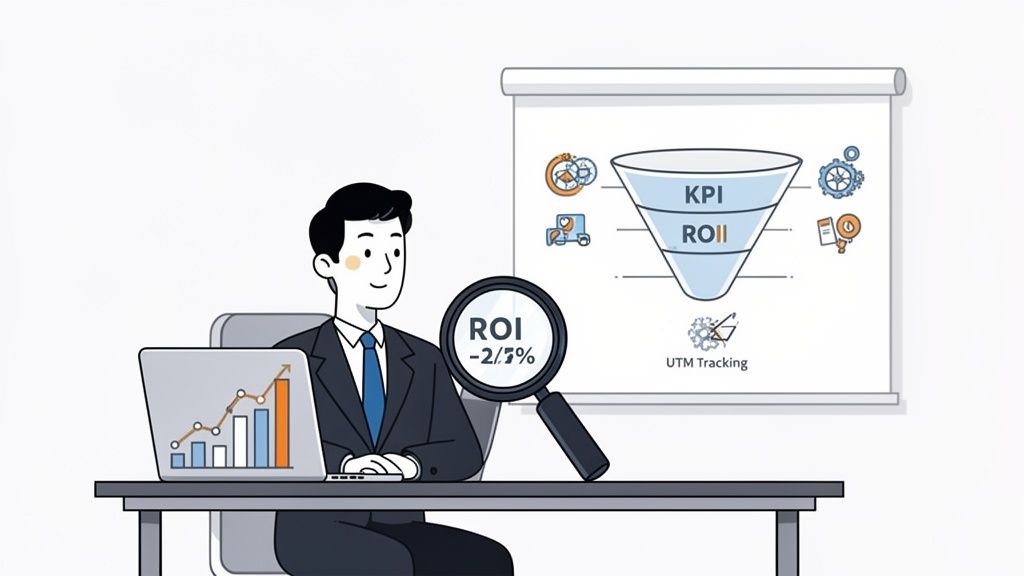
You’ll need to figure out who your best advocates are, what specific events should trigger a referral request, and how you’ll keep track of it all. For instance, a “big win” for a client—maybe they had a successful product launch with your help or hit a major KPI—is the perfect trigger.
When you frame your request around these positive moments, it feels like a natural part of a successful partnership, not an out-of-the-blue sales pitch. This guide will walk you through setting up every piece of that system.
Pinpointing Your Strongest Referral Sources

If you want to get serious about referrals, you have to look beyond simply asking a happy customer for a name. The most powerful referral networks are diverse, reaching far beyond your immediate client list.
The real trick is to systematically identify the people and businesses who not only think you do great work but are also in a perfect position to send new clients your way. It starts with a clear-eyed look at the relationships you already have.
Start With Your Current Customer Base
Your best advocates are often hiding in plain sight. It’s not enough to just think about the clients who say they’re happy; you need to find the ones who prove it with their actions. Data is your best friend here.
Get methodical and start segmenting your clients based on real-world indicators:
- High Engagement: Who’s actually opening your emails and clicking your links? Who comments on your social posts or sends a quick, unsolicited “great job” message? These are your fans.
- Repeat Business: Look at the clients who keep coming back for more. Their repeat investment is the loudest signal of trust you can get.
- High Net Promoter Score (NPS): If you run surveys, your 9s and 10s are pure gold. These “promoters” have explicitly told you they’re willing to recommend you.
These are the people who have already bought into your value. They’ve experienced a great outcome firsthand, which makes any recommendation they give feel genuine and powerful. This gives you a warm, focused list of people to start with.
A referral from a true champion carries so much more weight. They aren’t just passing along a name; they’re transferring the trust they’ve built with their own network directly over to you.
Look Beyond Your Client List
Happy customers are an amazing source, but stopping there is a huge mistake. I’ve found that some of the best referrals come from people who have never actually paid me a dime.
Think about who else moves in the right circles. This is a critical step in diversifying your approach to small business lead generation and building a pipeline that isn’t dependent on a single source.
Here are a few groups to consider:
- Strategic Partners: These are the businesses swimming in the lane next to you—think non-competing, adjacent industries. If you’re a web designer, this could be a copywriter, a brand strategist, or an SEO specialist you trust.
- Vendors and Suppliers: The people you pay for services see how you operate behind the scenes. They know if you’re professional and reliable, making their recommendation incredibly credible.
- Professional Colleagues: Don’t forget about peers in your industry who might serve a slightly different niche. Contacts from old jobs or networking groups can also be fantastic sources.
The key to unlocking these relationships is to always lead with value. Send business their way first. Share a helpful article. Make an introduction. When you actively invest in their success without asking for anything, they’ll naturally want to return the favor. Over time, these individual connections blossom into a proactive community that consistently sends opportunities your way.
Crafting a Referral Request People Actually Respond To
Let’s be honest: knowing when and how to ask for a referral can feel incredibly awkward. It’s the biggest hurdle for most people. We worry about sounding too salesy or, even worse, desperate. But here’s a little secret I’ve learned over the years: a great referral request isn’t a pitch at all. It’s just a natural conversation.
The trick is to make your ask when your client is at their absolute happiest with your work. Think about that moment right after you’ve delivered a huge win, or when they send you an unsolicited email gushing about the results. When you catch them in that peak moment of satisfaction, asking for a referral feels less like an interruption and more like a logical next step.
This simple visual breaks down a friendly, low-pressure way to approach it.

See how the request is framed? It’s all about helping their network, which subtly reinforces the great outcome you just delivered for them. You’re positioning them as a helpful connector, not a salesperson for your business.
Timing and Tone Are Everything
The success of your referral request boils down to two things: timing it perfectly and getting the tone just right. If it feels transactional, it’s going to fall flat. You want the ask to feel like a seamless part of your ongoing relationship.
From my experience, here are the golden moments to ask:
- During a Project Debrief: You’re already reviewing a successful project, and the client is thrilled with the outcome. This is a perfect, natural segue.
- Right After They Praise You: A client emails, “This is incredible work!” That’s your cue. A quick thank you followed by a gentle ask is incredibly effective.
- In a Quarterly Business Review: For those long-term clients, these check-ins are a fantastic time to discuss how you can provide even more value—not just to them, but to their network as well.
Your tone should always be one of gratitude, never demand. Frame it around the success you achieved together. Something like, “I’m so glad we were able to achieve [specific positive outcome]. This is exactly the kind of result we love to create for businesses like yours.”
It turns out, we’re often our own worst enemy when it comes to asking for help. Research from Stanford’s Graduate School of Business found that we consistently underestimate how willing people are to assist when we ask them directly. The fear of asking is usually the only thing holding us back.
The best approach often depends on who you’re asking. A quick text might work for a friend, but a formal email is better for a corporate client.
Referral Request Timing and Method
This table breaks down the sweet spot for timing your ask and the best way to do it for different types of referrers.
| Referral Source | Optimal Timing | Recommended Method |
|---|---|---|
| Happy Clients | Immediately after a project win or positive feedback. | A personal email or during a scheduled review call. |
| Industry Partners | During regular catch-ups or after you’ve sent a referral their way. | A direct call or a casual coffee meeting. |
| Friends & Family | When they ask about your work or you share a recent success. | A quick text message or a casual phone call. |
| Mentors | During a mentorship session when discussing business growth. | A face-to-face conversation or a thoughtful email. |
Ultimately, the goal is to make the request feel authentic to the relationship you have with that person.
Make It Effortless For Them to Say Yes
Once you’ve nailed the timing, your next job is to make it ridiculously easy for them to follow through. The more work you make them do, the less likely they are to do it. Your mission is to remove every single piece of friction from the process.
First, be incredibly specific about who you help. Don’t just say you’re looking for “more clients.” That’s too vague. Give them a clear picture of your ideal customer. For instance, “We do our best work with B2B SaaS companies that are looking to scale their content marketing.”
Next—and this is a real game-changer—give them the tools they need. I always offer to write a short, forwardable email they can send as an introduction. This saves them a ton of time and ensures your value proposition is communicated perfectly.
Here’s the simple template I use for that pre-written intro:
- A quick, personal opening: “Hi [Contact Name], hope you’re doing well.”
- The connection and value: “I wanted to introduce you to [Your Name] from [Your Company]. We just worked with them to [achieve a specific, impressive result], and I immediately thought of you because I know you’ve been focused on [a relevant challenge or goal].”
- A clear, low-pressure CTA: “I’ll let [Your Name] take it from here. No pressure at all, but I think a quick chat could be really valuable for you.”
By providing this simple text, you transform a vague request into a simple copy-and-paste action. This one small step will dramatically increase your odds of getting that warm introduction.
Forging Strategic Referral Partnerships
To really build a predictable pipeline of high-quality leads, you need to think bigger than individual requests. The real magic happens when you move from asking for one-off introductions to creating strategic referral partnerships.
This means finding complementary, non-competing businesses and building a system that benefits everyone involved. Think about a real estate agent and a mortgage broker. They serve the exact same customer, just at different points in the home-buying journey. By partnering up, they create a fantastic, streamlined experience for their clients and a steady flow of business for each other. That’s the goal here.
Identifying and Approaching Potential Partners
So, who are your ideal partners? They’re the businesses your clients already know and trust—the ones they work with right before or right after they need your services.
Take a few minutes to brainstorm. If you’re a brand strategist, your ideal partners might be web designers, copywriters, or even fractional CMOs. The key is to find that natural overlap.
When you reach out, resist the urge to immediately ask for leads. Your first move should always be to offer value.
Here’s a simple, effective way to get started:
- Do your research. First, get to know their business. What are they working on? Who are their best clients? Find a genuine way you can help them first.
- Make a valuable introduction. Connect them with someone in your network who could be a great client or collaborator for them. This is a powerful, no-cost way to show you’re serious about helping.
- Promote their work. See a great blog post or case study they published? Share it on your LinkedIn or in your newsletter. It shows you respect their expertise.
This approach flips the script. Instead of asking for something, you’re giving something. It builds goodwill and lays the foundation for a relationship based on mutual respect, not just a transaction.
A partnership built on mutual benefit is far more resilient and productive than a purely transactional one. When you genuinely want to see your partners succeed, they’ll be far more invested in helping you do the same.
Defining the Terms of Your Partnership
Once you’ve built some rapport and delivered value, it’s time to make things a bit more official. A successful, long-term partnership hinges on clarity. You need to agree on how the system will work, from tracking leads to managing compensation.
It’s also a good time to think about what is lead scoring and how you’ll apply it to these new referrals to focus your energy on the best opportunities.
Talking about money can feel awkward, but it’s essential. A simple commission structure is a popular option, but don’t forget about non-monetary incentives. You could co-host a webinar, swap services, or create a joint content piece. These can be just as valuable as cash.
This shift toward formal partnerships isn’t just a trend; it’s a significant economic movement. In the consulting world, for example, alliances with law firms or software vendors create powerful lead channels that often bypass the entire competitive bidding process. The referral management market is on track to hit $10.82 billion by 2029, a testament to how vital these structured partnerships are becoming. You can dig into more of the consulting referral network economics on SoftwareOasis.com.
By building these alliances, you’re doing more than just getting leads—you’re creating a powerful, long-term competitive advantage.
Using Technology to Scale Your Referral Program

If you’re still tracking referrals on a spreadsheet, you’re leaving money on the table. It’s a classic startup move, but it quickly becomes a bottleneck. As you grow, that manual approach guarantees you’ll miss opportunities, frustrate your best advocates, and lose track of who sent you which lead.
To truly get referrals at scale, you have to move past the spreadsheet. Adopting the right software isn’t just a nice-to-have; it’s a game-changer. The global market for this kind of software is already worth over $4.17 billion and is expected to balloon to $13.48 billion.
Why the massive growth? Because it works. Companies that use dedicated software see incredible results. Referred customers tend to have a 37% greater retention rate and are 27% more likely to stick around as loyal clients. You can dig into more data on referral management software at LLCBuddy.com.
Must-Have Features in Referral Software
Shopping for referral management tools can feel a bit overwhelming with all the bells and whistles. The goal isn’t to find the most complicated system. The real aim is to find software that automates the tedious work, freeing you up to focus on what matters: building relationships with your partners.
Here are the non-negotiables to look for:
- Unique Tracking Links: Every single referrer needs their own unique link or code. This is fundamental. It completely removes the guesswork and makes sure every lead is credited to the right person.
- Automated Reward Payouts: Let’s be honest, manually sending out gift cards or processing commissions is a huge time-drain. A solid platform handles all of that for you, ensuring your partners get paid accurately and on time, every single time.
- Analytics Dashboards: You can’t improve what you don’t measure. You need a clear, at-a-glance view of your program’s health—who your top performers are, what your conversion rates look like, and the overall ROI.
By measuring key metrics like referral rate and success rate, businesses can significantly lower their customer acquisition costs. A well-oiled, tech-driven program removes the friction that stops most referral efforts from scaling.
Choosing the Right Tool for Your Business
The “perfect” tool really depends on where your business is at. A solopreneur just starting out has very different needs than a fast-growing SaaS company managing a hundred partners. The key is to pick a platform that makes life easier for everyone involved—both for you and for the people sending you business.
For example, a simple, straightforward system might be perfect for getting your program off the ground. On the other hand, a more robust platform like PartnerStack is built to handle complex B2B partnerships with multiple tiers and commission structures.
Your choice should always support your main goal: making the entire referral process as seamless as possible. This data-driven approach is how you reduce customer acquisition cost and turn referrals into a reliable, sustainable growth engine.
Ultimately, technology gives you the visibility needed to make smart decisions. It helps you pinpoint your best advocates, understand the real value they’re bringing in, and continuously fine-tune your program for even better results down the road.
Answering Your Top Referral Questions
Even with the best strategy, running a referral program means you’ll hit a few tricky spots. It’s not just about sending outreach emails; you’re building relationships and navigating new professional dynamics. Let’s walk through some of the most common questions that pop up.
Getting these situations right is what separates a program that fizzles out from one that thrives. The aim is to make referring you a genuinely positive and seamless experience for everyone.
What Kind of Incentives Should I Offer?
There’s no magic, one-size-fits-all incentive. The best reward really depends on your business and what truly motivates your audience. If you’re a B2C company, tangible rewards are often king. Think things like cash bonuses, gift cards, or a hefty discount on their next purchase. They’re simple, clear, and almost everyone appreciates them.
The B2B world, however, plays by different rules. A cash reward can sometimes feel a bit transactional, and in some cases, it might even cheapen a trusted professional recommendation. Instead, you’ll want to lean into non-monetary incentives that offer real professional value.
- Co-marketing opportunities are a huge win-win. Think about a joint webinar or featuring them in a case study.
- Exclusive access to new features, beta programs, or premium content can be very appealing.
- A charitable donation made in your referrer’s name is a classy move that feels good for everyone.
One of the most effective tactics I’ve seen is the two-sided incentive. This is where both the person making the referral and the new customer they send your way get a reward. It makes your referrer look like a hero for sharing a great deal, which is a powerful motivator.
How Do I Keep Partners Engaged?
Keeping your referral partners active is about more than just a quick thank-you email when you close a deal. Real, long-term success comes from consistent communication and showing that the relationship is a two-way street. Don’t let things go quiet.
Your partners should never feel like you only pop up when you want another lead. Get in the habit of sending them brief, regular updates on the referrals they’ve sent—even if they don’t pan out. A simple message like, “Just wanted to let you know I had a great chat with Sarah—thanks again for the intro!” makes them feel valued and in the loop.
Even better, be a great partner to them. Keep your ears open for opportunities you can send their way. Give them a shout-out on social media for a recent win. A casual check-in call once a quarter does wonders for keeping the relationship strong and making sure you both stay top-of-mind.
What If Someone Sends a Bad-Fit Referral?
Okay, this one requires a bit of finesse. When a referral isn’t a good fit, your first move is always to thank the person who sent it. Acknowledge their effort immediately. You want to reinforce the behavior of them thinking of you, so never make them feel like they made a mistake.
After you’ve spoken with the prospect, follow up with your partner. Be honest, but be tactful. You could say something like:
“Thank you so much again for connecting me with Mark. We had a good conversation, and it turns out we’re not quite the right solution for his current needs, but I really appreciate you making the introduction.”
This is also a perfect, low-pressure opportunity to gently clarify who your ideal customer is. You might add, “For future reference, the best introductions for us are typically B2B tech companies struggling with X.” This protects the relationship and helps you get much better-qualified leads next time.
Ready to stop hoping for referrals and start building a predictable growth engine? ReachLabs.ai provides the strategic expertise to develop and scale marketing programs that deliver real results. See how our team of specialists can help you at https://www.reachlabs.ai.