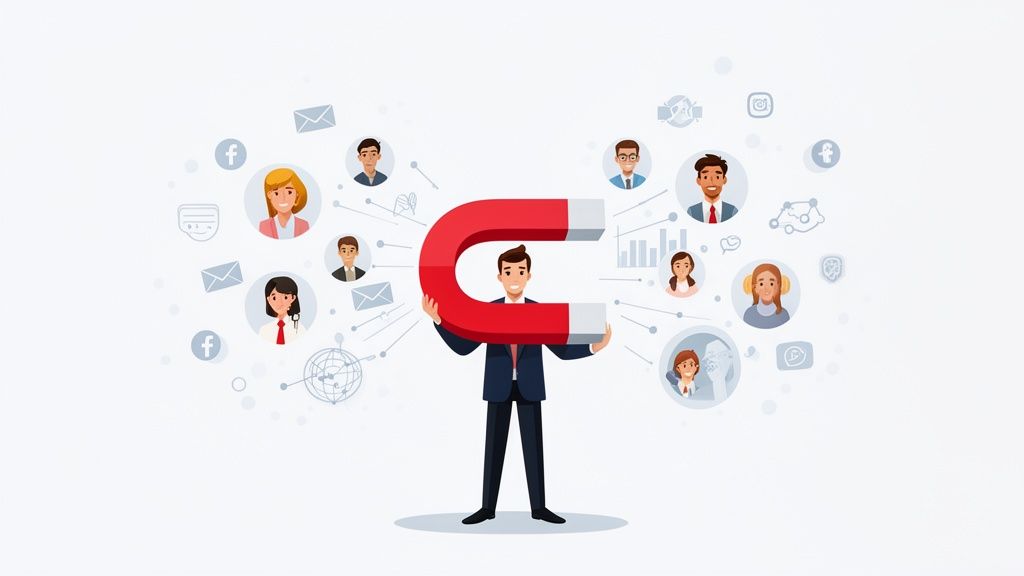
So, you want to make money from your social media. It really comes down to four main paths: selling your own stuff, promoting other people's products, partnering with brands, or offering a service. The secret isn't luck—it's picking the right model that fits your content, your audience, and your platform.
A Real-World Plan for Monetizing Your Social Media
Turning your social media presence into a reliable income stream in 2026 isn't about chasing viral moments. It’s about building a legitimate business, and that starts with a solid plan. You need to look past the vanity metrics and focus on the fundamental ways creators actually make money.
The trick is to match your unique voice and the community you've built with a monetization method that feels natural, not forced. To get the full picture, it's worth understanding the wider world of content monetization. This helps you build a more durable business that isn't just tied to one platform's algorithm.
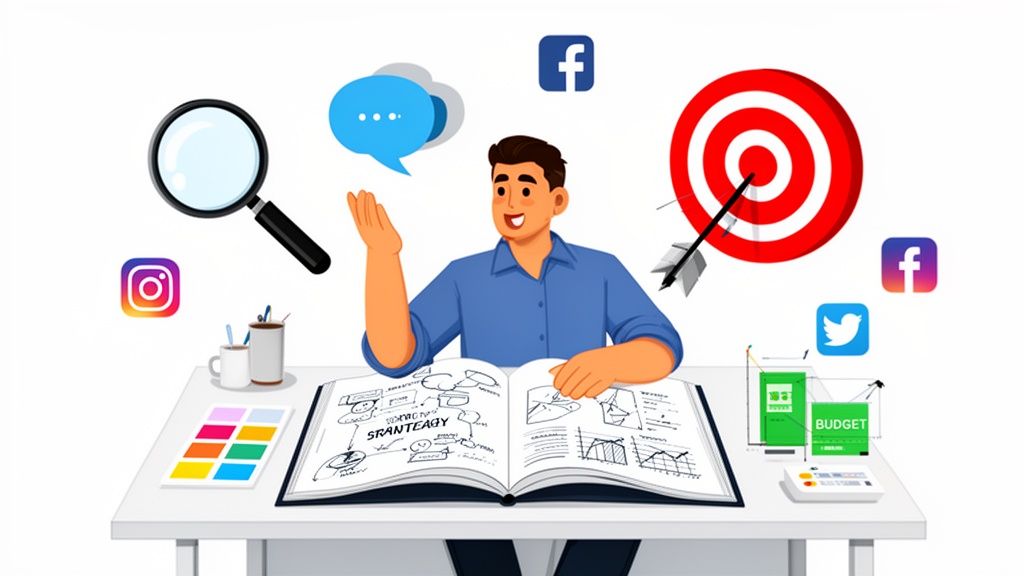
This is your roadmap. It lays out the strategies, the different models available, and how to choose the right one for your brand.

As you can see, everything starts with a clear strategy. Only then should you dive into picking specific revenue streams.
What Are Your Revenue Options?
The most successful creators I know don't put all their eggs in one basket. They build a portfolio of income sources that work together. Before you pick one, let’s get familiar with your main options.
A great way to visualize these choices is to compare them side-by-side.
Social Media Monetization Models at a Glance
This table breaks down the most common monetization models, giving you a realistic look at the income potential and the effort required for each.
| Monetization Model | Potential Income | Required Effort | Best For |
|---|---|---|---|
| Ad Revenue & Creator Funds | Low to Medium | Low | Creators on platforms with built-in programs (YouTube, TikTok) with large viewership. |
| Affiliate Marketing | Medium | Medium | Niche creators who can authentically recommend products they use and trust. |
| Brand Sponsorships | High | High | Influencers with a highly engaged, targeted audience that brands want to reach. |
| Selling Your Own Products | Very High | High | Creators with a strong brand and audience ready to buy digital or physical goods. |
| Subscriptions & Memberships | High (Recurring) | Medium | Experts and community builders offering exclusive content or access. |
| Selling Services | Very High | High | Professionals (coaches, consultants, freelancers) using social media for lead generation. |
Each model has its own learning curve and timeline. Affiliate marketing is a fantastic entry point for many, while selling your own high-ticket course is often a long-term goal that requires a much larger, more dedicated following.
Here’s a closer look at some of the most popular starting points:
- Affiliate Marketing: This is where you earn a commission for promoting another company’s products. It’s a great first step because you don’t have to create a product yourself. Think of a fitness creator on Instagram sharing a link to their favorite protein powder—every sale through their link earns them a cut.
- Sponsored Content: This is when brands pay you to create content that features their products. It works best once you’ve built an engaged, niche audience. A brand selling sustainable home goods might pay a micro-influencer to feature their cleaning products in a TikTok video.
- Selling Your Own Stuff: This path holds the highest income potential but also requires the most work. You could sell digital products like ebooks or Lightroom presets, physical merchandise like t-shirts and mugs, or offer services like one-on-one coaching or freelance design work.
The most critical pivot a creator makes is from chasing followers to building a real business. That means thinking about revenue models, profit margins, and long-term stability from day one.
The Real Financial Power of Your Audience
Let's talk numbers, because that's what turns this from a hobby into a career. Brands are pouring money into social media for one simple reason: it works.
In 2026, social media marketing delivers an average ROI of $5.20 for every $1 invested. That’s an incredible return, and it shows exactly why brands are desperate to partner with creators who have a real, engaged audience. Your followers aren't just a number; they're a valuable asset.
This guide is designed to give you the blueprint to turn that asset into a sustainable income, helping you make the leap from creator to entrepreneur.
Choosing Your Monetization Path and Platform
The best monetization strategies don't feel like a sales pitch—they feel like a natural part of your content. It’s all about finding that sweet spot where your passion, your audience’s interests, and a genuine offer of value all meet. This isn't just about picking a revenue stream; it's about building a real, sustainable career as a creator.
Before you even think about money, you need to take a good, hard look at your own brand. What are you genuinely good at? What could you talk about for hours? And who, exactly, are you talking to? Getting clear on these answers is the bedrock of any successful creator business.

Align Your Monetization Model with Your Content
Different types of content naturally lead to different ways of making money. The goal is to pick a model that feels authentic to you and your audience. If you try to force something that doesn't fit, your followers will see right through it, and you'll just end up frustrated.
Think about it in these real-world terms:
- The Visual Storyteller: A food blogger on Pinterest who posts beautiful, step-by-step recipe guides can easily weave in affiliate links. When they link to the exact stand mixer or specialty vanilla extract they used, it’s helpful, not salesy. Their audience is already inspired to create the dish themselves.
- The Niche Expert: A financial advisor building a following on LinkedIn by sharing deep insights on market trends is perfectly set up to sell high-ticket consulting or a paid newsletter with exclusive analysis. Their content has already done the heavy lifting of building trust and proving their expertise.
- The Entertainer & Trendsetter: That personality-driven creator on TikTok who can make any sound or trend go viral is a goldmine for brand sponsorships. Brands will pay top dollar for their ability to grab attention and make a product look effortlessly cool.
In every case, the money-making method makes sense with the content. It solves a problem or fulfills a desire for the audience, which is why it works.
Don’t just ask, “How can I make money?” Instead, ask, “How can my content solve a problem for my audience in a way that also generates revenue?” Shifting your mindset this way is the secret to building a business that lasts.
Match Your Method to the Platform's Strengths
Every social media platform has its own vibe and user habits. A strategy that absolutely kills it on YouTube could be a complete dud on Instagram. Picking the right platform for your monetization model is just as critical as picking the model itself.
Here’s a quick breakdown of where different methods shine:
| Platform | Primary Monetization Strengths | Ideal Creator Profile |
|---|---|---|
| YouTube | Ad Revenue, Affiliate Marketing, Course Sales | Educators, Reviewers, Storytellers |
| Brand Sponsorships, Affiliate Marketing, E-commerce | Visual Brands, Lifestyle Influencers, Photographers | |
| TikTok | Creator Fund, Brand Sponsorships, Live Gifting | Entertainers, Trend Spotters, Short-form Educators |
| Selling Services, B2B Consulting, Paid Newsletters | Industry Experts, Coaches, Business Professionals | |
| Affiliate Marketing, Driving E-commerce Traffic | DIY Creators, Food Bloggers, Home Decor Stylists |
For instance, the audience on YouTube is conditioned to watch longer, in-depth videos. This makes it the perfect place to build authority before launching a detailed online course. On the flip side, the fast, visual-first nature of Instagram is tailor-made for showing off products in splashy, high-impact sponsored posts. You can get more tactical advice on this by checking out our guide on how to get brand deals, which digs into the specific approaches that work best on each platform.
The Power of Diversifying Your Income
I can't stress this enough: relying on a single source of income is incredibly risky. I've seen countless creators get their entire business wiped out overnight by a surprise algorithm change or a new platform policy. The smartest, most resilient creators build several income streams.
This creates a financial safety net that protects you from volatility and helps you earn more in the long run. The real magic happens when you start combining different models that work together:
- YouTube Ad Revenue + Merchandise: Your ad checks provide a steady baseline income, while selling branded hoodies gives your most loyal fans a way to show their support.
- Affiliate Marketing + Digital Products: You can use affiliate links for some quick, low-effort wins while you’re in the background building a more significant asset, like a signature ebook or a set of design templates.
- Brand Sponsorships + Coaching Services: Sponsored posts can bring in large checks, while offering 1-on-1 coaching creates a high-ticket service for the handful of followers who want your direct, personalized help.
A blended strategy like this turns your creator account into a real business. If brand deals dry up one month, your course sales or affiliate income can keep you afloat. This is how you go from just making content to building an empire.
Building Your Content and Sales Funnel
Having great content gets you noticed, but having a great funnel is what gets you paid. This is the moment where your creativity meets commerce, turning followers who just scroll by into genuine customers. If you're serious about monetizing, you need a deliberate system to guide people from discovering you to buying from you.
Think of it as a journey you design for your audience. They don't just wake up and decide to buy your stuff. You have to lead them there, step by step, using content that's perfectly matched to where they are in their decision-making process. That's your content and sales funnel.
The Three Stages of a Social Media Funnel
Your funnel really breaks down into three core parts, and each one has a totally different job to do. You'll need different kinds of content for each level to make the whole thing work, creating an experience that feels helpful, not pushy.
Top of Funnel (ToFu) – Grabbing Attention: This is all about discovery. Your only goal here is to attract a wide audience with content that’s incredibly shareable, entertaining, or useful. You’re casting a wide net to pull new people into your world.
Middle of Funnel (MoFu) – Building Trust: Once you have their attention, the real work begins. Now you have to earn their trust and show them you know what you’re talking about. This is where you turn casual viewers into a loyal community.
Bottom of Funnel (BoFu) – Driving Action: This is where the magic happens—the conversion. After building all that trust, you finally present a direct offer. The content here needs to be clear and persuasive, giving your most engaged followers a simple reason to take that final step and buy.
The best funnels don't even feel like funnels. They feel like a natural journey where every piece of content helps your audience, building so much trust that buying from you becomes the most logical next step.
Crafting Content for Each Funnel Stage
Alright, let's get practical. Generic advice is useless here; you need specific content ideas that actually work for each stage.
Top of Funnel Content Examples
Remember, the goal is maximum reach and engagement. Think short, catchy, and low-commitment.
- Entertaining TikToks or Instagram Reels: Jump on a trending audio clip or film a quick, funny skit that relates to your niche.
- Viral-style Twitter Threads: A thread titled "10 Free Tools That Feel Illegal to Know" is classic bait for attracting thousands of new eyeballs.
- Quick "How-To" Carousels: An Instagram carousel showing "5 Ways to Style a White T-Shirt" is incredibly easy for people to save and share.
This is your first handshake. People might follow you, but they're nowhere near ready to buy. That's where the next stage comes in.
Middle of Funnel Content Examples
Now it's time to build a real connection. This content asks for a bit more of your audience's time, but it delivers way more value in return.
- In-depth YouTube Tutorials: A 15-minute video showing your exact process for editing a photo builds tremendous authority and proves your expertise.
- Behind-the-Scenes Instagram Stories: Walk people through a day in your life or show the messy process of creating a product. It makes your brand feel human.
- Live Q&A Sessions: Hop on Instagram or YouTube Live to answer questions directly. This is a powerful way to prove you’re an accessible expert.
A critical move at this stage is to get your most engaged followers off the social platform and onto a channel you actually own, like an email list. If you need a playbook for this, our guide on how to build email lists gives you the exact steps to capture and nurture that audience.
Bottom of Funnel Content Examples
This is where you make your ask. This content is for your true fans—the ones who already trust you and value your expertise.
- A Webinar or Live Workshop: Host a free training session that solves a specific problem and naturally leads to an offer for your paid course or service.
- Direct Offers in Email Newsletters: Announce a product launch or a limited-time discount exclusively to your email subscribers. They should always get the best deals.
- Case Studies or Testimonial Posts: Share a detailed success story from a past client. This kind of social proof is often the final push someone on the fence needs to see.
For instance, I once had a Twitter thread on productivity hacks go viral. I immediately packaged the concepts into a simple, paid mini-course. By dropping the link to the course at the end of the thread, I built a quick ToFu-to-BoFu funnel that converted brand-new followers into paying customers in a matter of hours. It just goes to show how a well-planned content journey is the key to turning social media into a real source of income.
Mastering Pricing, Negotiations, and Contracts
Let's talk about the part that makes most creators sweat: money and contracts. It can feel awkward, but getting comfortable with pricing and legal paperwork is what separates a hobbyist from a professional. This is how you protect your work, value your time, and build a real business.

How to Price Your Work Confidently
One of the first questions every creator asks is, "What should I charge?" Let's get one thing straight: once you've built an audience, you should never work for "exposure." Your work has tangible value.
A good starting point for many is the old 1% rule, which suggests charging around $100 for every 10,000 followers. Think of this as the absolute floor, not the ceiling. Honestly, follower count is becoming a vanity metric. What truly matters is your engagement. A small, highly dedicated audience is often far more valuable to a brand than a massive, passive one.
Your final price needs to cover the time it takes to script, shoot, and edit, plus any expenses like props or software. It's also about the results you deliver. To get a better handle on the numbers, check out this excellent guide on How Much to Charge for Social Media Management for some practical frameworks you can adapt to your own offerings.
Your rate card isn't just a list of prices; it's a statement of your professional value. Base it on data, update it as you grow, and never be afraid to charge what you're worth.
Sponsored Post Rate Card Example
Showing up to a negotiation with a professional rate card immediately signals that you're serious. It saves a ton of back-and-forth and clearly shows brands what they get for their investment. You can create a simple one-pager that outlines your core services.
Here’s a sample structure you can build on:
| Deliverable | Platform | Base Rate (Example) | Notes/Add-ons |
|---|---|---|---|
| Static Feed Post | $500 | +$150 for link in bio for 24 hours. | |
| Instagram Story (3 frames) | $350 | +$100 for a swipe-up link. | |
| Dedicated Video | YouTube | $1,500 | 60-second integrated ad read. |
| Short-Form Video | TikTok/Reels | $750 | Using brand's audio or concept. |
| Content Bundle | All Platforms | $2,800 | Includes 1 feed post, 3 stories, 1 Reel. |
This is just a starting point, not a rigid menu. Always be ready to create custom packages. Remember to charge significantly more for add-ons like whitelisting (letting a brand run your post as an ad from their account) or exclusivity (agreeing not to work with competitors for a period).
The Art of Negotiation and Contracts
Here's a little secret: a brand's first offer is almost never their final offer. Negotiation is an expected part of the dance, so don't be shy about asking for what you're worth, especially if their request goes beyond your standard deliverables.
Here are a few tips I've learned from countless negotiations:
- Always Anchor High: Start with a price that’s a bit higher than your goal. This gives you wiggle room to come down and still land on a number you’re happy with.
- Justify Your Rate: If you counter, explain the "why" behind your price. Point to your strong engagement metrics, your unique connection with your audience, or the production effort involved.
- Bundle and Upsell: If a brand’s budget is firm, don't just slash your price. Instead, offer more value. You could suggest adding an extra Story frame or a bonus mention to help get the deal across the finish line.
Once you’ve settled on the terms, get it all in writing. A contract is non-negotiable—it protects you and the brand. It doesn't have to be complicated, but it absolutely must include:
- Scope of Work: The exact deliverables. Be specific (e.g., "one 60-second TikTok video," "three-frame Instagram Story with a link sticker").
- Payment Terms: The total fee, when you get paid (I recommend 50% upfront, 50% on completion), and how you'll be paid.
- Deadlines: Key dates for submitting drafts, allowing for revisions, and the final live post date.
- Usage Rights: How long and where the brand can use your content. Can they use it on their website? In email newsletters? For how many months?
- FTC Compliance: A clause confirming you will follow all legal guidelines by using clear disclosures like #ad or #sponsored.
Seriously, never start creating content without a signed contract in hand. It’s the foundation of every professional partnership and the key to turning your social media presence into a sustainable career.
Scaling Your Revenue and Measuring What Matters
That first dollar you earn from social media is a huge win. But the real goal? Building a system that grows your income without chaining you to your desk 24/7. This is the moment you graduate from content creator to business owner. It's less about hustling for every dollar and more about scaling smart and tracking the numbers that actually move the needle on your profit.
The objective isn’t just to make more money; it's to build a more efficient, resilient business. You'll do this by creating scalable assets, putting key processes on autopilot, and getting obsessed with the metrics that show the true health of your brand. This is how you stop chasing one-off paydays and start building real, long-term wealth.
Looking Past the Vanity Metrics
Likes, views, and follower counts feel great, I get it. But they don't pay the mortgage. We call these vanity metrics for a reason—they look impressive on the surface but often have a weak link to your bank account. It’s time to shift your focus from the numbers that stroke your ego to the ones that build your business.
This pivot is what separates the pros from the hobbyists. Successful creator-preneurs know their numbers inside and out, and I'm not talking about their follower count.
So, what should you be tracking instead?
- Conversion Rate: This is your truth-teller. What percentage of people who see your offer actually buy, sign up, or click? A high conversion rate means your message is hitting the mark.
- Average Order Value (AOV): If you sell products, this is huge. It's the average amount a customer spends in one go. Bumping this up is one of the fastest ways to increase revenue without needing a single new customer.
- Customer Lifetime Value (CLV): This is the total profit you can expect from a single customer over time. A high CLV is the ultimate sign of a loyal community that loves what you do.
- Profit Margin: The most fundamental metric of all. After you've paid for your tools, ads, and other costs, what percentage of the revenue is left? This number determines if your business can actually last.
The name of the game is to disconnect your income from the hours you work. You need assets that make money for you, freeing you up to think bigger and focus on growth.
Advanced Moves to Scale Your Income
Once you have a reliable income stream, you can start making moves to multiply it. This is where you really put your audience and existing content to work, building new revenue sources that don't demand constant, hands-on effort.
One of the best ways I’ve seen creators scale is by building a library of evergreen digital products. A sponsored post pays you once. An ebook, a workshop recording, or a pack of templates can sell thousands of times, generating passive income for years from the initial effort.
Another game-changer is automating your sales funnel. Using email marketing tools, you can set up a sequence that automatically welcomes new subscribers, provides value, and gently guides them toward a purchase. This system is your tireless salesperson, working 24/7 to turn followers into customers. To really nail this, you need to know exactly which funnels are working, which is why it’s critical to measure your social media ROI and double down on what’s proven to be effective.
Case Snippet: Launching a High-Ticket Offer
Let's break this down with a real-world scenario. A business coach on LinkedIn has a strong, engaged audience of 10,000 followers. She’s making good money with one-on-one coaching, but her calendar is completely full. Her income has hit a hard ceiling because she's run out of time.
Instead of just trying to grow her follower count, she analyzed her audience. She spotted a pattern: a small but very vocal segment of her followers were founders struggling with team management. That was her lightbulb moment.
She decided to launch a high-ticket mastermind group. She didn't just throw it out there; she had a plan.
First, she put together an irresistible offer: a $5,000, six-month mastermind program for just 10 business owners, complete with group coaching and a private community.
Next, she built the funnel. She hosted a free, high-value webinar on "How to Scale Your Team Without Chaos." Her targeted promotion pulled in over 200 registrants from her existing audience.
Finally, the conversion. At the end of the powerful webinar, she introduced the mastermind. Because she'd built so much trust and was speaking directly to their biggest pain point, she filled all 10 spots right then and there.
That single launch brought in $50,000—more than an entire quarter of her one-on-one coaching income. She scaled her revenue not by working more, but by creating a leveraged, premium offer for the right segment of her audience. That’s the power of listening to your audience and measuring what truly matters.
Frequently Asked Questions

As you start figuring out how to make money from your social media, you’re bound to have questions. Here are some straight-up answers to the most common hurdles I see creators face, so you can move forward with a clear head.
How Many Followers Do I Need to Start Monetizing?
Let's bust the biggest myth in the creator world right now. You don't need a huge audience to make money—you need an engaged one. The obsession with follower counts is fading fast as brands and buyers have gotten smarter, focusing instead on genuine connection.
Nano-influencers, those with somewhere between 1,000 to 10,000 followers, are landing fantastic brand deals. Why? Because their audiences are incredibly niche and hang on their every word. I personally know a creator who launched and sold out a $99 digital course with just over 2,000 dedicated followers. It worked because every single one of those people trusted her recommendations.
The new currency isn't followers; it's trust. Brands are shifting their budgets to these tight-knit communities because the ROI is often much, much higher.
So, stop chasing a specific number. Instead, pour all that energy into delivering real value to the people who are already tuned in. Start conversations, build relationships, and be genuinely helpful. When you do that, monetization opportunities will find you.
Which Social Media Platform Is Best for Making Money?
The "best" platform is simply where your target audience already is. Stop trying to be everywhere at once. Your success depends on being in the right room, not shouting into every empty one.
Selling Visual Products? If you're in e-commerce or B2C, you need to be on Instagram and TikTok. Their visual-first nature is built for showing off products, telling stories, and running influencer campaigns that lead directly to sales.
Teaching and Educating? YouTube is still the king of long-form content. Its ad revenue is a great starting point, but its real power is in building authority before you sell a high-value course or promote a premium affiliate product.
A B2B Coach or Consultant? Go straight to LinkedIn. It's the professional world's town square, where you can land high-ticket clients by sharing real-world insights, case studies, and establishing yourself as an expert.
Every successful creator I know dominates one platform first, then uses a second to support it. Spreading yourself across five platforms from the start is a recipe for mediocrity on all of them. Pick your main battleground and win there.
What Are the Most Common Mistakes to Avoid When Monetizing?
Turning your social media into a business means sidestepping a few common traps that can stall your growth or, worse, ruin your reputation.
The biggest mistake is cashing in on your audience's trust for a quick buck. Promoting a sketchy product or spamming your feed with garbage affiliate links is the fastest way to burn the credibility you worked so hard to build. Don't do it.
Another huge error is putting all your eggs in one basket. I've watched creators have their income vanish overnight because a platform changed its algorithm or shut down a monetization feature. You absolutely must diversify. Combine sponsorships with affiliate links and, ideally, your own product or service to create a stable business.
Finally, too many creators just don't know their own worth. They’re scared to negotiate, they don’t bother with contracts, and they end up getting paid a fraction of what they should. From day one, treat yourself like a business—because that's exactly what you're building.
Can I Monetize Social Media Without Showing My Face?
Absolutely. In fact, some of the most profitable accounts out there are run by "faceless" brands. Your success is tied to the value you provide and the strength of your brand voice, not what you look like.
Think about the possibilities:
- Niche Curation Pages: Accounts that post nothing but luxury travel spots, fascinating historical photos, or motivational quotes pull in serious income from sponsored posts, affiliate links, and their own digital products like planners or presets.
- Skill-Based Brands: You can build a powerful brand entirely around a skill. A graphic design account can thrive by selling templates, while a writing-focused account can sell ebooks, courses, and editing services without ever appearing on camera.
- AI and Animation: With the tools available in 2026, creating an animated mascot or an AI avatar is easier than ever. This can give your brand a unique personality while keeping you completely anonymous.
In these models, your content is the hero. Your audience shows up for your unique perspective, your expert curation, and the quality of your work.
Ready to stop guessing and start growing? At ReachLabs.ai, we build the data-driven strategies that turn creators into entrepreneurs. Discover how our team can elevate your brand and build a monetization plan that works by visiting us at https://www.reachlabs.ai.