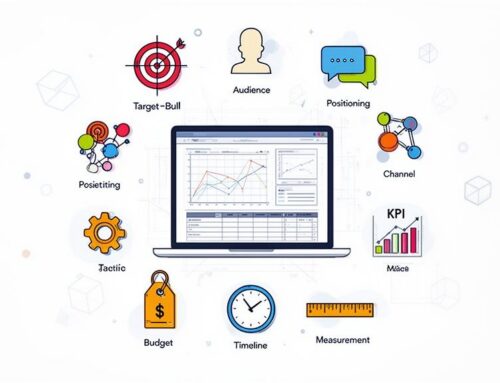

Before you can build a winning social media strategy, you have to know where you stand. It's tempting to jump right into creating cool content, but without a clear baseline, you're just throwing things at the wall and hoping something sticks. Real success comes from a plan built on data, not guesswork.
That’s why the first move is always to look inward and then outward—first with a deep-dive audit of your own channels, then with a sharp analysis of your competition.
Laying the Groundwork for a Winning Social Strategy

So many businesses skip this foundational work, and it's a huge mistake. A thorough audit isn't just about counting your followers; it's about understanding the story your data is telling you. Are people actually engaging with what you post, or just scrolling by? Which platforms are sending real traffic to your website?
Getting honest answers to these questions reveals what’s working, what's a waste of time, and where your biggest opportunities are hiding.
First, Look in the Mirror: The Social Media Audit
Think of a social media audit as a health check for your online presence. You're systematically reviewing everything to spot impostor accounts, clean up brand inconsistencies, and pinpoint your star content. This process gives you a concrete benchmark to measure all your future efforts against.
Start by tracking down every single social profile your company has—yes, even that dusty Pinterest account someone made years ago. For each one, pull the key metrics from the last 90 days.
Here's a quick checklist to guide you:
- Engagement Rate: Don't just look at likes. Calculate your true engagement rate by dividing the total engagements (likes, comments, shares) by your follower count. This tells you how much your audience actually cares.
- Top-Performing Posts: Find the handful of posts that really took off. Was it a video? A behind-the-scenes carousel? A customer story? Look for patterns in the format and topics.
- Audience Demographics: Who are you actually talking to? Check the age, location, and interests of your followers on each platform. If it doesn't match your ideal customer, you have a problem.
- Referral Traffic: Pop open your website analytics. How much traffic is social media really sending your way, and from which channels?
An audit is all about replacing assumptions with facts. Without this, you're basically flying blind, just hoping you stumble upon what your audience wants to see.
Next, Look Out the Window: Analyze Your Competitors
Knowing what your competitors are up to is just as crucial as understanding your own performance. A smart competitive analysis helps you see what's standard in your industry, find content gaps you can own, and learn from what others are doing right (and wrong).
Pick three to five competitors—both the big players and the scrappy up-and-comers. Then, put their social media under the microscope just like you did with your own.
Ask yourself these questions:
- Where are they most active and getting the best results?
- What’s their brand voice like? Is it working for them?
- Which of their posts get people talking?
- How are they handling customer comments and questions?
The point here isn't to copy them. It's to gather intel. Maybe you'll find your biggest rival is crushing it on Facebook but totally ignoring LinkedIn, leaving a massive opening for you. Or perhaps you'll notice that short-form video is a huge trend in your space that you need to get in on. As you begin this process, digging into a proven content strategy framework for social media can give you a solid structure to build upon.
When you combine a frank internal audit with a sharp-eyed competitive analysis, you get a 360-degree view of your position. This is the foundation that turns a generic social media plan into a focused, effective strategy that will actually hit your business goals.
2. Pinpoint Your Audience & Set Clear Goals
So, you’ve wrapped up your social media audit. You know what’s working, what isn’t, and where you stand against the competition. Now, it's time to stop looking in the rearview mirror and start mapping out the road ahead.
The most creative content on the planet will completely miss the mark if it's not made for a specific person and aimed at a specific goal. This is where we move from just posting content to starting real conversations that drive results.
A rock-solid social media strategy really boils down to two things: knowing exactly who you're talking to and knowing exactly what you want them to do next. Vague wishes like "more brand awareness" or "get more followers" won't cut it. We need to trade that wishful thinking for a concrete plan of action.
Go Beyond Demographics: Crafting Real Audience Personas
You probably have a general idea of your audience, but basic demographics are just scratching the surface. Knowing you're targeting a 35-year-old marketing manager in Chicago isn't a persona—it’s just a data point. To create content that actually resonates, you have to dig into the psychographics: their motivations, their daily frustrations, and what they truly care about.
This is where building out detailed audience personas becomes so valuable. A persona is a semi-fictional character you create based on real customer data and market research. Give them a name, a job, and a backstory. This simple exercise makes your ideal customer feel like a real person, which helps your whole team create content with genuine empathy.
Start by asking questions that get to the heart of who they are:
- What are their biggest headaches at work? What keeps them up at night?
- What kind of content do they actually find helpful or entertaining?
- Where do they hang out online? Are they binging podcasts on their commute, scrolling through TikTok for a laugh, or reading deep-dive industry newsletters?
- What "job" are they really "hiring" your product to do for them? (Hint: It’s usually more than just the features).
Building these profiles is the first step toward smart what is audience segmentation. Once you understand the unique needs of different groups, you can tailor your messaging and stop serving one-size-fits-all content.
Ditch Vague Goals for SMART Objectives
Once you have a crystal-clear picture of your audience, you can set objectives that actually move the needle. Every single post, video, or story should ladder up to a bigger business goal. The best way to make sure your goals have teeth is to make them SMART.
The SMART framework is perfect for turning fuzzy ambitions into a clear roadmap:
- Specific: What, exactly, are you trying to achieve? Instead of "more engagement," aim to "Increase our average post engagement rate on Instagram."
- Measurable: How will you know if you've succeeded? "Increase our engagement rate from 1.5% to 3%."
- Achievable: Is this realistic? Doubling your engagement is a stretch goal, but it’s possible. A 10x increase in a month is a fantasy.
- Relevant: How does this help the business? A higher engagement rate should lead to more website traffic and, ultimately, more qualified leads.
- Time-bound: What's the deadline? "Increase our engagement rate from 1.5% to 3% by the end of Q3."
When you set SMART objectives, you create accountability. You're no longer just "doing social media." You're executing a measurable plan designed to deliver a specific business outcome.
Tying Your Social Media Goals to Business Impact
This approach fundamentally shifts how you think about social media. It stops being just a creative outlet and becomes a strategic business driver. Understanding your audience demographics is a key piece of the puzzle here.
For instance, knowing that Millennials make up 33% of all social commerce spending, with Gen Z close behind at 29%, helps you choose the right platforms and content styles to drive sales. And considering that a staggering 97% of people check a company's social media presence before visiting, your strategy has a direct line to your brand's credibility.
Let's look at a real-world example. A B2B software company wants to generate more qualified leads. A perfect SMART social media objective would be: "Generate 50 marketing qualified leads (MQLs) from LinkedIn in Q2 by promoting our new webinar series, aiming for a 5% conversion rate on the registration landing page."
See how that works? It's specific (50 MQLs, webinar series), measurable (form submissions), achievable (based on past data), relevant (supports sales goals), and time-bound (Q2). Now, every single LinkedIn post has a clear, measurable purpose.
Choosing the Right Platforms and Content Pillars
Let’s be honest: trying to be everywhere on social media is a surefire recipe for burnout and getting nowhere fast. A killer social media strategy isn't about planting your flag on every platform out there. It’s about making smart, deliberate choices—investing your time and budget where you'll actually get a return.
This all starts by connecting the dots between your audience, your goals, and the unique vibe of each social network. You have to show up where your people already are and create content that feels like it belongs there, not like a clunky advertisement that crashed the party.
This simple decision tree is a great starting point. It helps visualize how your business model immediately influences your primary social media goal.
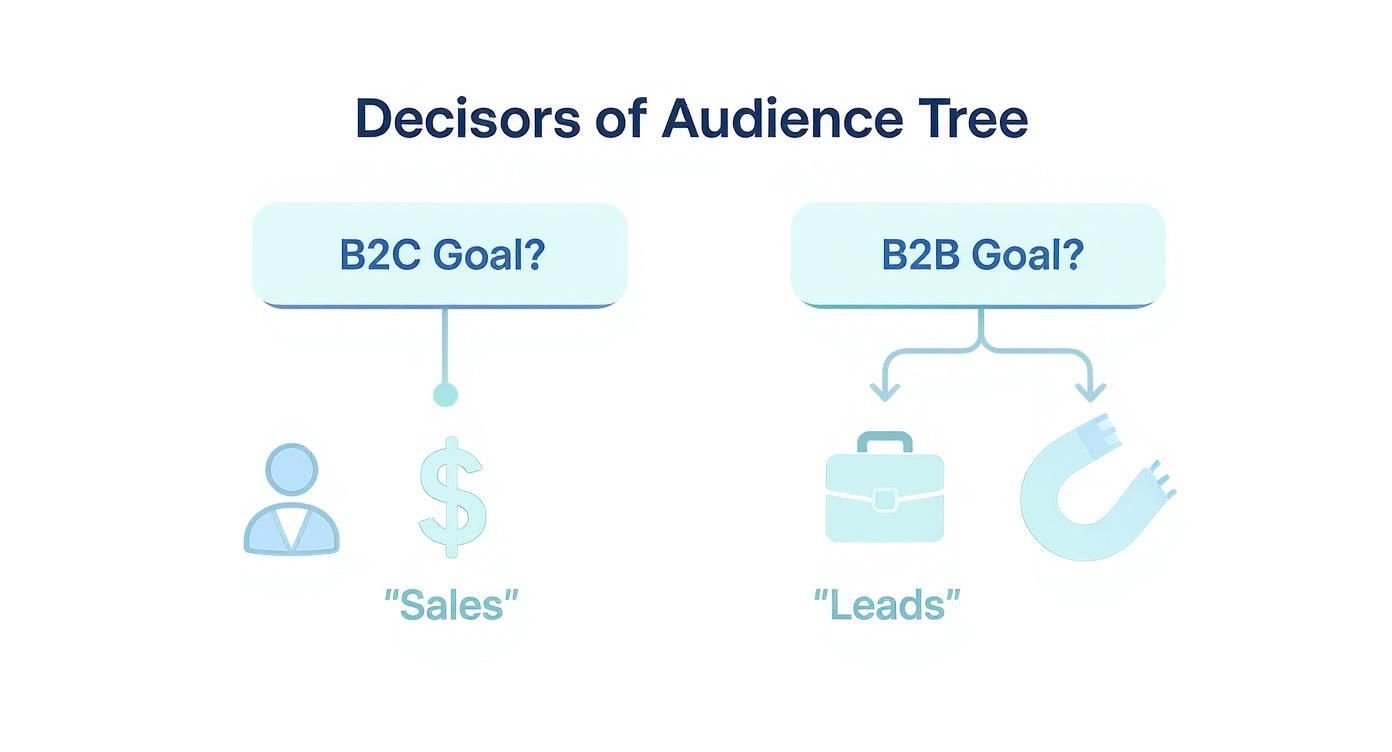
As you can see, there’s a fundamental split. If you're a B2C brand, you're likely chasing direct sales. If you're B2B, your world probably revolves around generating solid, qualified leads.
Selecting Your Core Platforms
Picking your platforms is about looking deeper than just user counts. Sure, Facebook still holds a massive 68.71% of the social media market share, but that number doesn't tell the whole story.
Engagement is where the real action is. TikTok, for example, boasts a median engagement rate of a whopping 2.63%, and there's been a 71% jump in users following brands on the platform. With 35% of marketers saying short-form video gives them the best ROI, you can't ignore the platforms that make it king.
To make the right call, you need to weigh a few key factors:
- Where Your Audience Lives: Does your ideal customer spend their days scrolling LinkedIn? That's a no-brainer for B2B. Trying to reach Gen Z consumers? Instagram and TikTok are your heavy hitters.
- Your Content Strengths: If your team is brilliant at creating stunning photos and graphics, Instagram and Pinterest are your natural playgrounds. If you're all about real-time conversation and quick-witted updates, X (formerly Twitter) is your arena.
- What You're Trying to Achieve: Need to drive traffic to your website to capture leads? Platforms with robust link-sharing features like LinkedIn, Facebook, or even Pinterest are great. If your main goal is building brand awareness with fun, viral content, TikTok is tough to beat.
Here’s a quick-glance matrix to help you map platform strengths to your specific business goals.
Platform Selection Matrix Based on Goals
| Platform | Primary Audience | Best For (Business Goal) | Top Content Formats |
|---|---|---|---|
| Gen X & Millennials | Community Building, Lead Gen, Local Business | Video, Curated Content, User-Generated Content | |
| Gen Z & Millennials | E-commerce, Brand Awareness, Influencer Marketing | Reels, High-Quality Photos, Stories, Carousels | |
| TikTok | Gen Z | Viral Marketing, Brand Awareness, Trend Participation | Short-Form Video, Behind-the-Scenes, Tutorials |
| B2B Professionals | B2B Lead Gen, Thought Leadership, Recruiting | Articles, Case Studies, Professional Video, Text Posts | |
| X (Twitter) | Millennials & Gen X | Real-Time News, Customer Service, Community Chat | Short Updates, News Links, Polls, Threads |
| Millennial Women | Driving Website Traffic, E-commerce, Visual Discovery | Infographics, Step-by-Step Guides, Product Photos |
This table isn't exhaustive, but it provides a solid foundation for aligning your strategic objectives with the right digital environment. The key is to be selective and focus your energy where it counts.
My best advice? Don't chase every shiny new platform. Pick one or two channels where you know you can create amazing content and build a real community. A deep, meaningful presence on two platforms is infinitely more valuable than a shallow, inconsistent one on five.
Developing Your Content Pillars
Once you've chosen your home base, it's time to define your content pillars. Just think of these as the 3-5 core themes or topics your brand will own. They are the backbone of your entire content calendar, making sure every single thing you post is relevant, valuable, and directly tied to your brand's expertise.
Content pillars are the ultimate cure for the dreaded "what on earth should I post today?" headache. They give you a strategic framework, making content ideation so much easier. Instead of posting at random, every piece of content ladders up to one of your core pillars, reinforcing what your brand stands for.
Let's imagine a financial planning firm that helps young professionals. Their pillars might look like this:
- Investing 101: Breaking down intimidating topics like stocks and retirement accounts into simple, actionable advice.
- Debt Demolition: Practical, no-fluff tips for tackling student loans and credit card debt.
- Big Life Goals: Content focused on saving for huge milestones, like buying a first home or starting a family.
- Client Wins: Relatable success stories that show how they've helped people just like their target audience.
These pillars speak directly to the pain points and ambitions of their audience. This focus ensures their content is always helpful, which is how you build trust and authority over time.
You can find tons of inspiration by exploring different social media content categories to see what might work for you. By setting these thematic cornerstones, you build a content engine that not only runs smoothly but also truly connects with the people you want to reach.
Building Your Social Media Content Engine

Alright, you've picked your platforms and nailed down your content pillars. Now comes the fun part: shifting from abstract planning to actually making things. A great social media strategy isn't a document that gathers dust; it's a living, breathing system for creating and publishing great content, week in and week out. This is where you build the well-oiled machine that turns those big ideas into a steady stream of posts your audience will love.
The goal here is to finally escape that chaotic, "what are we posting today?" scramble. When you have a structured content engine, you ensure quality, maintain a consistent brand voice, and free up your time to focus on what really moves the needle—like community engagement and analyzing performance.
Get Organized with an Editorial Calendar
Think of an editorial calendar as the beating heart of your entire social media operation. It's a surprisingly simple but powerful tool that maps out what you'll post, where it's going, and when it goes live. This little bit of foresight is what truly separates professional social media management from amateur hour.
Your calendar doesn't need to be fancy. Honestly, a shared spreadsheet using Google Sheets or Airtable is often the perfect place to start. What matters is tracking the essentials for every single post.
Make sure you have columns for:
- Date & Time: When is this post scheduled to go live?
- Platform: Instagram, LinkedIn, TikTok, etc.
- Content Pillar: Which core theme does this post support?
- Format: Is it a Reel, a carousel, a static image, or a simple text post?
- Copy: The exact text for the post, including all hashtags and @mentions.
- Visuals: A link to the final image, video, or graphic in Dropbox or Google Drive.
- Status: A simple tracker to see where things are at (e.g., Idea, In Progress, Approved, Scheduled).
By planning your content just two to four weeks in advance, you eliminate that daily panic. It gives you a bird's-eye view of your messaging, helping you craft a much more balanced and thoughtful content mix over time.
Master the 80/20 Rule: Give More Than You Take
One of the fastest ways to lose followers is to treat your social media channels like a non-stop sales megaphone. It’s a massive turn-off. A much smarter (and more effective) approach is the 80/20 rule, a simple principle that should guide your entire content mix.
Here's how it works:
- 80% of your content should be dedicated to providing genuine value. This means educating, entertaining, or inspiring your audience with no strings attached.
- 20% of your content can then be used for direct promotion—talking about your products, services, or special offers.
This balance is absolutely crucial for building trust. When you consistently show up with helpful, interesting, and engaging content, your audience is far more receptive when you do have something to sell. They start to see you as a valuable resource, not just another company trying to get their money.
Your social media presence should feel like a helpful conversation, not a constant sales pitch. When you prioritize giving value, you earn the right to ask for the sale.
Define Your Brand Voice and Visuals
Consistency is what makes a brand memorable. Every single post should look and sound like it came from you, even if multiple people are on your team. To achieve this, you need to establish a clear and cohesive brand identity for social media.
Your brand voice is the personality your brand takes on. Are you witty and informal? Or are you more authoritative and professional? Jot down a few key adjectives that define your tone and, more importantly, provide real examples of things your brand would say and things it wouldn't.
Your visual style works the same way. This covers your color palette, font choices, logo usage, and the overall mood of your photos and graphics. Creating a few simple templates in a tool like Canva for different post types can be a game-changer. It ensures every visual feels on-brand, reinforcing recognition every time someone scrolls past your content.
This one-two punch of a defined voice and a consistent visual style is what makes your brand instantly recognizable. The goal is for someone to see one of your posts and know it's yours before they even glance at the profile name. That's the power of a well-executed content engine.
Measuring Success and Optimizing Your Strategy
Your social media strategy isn't something you create once and then stick in a drawer. The best ones are living, breathing documents. The real magic happens when you stop guessing and start measuring, turning raw data into smarter decisions that fuel continuous improvement. This feedback loop is what separates the social media efforts that just chug along from those that truly crush it.
Too many brands get hung up on vanity metrics—things like follower counts or total likes. Sure, they feel good, but they don't really tell you how your efforts are impacting the business. Real success is found in tracking the Key Performance Indicators (KPIs) that connect directly to your bottom line.
A data-driven strategy isn't about chasing every single metric. It’s about focusing on the handful that actually matter and using them to tell a story about what’s working, what isn't, and why.
Moving Beyond Vanity Metrics to Real KPIs
To get a clear picture of what’s going on, you have to match your metrics to the business objectives you set earlier. Different goals need different yardsticks. The trick is to pick KPIs that show real value, not just a popularity contest.
Let's walk through which metrics matter most for some common goals.
- For Brand Awareness: Keep an eye on reach (the number of unique people who see your content) and impressions (how many times your content was displayed). When your reach is growing, you know your message is spreading to new corners of your target audience.
- For Engagement: You’ll want to monitor your engagement rate (likes, comments, shares, and saves divided by your follower count or reach). But don’t stop there. Pay close attention to comments and shares—these actions signal a much deeper connection than a simple like.
- For Website Traffic: Check your click-through rate (CTR) and referral traffic inside your website analytics. These numbers tell you exactly how effective your social posts are at getting people to leave the platform and visit your site.
- For Lead Generation: Here, the undisputed king is conversion rate. Of all the people who clicked your link, how many actually filled out the form, downloaded your guide, or signed up? That's the number that really counts.
A simple dashboard in a spreadsheet is a fantastic way to keep these numbers in one spot. Try updating it weekly or monthly to spot trends, celebrate wins, and see where you might need to pivot. This regular check-in is crucial to understanding and improving your results, which is the core of how to measure social media ROI and proving your value.
Key Social Media Metrics by Objective
To make this even easier, I've put together a table that connects common business goals directly to the KPIs you should be tracking. It’s a simple framework to help you focus on the data that matters most.
| Business Objective | Primary KPI | Secondary Metrics | Tools to Use |
|---|---|---|---|
| Increase Brand Awareness | Reach & Impressions | Audience Growth Rate, Share of Voice | Native Platform Analytics, Sprout Social |
| Drive Community Engagement | Engagement Rate | Comments, Shares, Saves, Mentions | Hootsuite, Buffer, Native Analytics |
| Generate Website Traffic | Click-Through Rate (CTR) | Referral Traffic, Bounce Rate | Google Analytics, Bitly, Native Analytics |
| Boost Lead Generation | Conversion Rate | Cost Per Lead (CPL), Form Submissions | Google Analytics Goals, HubSpot, CRM |
Think of this table as your cheat sheet for measurement. It ensures you’re not just collecting data for the sake of it, but gathering actionable intelligence.
The Power of Regular Performance Reviews
Data is only useful if you actually do something with it. I recommend setting aside dedicated time every month or quarter to conduct a formal performance review. This isn't just about staring at charts; it's about asking "why?"
During your review, pull up your top-performing content. What do these posts have in common? Was it the format (video crushed it), the topic, the time you posted, or the call to action? Do the same for your worst-performing content to learn what your audience just isn't into.
These insights are pure gold. Use them to refine your game plan. If Reels are consistently outperforming your static images on Instagram, it’s a pretty clear signal to lean into short-form video. If your LinkedIn articles are driving a ton of traffic, you know you need to make them a bigger part of your content mix. For a deeper look at the specific formulas and metrics, this guide on how to measure social media engagement effectively is a great resource.
This cycle of measuring, analyzing, and optimizing is what turns a good strategy into a great one. It transforms your plan from a static set of rules into a dynamic system that adapts and improves over time, making sure you’re always getting closer to your business goals.
Answering the Tough Questions About Social Media Strategy
Even the best-laid plans run into roadblocks. Once your strategy is out in the wild, the real work—and the real questions—begin. It's totally normal to hit a few snags when you're in the trenches managing everything day-to-day.
Think of this as your go-to guide for those tricky situations. We'll walk through the questions I hear most often from marketers and business owners, from figuring out the budget to dealing with that inevitable angry comment. Having these answers ready will help you stay agile and keep your strategy moving forward.
How Much Should I Actually Budget for Social Media?
This is the million-dollar question, isn't it? While there’s no single right answer, your budget should always tie back directly to your goals. As a solid starting point, I recommend setting aside 5-15% of your company's total marketing budget for social media. That includes everything from your team's time to paid ads.
To make it more concrete, think about breaking it down into these buckets:
- Content Creation: This is the cost of your tools (like Canva or the Adobe Suite), any video editing software, and potentially hiring freelance photographers or designers for bigger campaigns.
- Management & Analytics Tools: Your budget for platforms like Buffer or Sprout Social that help you schedule posts and track what's working.
- Paid Ads: This is the money you'll put directly behind boosting posts, running lead generation campaigns, or promoting a new launch.
My advice? If you're new to paid social, start small. Run a few different ad experiments to see what resonates, then double down on the winners. A flexible budget is your best friend here.
Seriously, How Often Should I Be Posting?
This is a classic one. The honest answer is that consistency always trumps frequency. It’s much more effective to share three genuinely amazing posts a week than it is to churn out ten mediocre ones that nobody engages with.
The rule I live by is simple: post as often as you can create truly valuable content without burning out or letting the quality slip. Never post just to check a box.
Every platform has its own rhythm, so use these as a starting point and let your analytics guide you:
- Instagram: Aim for 3-5 feed posts per week, but try to be active on Stories daily.
- Facebook: 3-5 times a week is a good cadence.
- LinkedIn: 2-4 quality posts per week usually works best for a professional audience.
- TikTok: Lean into trends and aim for 4-6 times per week if you can keep up with fresh ideas.
Pay close attention to your data. If you ramp up your posting and see engagement take a nosedive, that’s your audience telling you to pull back and focus on quality over quantity.
What's the Best Way to Handle Negative Comments?
Whatever you do, don't ignore them. Hitting the delete button or pretending you didn't see a complaint is one of the fastest ways to make your brand look like it doesn’t care. The best move is to respond quickly, stay professional, and do it publicly. It shows everyone else watching that you take feedback seriously.
Here's a simple framework that works every time:
- Acknowledge and Validate: Start by showing you understand their frustration. "I'm so sorry you had that experience" can immediately de-escalate the situation.
- Move the Conversation Offline: Offer a direct way to solve the problem privately. Say something like, "Could you please send the details to help@yourcompany.com so we can sort this out for you?"
- Don't Get Defensive: This is critical. Resist the urge to argue. Just stick to the facts and keep the focus on finding a solution for them.
Now, this doesn't apply to everything. You should absolutely delete and block comments that are spam, abusive, or contain hate speech. But for a legitimate customer issue, a calm and helpful public response can turn a bad situation into a win for your brand.
Executing a winning social media strategy requires expertise and dedication. ReachLabs.ai provides a collective of specialists who integrate data-driven insights with creative execution to elevate your brand. We handle everything from digital campaigns and influencer marketing to content creation, ensuring your strategy consistently moves the needle.
Discover how our full-service approach can drive real results for your business at https://www.reachlabs.ai.