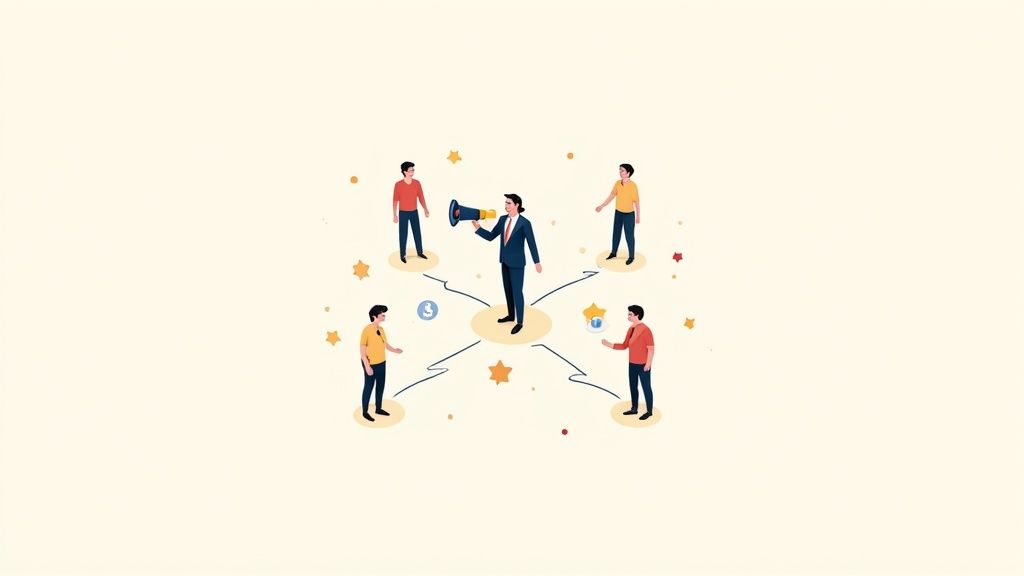
The secret to getting referrals is surprisingly simple: create an experience so remarkable that customers can't help but talk about it. Before you even think about fancy programs or incentives, you have to build a rock-solid foundation of genuine customer advocacy. This approach turns happy clients into your most effective and authentic marketing team.
Build a Customer Experience Worth Talking About
So many businesses jump straight to launching a referral program with flashy rewards. That's like trying to build a house by starting with the roof. The real groundwork for a referral engine isn't a clever incentive; it’s an unforgettable customer experience.
People don’t recommend products or services that are just "fine." They recommend the ones that make them feel valued, solve their problems effortlessly, and maybe even deliver a moment of unexpected delight.
Before you ever ask for a referral, you need to give your customers a story worth sharing. This means pushing past mere satisfaction and aiming for genuine loyalty. When a customer feels a real connection to your brand, referrals happen naturally. It's a byproduct of a great relationship, not a forced transaction.
Pinpoint Your Happiest Customers
Your most enthusiastic advocates are often hiding in plain sight. The trick is knowing where to look and what signals to watch for. Identifying these champions helps you understand what you're doing right and shows you who is most likely to become a powerful source of referrals.
You can find these people by keeping an eye on a few key touchpoints:
- Positive Support Interactions: A customer who ends a support chat with, "You've been so helpful, thank you!" is a perfect candidate. They just had a problem solved and are feeling a sense of relief and gratitude.
- Social Media Mentions: Look for unprompted praise on platforms like LinkedIn or X (formerly Twitter). These public shout-outs are a crystal-clear sign of a happy customer.
- High Engagement: Customers who consistently open your emails, use your product frequently, or buy from you again and again are showing their loyalty with their actions.
- Direct Feedback: Surveys and feedback forms are gold mines. To figure out who is most likely to recommend you, check out these powerful NPS question examples. A high Net Promoter Score (NPS) is one of the strongest signals of a potential advocate.
Create Moments of Unexpected Delight
A "surprise and delight" strategy is all about going above and beyond expectations in small, memorable ways. These gestures don't have to be expensive—they just need to be personal and thoughtful. These are the moments that turn a standard transaction into a story they'll tell their friends.
For instance, a SaaS company might notice a user hitting a major milestone and send a personal, congratulatory email from the CEO. An e-commerce brand could slip a handwritten thank-you note and a small, unexpected gift into a repeat customer's order. These simple actions show you're paying attention and that you value their business beyond the sale.
The goal is to make your customers feel seen and appreciated. A simple, personalized gesture can create more goodwill and word-of-mouth marketing than a thousand dollars in ad spend.
This proactive approach to relationship-building is exactly how you get referrals without explicitly asking. You're building up a bank of goodwill that pays off over time.
In fact, referred customers are more valuable in the long run. Studies show they have a 16% higher lifetime value (LTV) and a 37% higher retention rate than other customers, which directly boosts your bottom line. Our own guide on how to increase customer lifetime value offers deeper strategies for building this kind of long-term loyalty. By prioritizing an exceptional experience, you're not just making customers happy—you're investing in a more profitable future.
Designing a Referral Program That Motivates Everyone
Once you've nailed the customer experience and people are already talking about you, it’s time to pour some gasoline on that fire with a formal referral program. A great program does more than just hand out rewards; it makes sharing your brand feel effortless and genuinely exciting for your customers. It's about creating a system that feels like a true win-win, not just another marketing ploy.
The heart of any program is the incentive. The right reward can turn a happy customer into one of your most passionate advocates, but the wrong one can feel cheap or just fall flat. This is where you need to get strategic.
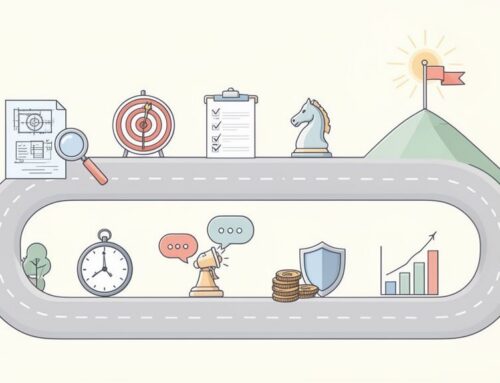
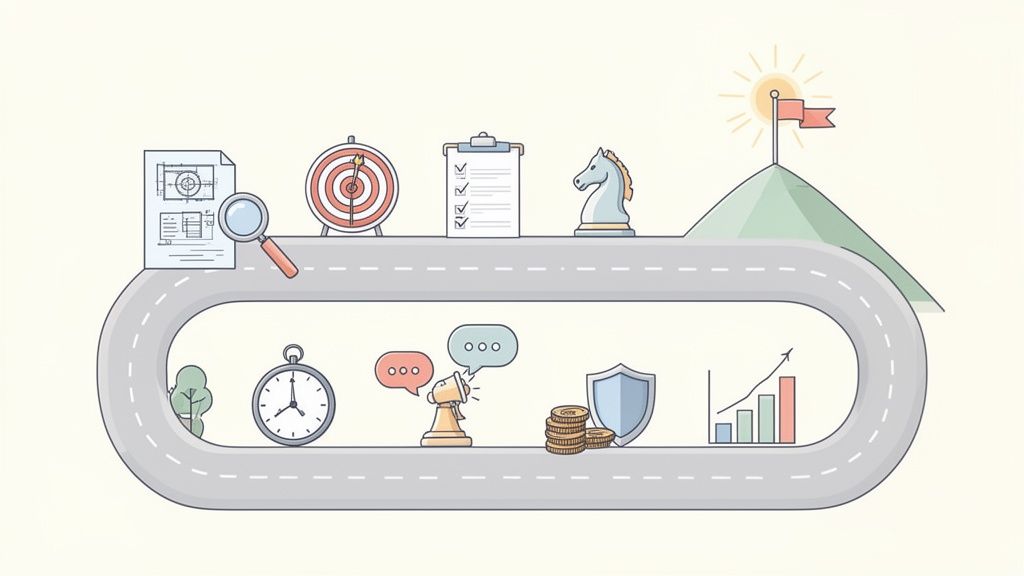
This flowchart really brings home a crucial point: an amazing customer experience is the foundation for everything else.

Think of your referral program as an accelerator, not a replacement for customer happiness. You need a product people genuinely love before a formal system can take off.
Choosing Your Incentive Model
First things first: who gets the reward? You have two main paths you can go down—single-sided or double-sided incentives.
- Single-Sided Rewards: This is pretty straightforward. Only the referrer (your current customer) gets a reward for bringing in someone new. This approach can work well for high-trust products where the recommendation itself holds a lot of weight for the new person.
- Double-Sided Rewards: Here, both your customer and the person they referred get a reward. This is almost always the more powerful option. It gives the new person an immediate reason to act and makes your customer feel great about giving their friend a deal. It’s what Dropbox used to grow exponentially, giving extra storage to both parties.
A double-sided incentive feels more like giving a gift than making a sales pitch. It lets your customer say, "Hey, I love this, and I can get you a discount to try it," which is a far more natural and persuasive conversation.
This simple shift changes the dynamic from a selfish act to a generous one, which can dramatically increase how many people participate. And with Nielsen data showing that 92% of consumers trust recommendations from people they know, making that recommendation even sweeter is a no-brainer.
Cash vs. Non-Cash Rewards
Okay, so you know who you’re rewarding. Now, what are you giving them? The classic debate is cash versus non-cash rewards, and honestly, the right answer completely depends on your business and your customers.
To help you decide, let's break down the most common incentive structures.
Comparing Referral Incentive Structures
This table breaks down the common reward models to help you figure out what makes the most sense for your business.
| Incentive Type | Best For | Pros | Cons |
|---|---|---|---|
| Cash/Cash Equivalent | Businesses where the value is universal (e.g., financial services, general consumer products). | Universally motivating and easy to understand. | Can feel transactional and doesn't encourage repeat business. Can be costly. |
| Store Credit/Discounts | E-commerce, subscription services, and B2B SaaS. Businesses with a high repeat purchase rate. | Cost-effective and encourages loyalty by keeping value within your ecosystem. | Less appealing if customers don't plan to purchase again soon. |
| Product Upgrades/Features | SaaS, software, and tiered service models. | High perceived value for a low marginal cost to the business. Deepens user engagement. | Only motivates customers who see value in premium features. |
| Exclusive Access/Swag | Brands with a strong community or "cult" following. | Builds a sense of community and brand loyalty. Creates brand ambassadors. | Can be difficult to scale and has a subjective value. Not all customers care about swag. |
Choosing the right structure is less about what's cheapest and more about what aligns with your customers' motivations and your business goals. A $50 gift card for an e-commerce store often drives more long-term value than a $25 cash payout because it brings the customer back to your site.
Make the Process Frictionless
Even the most amazing reward won't work if the process is a pain. Your goal should be to make sharing as easy as clicking a single button. Every extra field they have to fill out or page they have to navigate is another chance for them to give up.
A seamless program absolutely must include:
- A Unique, Sharable Link: Every customer needs their own personal referral link or code. It should be dead simple to find, copy, and share anywhere—email, text, social media, you name it.
- A Clear Landing Page: When someone clicks a referral link, they should land on a page that instantly explains the offer, confirms who sent them, and makes it incredibly easy to sign up or buy. No guesswork.
- Automated Tracking and Rewards: Your customers shouldn't have to chase you for their reward. Use referral marketing software to automatically track successful referrals and deliver the incentive instantly. This builds trust and makes them want to do it again.
When you design a program with the right incentives and a buttery-smooth user experience, you’re not just asking for referrals—you’re building a powerful, predictable engine for growth.
Nailing the Natural Referral Ask
Let's be honest, asking for a referral can feel a little… awkward. But it absolutely doesn't have to be some high-pressure sales tactic. The best referral requests I've ever seen—and made—feel like a natural part of a great conversation.
Think of it less as a hard sell and more about perfect timing and genuine appreciation. You're just making it incredibly easy for your happy customers to share something they already love. When you get it right, it's not a request; it's an opportunity for them to help out a friend or colleague. People actually enjoy recommending things that solve a problem or make their lives better. Your job is to simply open that door at just the right moment.

Finding the Perfect Moment to Pop the Question
The real secret to a referral ask that doesn't feel forced? Timing. You want to catch your customer when their positive feelings about you are at an all-time high. Asking then turns the question from a favor into a totally logical next step.
Keep your eyes peeled for these golden opportunities:
- Right After a Glowing Review: A customer just left a 5-star review or sent you a "you guys are awesome" email. This is the warmest lead you will ever get. They've literally just put their praise into words.
- Following a Support Win: Your team just swooped in and solved a tricky problem for them. The customer is feeling a huge sense of relief and gratitude. That's a prime time to gently make your move.
- When They Hit a Big Milestone: Did your software help them land a major client? Did your service help them crush a quarterly goal? Celebrate that win right alongside them, and then ask if they know anyone else who could use a similar victory.
- During Unprompted Praise: A customer jumps on a call and says, "By the way, I was just telling my team how much we love this feature." That's your cue. A simple, "That's so great to hear!" can seamlessly transition into a referral chat.
The trick is to just listen. When a customer is clearly happy, they are emotionally primed to share that good feeling. Don't let that moment slip away.
Crafting Outreach That Doesn't Sound Like a Robot
Nothing kills a referral request faster than a generic, copy-pasted template. Your outreach has to sound like it came from a real human who actually values the relationship. Whether it's an email or a LinkedIn message, personalization is everything.
The Referral Email That Actually Gets a Reply
Keep your email short, personal, and to the point. You're not writing a marketing essay; you're just starting a simple conversation.
A Few Subject Lines to Try:
- Connecting with [Mutual Connection's Name]?
- Quick question for you
- Loved your feedback, [Customer's Name]!
Here’s an example of what the email could look like:
Hi [Customer Name],
I'm still smiling about the kind words you shared about [Your Product/Service] the other day. It honestly made our whole team's week!
Since you've had such a good experience, I was wondering if you know one or two other [Job Title, e.g., "Marketing Managers"] who are also trying to [Specific Outcome, e.g., "streamline their content workflow"].
If someone comes to mind, feel free to just forward them this email. As a small thank you, we've got a [Incentive, e.g., "20% discount"] for them and a [Reward, e.g., "$50 gift card"] for you.
No pressure at all, but we really appreciate your support.
Best,
[Your Name]
See how that feels? It's light, appreciative, and super specific. It tells them exactly who to refer and what's in it for everyone. Mastering this kind of clear, persuasive messaging is a huge part of effective https://www.reachlabs.ai/copywriting-for-business/.
Using LinkedIn for Those Warm Introductions
For B2B, LinkedIn is an absolute goldmine for referrals. The key is making the introduction completely frictionless for your contact. Please, never just send a cold, generic connection request to the person you're trying to meet. That rarely works.
Instead, try sending this message to your existing happy customer:
Hi [Customer Name],
Hope you're having a great week!
I noticed on LinkedIn you're connected with [Target Prospect's Name] over at [Their Company]. We've been looking to help more folks in the [Industry] space, and from the looks of it, they'd be a perfect fit.
If you feel it’s appropriate, would you be open to making a quick introduction? To make it super easy, I've drafted a little message below you can copy, paste, or tweak however you like.
"Hey [Prospect Name], wanted to connect you with [Your Name]. We've been using their [Service] and it's been a game-changer for [Specific Benefit]. Thought it might be up your alley, too. I'll let you two take it from here!"
Let me know what you think. Either way, really appreciate your help!
This approach does all the heavy lifting for your customer. By handing them a pre-written script, you've removed basically all the work, which massively increases the odds they'll actually do it. It's a simple but powerful way to get the referrals you're looking for.
Activating Your Most Powerful Referral Channels
You've designed a killer referral program and figured out the perfect time to ask for one. That's a huge piece of the puzzle, but now it's time to put it into action. To really get referrals flowing, you have to meet your customers where they already are and make sharing your brand feel like a natural part of their day.
This means you can't just stick a "Refer-a-Friend" page on your website and hope for the best. You need to actively weave your program into the platforms your customers use and trust every single day. By baking referral prompts into your email marketing, social media, and even strategic partnerships, you create a constant, low-pressure drumbeat of advocacy.

The goal is to make referrals a visible and easy choice, not a hidden feature they have to hunt down. The more accessible you make it, the more people will actually participate.
Weave Referrals into Your Email Marketing
Your email list is your direct line to your customers, making it the perfect place to nurture referrals. Forget about sending one-off blasts. The real magic happens when you integrate referral messaging into your existing automated email flows, creating a steady stream of reminders that never feels spammy.
Here are a few high-impact spots to drop a referral prompt:
- Your Welcome Series: New customers are at their peak excitement right after they sign up. A gentle nudge in the second or third email of your welcome sequence can plant the referral seed early on.
- Transactional Emails: Think about it—order confirmations and shipping notices have sky-high open rates. A simple "P.S. Love your new gear? Give a friend 20% off and get $20" at the bottom is an incredibly effective, zero-effort tactic.
- Your Email Signature: Every single email your team sends is an opportunity. Add a small, clickable banner or a line of text to your company-wide email signature to keep the program top-of-mind.
You want your referral program to be a consistent, background hum, not a loud, annoying shout. It should feel like just another helpful part of their experience with your brand.
Empower Advocates on Social Media
Social media is where word-of-mouth explodes. Your job is to make it ridiculously easy for happy customers to shout your praises to their followers. Don't just ask them to share; give them the tools to do it right.
One of the best ways to do this is with a social sharing kit. This is basically a simple page on your site that includes everything they need:
- Pre-Written Posts: Draft a few post options for LinkedIn, X, and Facebook. Keep them authentic and make sure they're easy to edit.
- Eye-Catching Visuals: Provide a few high-quality images, GIFs, or short video clips they can just download and use.
- A Clear Call-to-Action: Make sure every post includes their unique referral link so you can track where the lead came from.
When you do the creative work for them, you lower the barrier to sharing to almost zero. A customer is far more likely to copy and paste a great post than to try and craft one from scratch.
Leverage the Power of Micro-Influencers
Big-name influencers have their place, but don't sleep on the power of micro-influencers. These are creators with smaller, super-engaged audiences, typically between 1,000 and 100,000 followers. Their recommendations feel less like a paid ad and more like genuine advice from a trusted friend.
Bringing them into your referral strategy can introduce your brand to new, dedicated communities. You can give them a special referral code or link that offers their followers an exclusive deal, creating an authentic partnership where everyone wins. The key is finding the right fit, and our guide can show you how to find micro-influencers whose audience aligns perfectly with your brand.
Recent data shows just how powerful these channels are. Polling reveals that between 28-31% of business leaders see social media as their top channel for referrals. At the same time, integrating referrals into existing systems is a core tactic, with 84% of businesses using their loyalty programs to drive them.
Build Strategic Referral Partnerships
Sometimes, your best source of referrals isn't a customer at all—it's another business. By teaming up with complementary, non-competing companies, you can tap into a brand new, highly relevant audience.
Just think about the other services your ideal customer uses.
- A wedding photographer could partner with local venues and florists.
- If you sell project management software, a time-tracking app is a perfect partner.
- A financial advisor and an accountant could send a steady stream of business to each other.
These partnerships thrive on mutual trust and shared value. You recommend them, they recommend you, and the customer gets a vetted solution to another one of their problems. It’s a brilliant way to get referrals by tapping into a pre-existing stream of qualified leads.
Tracking and Scaling Your Referral Engine
Launching a referral program without tracking it is really just wishful thinking. You might see a few new customers trickle in, but you’ll have no idea where they came from, why they came, or how to get more of them.
If you want to turn referrals from a random act of kindness into a predictable growth machine, you need to get serious about the data. This is how you stop guessing and start building a strategy that actually works.
Key Metrics You Must Monitor
To truly understand what’s happening with your program, you need to look beyond just the total number of referrals. A few key metrics will tell you the real story about what's working and what's falling flat.
Keep a close eye on these numbers:
- Referral Rate: What percentage of your customers are actually sending referrals? If this number is low, it might mean people don't know about your program or the incentive isn't hitting the mark.
- Share Rate: This is different. Of all the people who see your referral offer, how many actually bother to share it? This tells you a lot about the strength of your call-to-action and how easy you've made the process.
- Referral Conversion Rate: This is the big one. What percentage of people who get a referral link actually become a customer? If your share rate is high but your conversion rate is low, the offer might not be compelling enough for new leads.
- Cost Per Acquisition (CPA): Do the math. How much are you paying out in rewards for each new customer you get? This number needs to be significantly lower than your CPA from other channels like paid advertising.
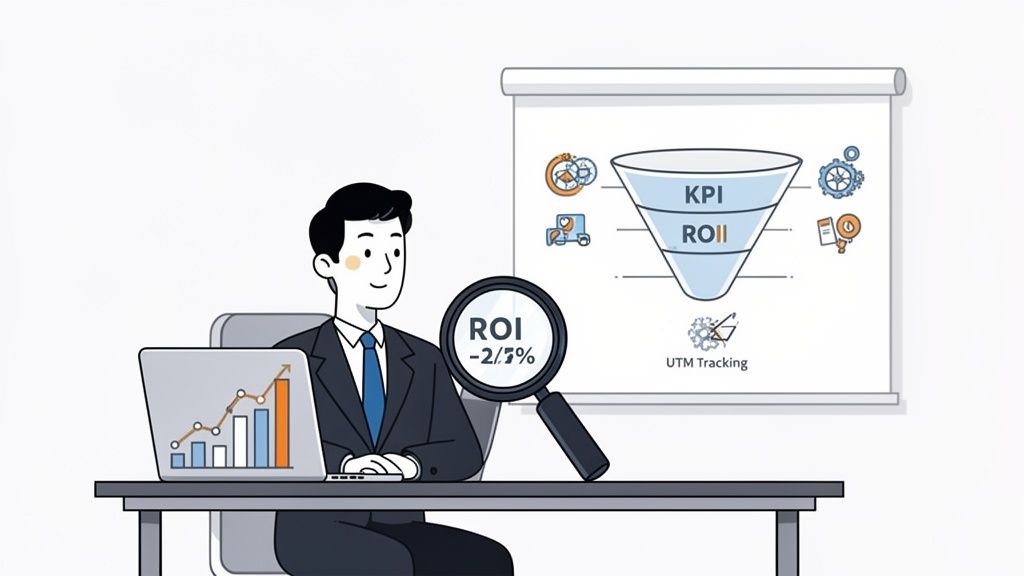
Think of these numbers as the dashboard for your referral engine. They let you see exactly what's going on so you can make smart adjustments.
Choosing the Right Referral Software
Trying to manually track unique links, attribute conversions, and handle reward payouts is a nightmare waiting to happen. It’s slow, full of potential for mistakes, and simply won't work once you have more than a handful of people participating.
This is where dedicated referral marketing software becomes a non-negotiable.
These platforms handle everything automatically—from giving each advocate a unique link to sending out rewards the second a new customer signs up. This isn't just about saving time; it's about building trust. When your customers get their rewards quickly and reliably, they're more likely to keep referring.
Investing in referral software isn't a cost; it's an investment in scalability. It ensures your program runs smoothly 24/7, providing a seamless experience for both your advocates and their friends.
There’s a reason this is a booming industry. The global referral management market is on track to grow from around USD 3.3 billion in 2025 to over USD 7 billion by the early 2030s. That explosion shows just how critical automated tracking and fulfillment are for businesses looking to scale. You can dig into more insights about this market trend to see where things are headed.
Scaling Lessons from Real-World Success
Once you have your tracking locked down and the process is automated, you can start thinking bigger. Scaling isn't just about getting more referrals; it's about making the whole system more powerful as it grows.
Just look at a classic example like Dropbox. They didn't just give out a generic reward. They offered more storage space, a reward that made their own product more valuable to the user. This created an incredible viral loop where referring friends directly improved the advocate's own experience.
Here are a few ideas you can steal to scale your own program:
- Tier Your Rewards: Don't stick with a single, flat reward. Create levels. A customer might get a small bonus for their first successful referral, a bigger one for their fifth, and something special for hitting their tenth. This gamifies the process and really motivates your best advocates.
- Run Time-Sensitive Campaigns: Urgency works. Try running a "Double Rewards Month" or offering a special bonus for referrals made over a holiday weekend. These short-term sprints can generate huge bursts of activity.
- Celebrate Your Top Advocates: Give your top referrers a public shout-out in your newsletter or on social media. That kind of recognition can be a powerful motivator all on its own and often sparks a little friendly competition.
When you combine sharp tracking with smart automation and creative scaling tactics, your referral program can become one of your most dependable and profitable ways to find new customers.
Common Questions About Getting Referrals
Even with a solid plan, you're bound to run into a few specific questions. Honestly, getting the little details right is often what separates a referral program that fizzles out from one that becomes a reliable pipeline for new business.
I get asked about these common hurdles all the time. Let's walk through some straightforward answers to the most frequent challenges people face.
When Is the Best Time to Ask for a Referral?
Timing is everything. You want to make your ask right after a customer has had a great experience—that moment when they're happiest with your brand. This makes the request feel natural, not like you're just trying to get something from them.
Keep an eye out for these "peak delight" moments:
- Right After a Glowing Review: A customer just went out of their way to praise you publicly. This is probably the best opportunity you'll ever get.
- Following a Customer Support Win: Your team just turned a frustrating problem into a moment of relief and gratitude. That's a perfect time to follow up.
- When They Hit a Milestone: They just used your product to achieve a big goal. Celebrate that win with them, then gently ask if they know anyone else who could benefit.
Catching them on that wave of positive energy makes it far more likely they’ll actually take the time to recommend you.
Are Cash Rewards Better Than Non-Cash Incentives?
This really depends on your audience and what kind of business you run. There's no one-size-fits-all answer here, but both have their pros and cons.
Cash is a powerful, universal motivator, no doubt about it. The downside is that it can feel a bit transactional and might not do much to build long-term loyalty.
On the other hand, non-cash incentives like store credit, a free month of service, or access to exclusive features can be much more cost-effective. More importantly, they bring the reward back to your product, encouraging people to stick around and use it more. My advice? The best strategy is to A/B test different reward types and see what your customers actually respond to.
How Can I Get Referrals if My Business Is New?
When you’re just starting out, forget about a formal, automated program. Your entire focus should be on creating an amazing, high-touch experience for your first handful of customers. You want to make them feel like they’re part of an exclusive club.
Your earliest advocates are your most important marketing asset. Start by making personal, one-on-one requests. Let them know how much their support means to you as you get things off the ground. You might even offer a more generous "founding member" referral bonus to show how much you value them. This personal touch builds a rock-solid foundation of loyalty that fuels powerful, organic growth. To really grasp the principles at play, it's worth understanding what is Word of Mouth Marketing.
At ReachLabs.ai, we turn brand advocacy into a powerful growth engine. Our team builds strategies that generate authentic referrals and drive measurable results. Discover how our collective approach can elevate your marketing.